

Missing most or all of your teeth can make eating, speaking, and smiling feel difficult. A full mouth dental implant procedure offers a permanent solution that can restore your confidence and quality of life.
Full mouth dental implants replace an entire arch of missing teeth using just four to six strategically placed implant posts that support a complete set of artificial teeth.
This approach, often called “all-on-four” or “all-on-six,” gives you teeth that look, feel, and function like natural ones. Unlike traditional dentures that sit on your gums, these implants anchor directly into your jawbone.
The process takes several months to complete, but the results can last decades with proper care. Understanding what to expect during each step helps you make an informed decision about whether this treatment is right for your situation.
Key Takeaways
- Full mouth dental implants use four to six posts per arch to support a complete set of replacement teeth
- The entire process typically takes three to nine months from start to finish
- Proper candidates need sufficient jawbone density and healthy gums to support the implants
Full Mouth Dental Implant Procedure Steps
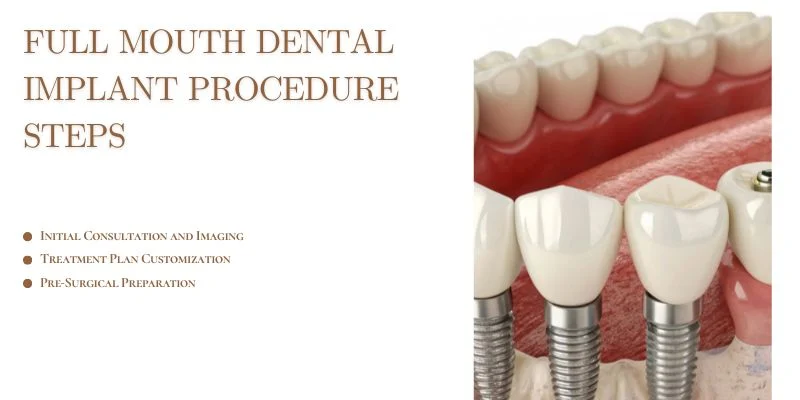
The full mouth dental implant procedure follows a careful sequence that begins with detailed imaging and examination, moves through personalized treatment planning, and concludes with thorough preparation for surgery.
Initial Consultation and Imaging
Your dental implants procedure starts with a comprehensive dental exam to assess your oral health. The dentist examines your gums, remaining teeth, and jawbone structure.
Advanced imaging forms the foundation of your treatment. Your dental team uses 3D imaging technology to capture detailed views of your mouth structure.
Digital x-rays provide precise measurements of your jawbone density and height. These images help determine if you need bone grafting before implant placement.
Intraoral scans create accurate 3D models of your teeth and gums. This technology eliminates the need for messy impression materials.
Your dentist discusses your medical history and current medications. Certain health conditions may affect healing after surgery.
The consultation includes a discussion of your goals and expectations. You’ll learn about different implant options and what results you can expect.
Ready to start your full mouth dental implant journey in Metairie, LA? Book an appointment today.
Treatment Plan Customization
Your dentist creates a personalized treatment plan based on your imaging results and oral health assessment. This plan outlines the number of implants needed and their exact placement locations.
Implant positioning is carefully mapped using your 3D scans. The plan shows where each implant will be placed for optimal support and function.
Your dentist determines if you need tooth extractions before implant placement. Damaged or failing teeth must be removed first.
Bone grafting requirements are identified during planning. Some patients need additional bone material to support the implants properly.
The timeline for your procedure is established. This includes healing periods between different phases of treatment.
Your dentist presents cost estimates and payment options. The treatment plan includes all procedures from start to finish.
Pre-Surgical Preparation
Medical clearance may be required before surgery. Your dentist coordinates with your physician if you have health conditions that could affect healing.
You receive detailed pre-operative instructions. These cover eating, drinking, and medication guidelines before your procedure.
Temporary prosthetics are prepared in advance. You’ll have replacement teeth ready for placement immediately after implant surgery.
Your surgical appointment is scheduled with specific timing requirements. You’ll need to arrive early for final preparations and paperwork.
Sedation options are discussed and arranged. Many patients choose oral or IV sedation for comfort during the procedure.
Pre-surgical medications may be prescribed. These might include antibiotics to prevent infection or anti-anxiety medications.
Your support person arrangements are confirmed. You’ll need someone to drive you home after surgery if you receive sedation.
The Surgical Process and Immediate Aftercare
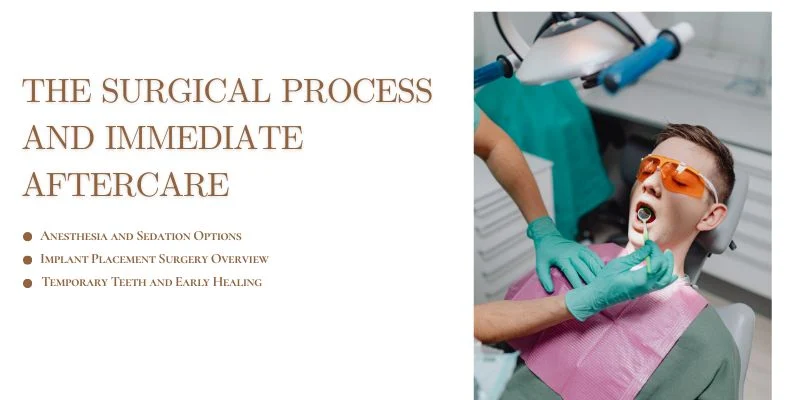
Full mouth dental implant surgery involves placing multiple implant posts into your jawbone under anesthesia, with options for temporary teeth and specific aftercare steps to ensure proper healing.
Anesthesia and Sedation Options
Your dental team will discuss the best anesthesia option for your comfort during the procedure. Local anesthesia numbs the surgical area and is commonly used for implant placement.
Concerned about your procedure in Metairie, LA? Schedule an appointment to discuss your options and ensure your comfort during surgery.
Many patients receive IV sedation along with local anesthesia to help you relax during the longer procedure. This keeps you comfortable while remaining conscious.
General anesthesia may be recommended for full mouth procedures. This puts you completely under during surgery.
Your medical history and anxiety level help determine the right choice. The surgical team monitors you throughout the procedure regardless of which option you choose.
Implant Placement Surgery Overview
Dental implant surgery begins with your surgeon making small incisions in your gums to expose the jawbone. Any remaining teeth requiring removal are extracted first.
The surgeon then drills precise holes into your jawbone. Multiple implant posts are placed into these holes at specific angles and depths.
For full mouth procedures, typically 4-6 implant posts per arch are placed. The implant post acts as an artificial tooth root made of titanium.
Implant surgery usually takes 90 minutes to several hours depending on how many implants you need. The gums are then sutured closed around the implants.
Temporary Teeth and Early Healing
Most patients receive temporary teeth on the same day as surgery. Your temporary denture attaches to the newly placed implants.
These temporary teeth let you eat soft foods and maintain your appearance during healing. They’re designed to put minimal pressure on your healing implants.
Swelling and discomfort are normal for the first 3-5 days. You’ll need to eat soft foods and avoid chewing on hard items for several weeks.
Follow your surgeon’s instructions about cleaning around the implants. Take prescribed medications as directed to manage pain and prevent infection.
Your healing progress is monitored through follow-up appointments over the next few months.
Recovery, Osseointegration, and Final Restoration
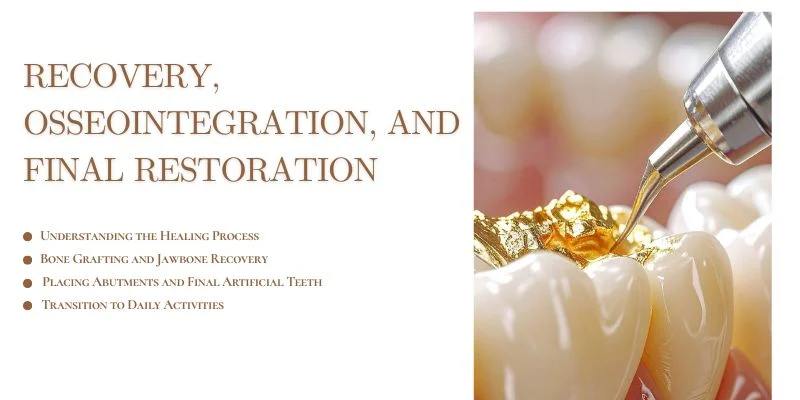
Your full mouth dental implant journey involves several healing stages before you receive your final teeth. The bone must fuse with your implants through osseointegration, and you’ll need time for proper recovery before receiving your permanent prosthetic teeth.
Understanding the Healing Process
Your body needs time to heal after getting dental implants placed in your jawbone. The healing process takes three to nine months depending on how fast your body recovers.
During this time, your jawbone grows around each implant. This creates a strong foundation for your new teeth.
Key healing stages include:
- Initial wound healing (1-2 weeks)
- Soft tissue recovery (2-6 weeks)
- Bone integration (3-9 months)
- Final tissue maturation
You’ll need to follow a soft-food diet during the early weeks. This protects your implants while your gums heal around them.
Your dentist will check your progress at regular appointments. They’ll make sure everything is healing properly before moving to the next step.
Bone Grafting and Jawbone Recovery
Some patients need bone grafting before or during implant placement. This happens when your jawbone isn’t thick enough to support the implants properly.
A bone graft adds extra bone material to strengthen weak areas. The graft material can come from your own body, a donor, or synthetic sources.
Bone grafting recovery involves:
- Additional healing time (3-6 months)
- Temporary swelling and discomfort
- Special care instructions for the graft site
- Follow-up visits to check bone growth
Your jawbone must fully integrate with the graft material first. Only then can osseointegration begin between your bone and implants.
This process takes longer but creates a much stronger foundation. Your implants will be more stable and last longer with proper bone support.
Placing Abutments and Final Artificial Teeth
Once osseointegration is complete, you’re ready for your final teeth. Your dentist will attach small connector pieces called abutments to each implant.
The abutment placement requires a minor procedure. Your dentist makes small openings in your gums to access the implants underneath.
The final restoration process includes:
- Abutment placement surgery (usually 1 hour)
- Healing time for gums (2-4 weeks)
- Taking impressions for your prosthetic teeth
- Creating your custom artificial teeth
- Final fitting and adjustments
Your prosthetic teeth are designed to match your natural smile. They attach securely to the abutments and function like real tooth roots.
This stage typically takes 4-8 weeks from start to finish. You’ll have several appointments to ensure everything fits perfectly.
Transition to Daily Activities
You can gradually return to normal activities as you heal from each stage. Most people return to work within a few days after implant placement.
Avoid heavy lifting and intense exercise for the first week. These activities can increase bleeding and slow your healing process.
Activity timeline:
- Days 1-3: Rest and limited activity
- Week 1: Light work and gentle movement
- Weeks 2-4: Normal daily activities
- Month 2+: All activities including sports
Your diet will slowly expand from liquids to soft foods to regular meals. Follow your dentist’s guidance about when to add harder foods back.
Most patients feel comfortable with their new teeth within 2-3 months. You’ll learn to eat, speak, and smile confidently with your full mouth dental implants.
Long-Term Care and Cost Considerations
Proper oral hygiene helps your implants last decades, while understanding costs and aftercare helps you plan for long-term success. Regular maintenance prevents complications and protects your investment.
Oral Hygiene and Maintenance
Your full mouth dental implants need daily cleaning just like natural teeth. Caring for dental implants follows similar hygiene practices to natural teeth.
Brush your implants twice daily with a soft-bristled toothbrush. Use fluoride toothpaste to clean around the implant crowns and gum line.
An interdental brush works well to clean between implants. These small brushes reach tight spaces that regular toothbrushes miss.
Floss daily around each implant. Water flossers can help remove food particles and bacteria from hard-to-reach areas.
Visit your dentist every six months for professional cleanings. Your dental team will check implant stability and gum health during these visits.
Avoid chewing ice, hard candies, or using your teeth as tools. These habits can damage implant crowns or affect the implant connection to your jawbone.
Common Aftercare Instructions
Follow your surgeon’s specific aftercare instructions to ensure proper healing. Most patients receive detailed guidelines for the first few weeks after surgery.
Take prescribed antibiotics exactly as directed. These medications prevent infection during the healing period.
Avoid smoking and tobacco products completely. Smoking increases implant failure risk and slows healing significantly.
Eat soft foods for the first week after surgery. Gradually return to your normal diet as healing progresses and comfort improves.
Apply ice packs to reduce swelling during the first 48 hours. Use ice for 15 minutes on and 15 minutes off.
Rinse gently with salt water starting 24 hours after surgery. Mix half a teaspoon of salt in warm water for each rinse.
Avoid strenuous exercise for one week. Physical activity can increase bleeding and interfere with proper healing.
Understanding Dental Implant Cost
Individual dental implants cost between $1,600 and $2,200 per tooth, making full mouth procedures a significant investment. Total costs vary based on your specific needs and treatment plan.
Full mouth implant procedures typically range from $20,000 to $50,000 per arch. Factors affecting cost include implant type, crown material, and additional procedures needed.
Your dental insurance may not cover implant procedures. Many plans consider implants cosmetic rather than medically necessary treatments.
Financing options help make treatment affordable. Many dental offices offer payment plans or work with third-party financing companies.
Consider the long-term value when evaluating costs. Dental implants can last a lifetime with proper care, while other options need replacement every 10-15 years.
Thinking about full mouth dental implants in Metairie, LA? Contact us today to learn more about the process and financing options.
Additional costs may include bone grafts, sinus lifts, or temporary teeth during healing. Discuss all potential expenses with your dental team before starting treatment.
Frequently Asked Questions
How much can I expect to pay for a full mouth dental implant procedure?
Full mouth dental implants typically cost between $20,000 to $50,000 per arch. This means replacing all your upper or lower teeth could fall within this range.
The final price depends on several factors. Your bone density, gum health, and need for additional procedures like bone grafts affect costs.
Geographic location plays a big role in pricing. Urban areas often charge more than rural locations for the same treatment.
Are there different types of dental implants, and how do costs vary?
Traditional dental implants require individual posts for each tooth replacement. This method costs more but provides the strongest foundation.
All-on-4 implants use just four posts to support a full arch of teeth. This option typically costs less than individual implants for every tooth.
Snap-in dentures attach to implants placed in your jawbone. They offer a more affordable option than fixed implants while still providing better stability than regular dentures.
Mini implants cost less than standard-sized implants. However, they work best for specific situations and may not suit everyone’s needs.
Can full mouth dental implants be completed in a single day?
Same-day dental implants are possible in some cases. Your dentist can place the implant right away if you have enough bone density and healthy gums.
You might receive temporary teeth on the same day as implant placement. This prevents gaps in your smile while your implants heal.
Most full mouth cases require multiple visits over several months. The healing phase can take three to nine months for your jawbone to fuse with the implants.
Your specific situation determines the timeline. Factors like bone quality, overall health, and number of implants needed affect scheduling.
Does dental insurance typically cover the cost of full mouth dental implants?
Most dental insurance plans provide limited coverage for full mouth implants. Many insurers still consider implants cosmetic rather than necessary treatment.
Some plans may cover a portion of the crown or denture that attaches to implants. They typically won’t pay for the surgical implant placement itself.
Medical insurance might help if you lost teeth due to an accident or disease. Coverage varies widely between different insurance companies and plans.
Many dental offices offer payment plans or financing options. These help make treatment more affordable when insurance doesn’t cover the full cost.