

You want a tooth replacement that feels steady and works like the real thing. Implant materials play a big role in that feeling. They sit in your jaw and take on the same job as a natural tooth root.
Implant materials mimic natural tooth roots by bonding with your jawbone and handling daily biting forces in a stable, natural way. Materials like titanium and zirconia improve bone density and stay strong under pressure. This design helps your implant feel secure when you eat, talk, and smile.
Modern implants also use careful shaping and surface design to support long-term comfort. These details help your jaw accept the implant and keep your bite balanced over time.
Key Takeaways
- Implant materials bond with bone to create a stable tooth base.
- Design and surface features support strength and comfort.
- Custom planning helps implants match your natural bite.
Discover which implant material is best for you with a consultation in Metairie, LA.
How Implant Materials Replicate Natural Tooth Roots
Dental implants rely on shape, surface, and material choices that aim to copy how natural teeth anchor and function. These features help implants support chewing forces, bond with the jawbone, and serve as stable bases for artificial teeth.
Structural Similarities Between Implants and Natural Teeth
A natural tooth root has a tapered shape that spreads pressure into the jawbone. Many dental implants copy this form instead of using a simple straight post. This design helps lower stress on surrounding bone during biting.
Modern implants often use titanium or zirconia because these materials match the strength needed for daily chewing.
Research into custom root-shaped implants, also called root analogue implants, shows how closely shaped designs can better match natural anatomy, as described in three-dimensional custom-root replicate dental implants.
Key shared traits include:
- Tapered root-like shape
- High strength under load
- Stable support for natural-looking tooth replacements
Integration With the Jawbone
Natural teeth stay in place because bone grows tightly around their roots. Dental implants depend on osseointegration, where the jawbone bonds directly to the implant surface. This bond allows the implant to act like a fixed part of your mouth.
Implant surfaces often have microscopic textures that encourage bone cells to attach. Studies on additive manufacturing of root analogue dental implants show that 3D-printed surfaces can perform as well as traditional implants in living bone.
Strong osseointegration helps limit bone loss and supports long-term tooth replacement.
Role of the Artificial Tooth Root
The implant body works as an artificial tooth root. You do not see it, but it carries the load every time you chew or speak. This hidden part keeps the visible crown steady and aligned.
Unlike dentures, implants transfer force directly into the jawbone. This action helps maintain bone volume and facial shape.
What the artificial root does for you:
- Anchors artificial teeth firmly
- Supports normal chewing pressure
- Helps preserve jawbone structure
Sensory Functions and Limitations
Natural teeth connect to nerves that sense pressure and texture. Traditional dental implants lack this direct nerve link, so they cannot fully copy tooth sensation. You may notice less fine feedback when biting.
New research aims to improve this gap. Scientists at Tufts are testing implants designed to interact with surrounding tissues in ways that may restore some feeling.
Even without full sensation, implants still provide stable, reliable function for everyday use.
Talk to an implant specialist in Metairie, LA about titanium vs zirconia options.
Types of Implant Materials and Their Unique Properties
Implant materials copy how natural tooth roots handle pressure, bond with bone, and stay stable over time. Each material brings specific strengths that affect comfort, healing, and long-term use.
Titanium and Titanium Alloys: The Gold Standard
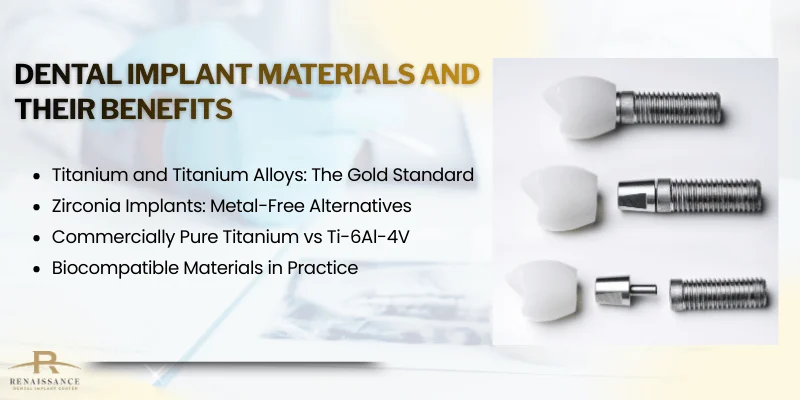
Titanium leads modern implant care because your body accepts it well. Dentists value it for strong bone bonding, called osseointegration. This bond helps the implant act like a real tooth root.
Titanium also resists corrosion from saliva and daily chewing forces. It keeps its shape under pressure, which helps crowns stay stable. These traits explain why titanium dominates dental implant material types.
You benefit from decades of clinical use. Dentists understand how titanium behaves in bone, which lowers risk and improves long-term results.
Zirconia Implants: Metal-Free Alternatives
Zirconia implants offer a ceramic option when you want to avoid metal. Dentists often recommend them if you have metal sensitivities or strong cosmetic concerns.
Zirconia has a white color that blends with natural teeth. This helps prevent dark shading near the gum line. It also resists plaque buildup, which supports gum health.
These benefits make zirconia a strong choice among materials used for dental implants. Still, zirconia lacks the long history of titanium, so dentists choose cases carefully.
Commercially Pure Titanium vs Ti-6Al-4V
Not all titanium implants are the same. Dentists mainly use commercially pure titanium or Ti-6Al-4V, a titanium alloy with aluminum and vanadium.
Commercially pure titanium offers excellent biocompatibility. Your bone bonds to it easily, which supports steady healing. Ti-6Al-4V adds higher strength, useful when bone density is low.
A simple comparison helps:
| Feature | Pure Titanium | Ti-6Al-4V |
| Bone bonding | Very high | High |
| Strength | Moderate | Higher |
| Common use | Standard implants | High-stress areas |
Studies of biomaterials in implant dentistry guide these choices.
Biocompatible Materials in Practice
Biocompatible materials let your body accept implants without harm. Dentists test these biomaterials to avoid toxic reactions and support healthy bone growth.
In practice, surface texture matters as much as the base material. Roughened surfaces help bone cells attach faster. This improves early stability and long-term success.
Common biocompatible implant materials include:
- Titanium and titanium alloys
- Zirconia ceramics
- Advanced ceramic coatings
These options reflect what dentists consider when choosing the best materials for dental implants. Each choice aims to match how natural tooth roots function inside your jaw.
Compare dental implant options with a specialist before choosing treatment.
Advanced Surface Treatments to Enhance Bone Integration
Implant surfaces now copy how natural tooth roots interact with bone. Controlled roughness, chemical treatments, and sprayed coatings help bone cells attach, grow, and stay stable over time.
Importance of Surface Topography
Surface topography plays a direct role in how well your bone bonds to an implant. Bone cells prefer surfaces that feel uneven rather than smooth. These small peaks and valleys give cells places to attach and spread.
Research on dental implant surface modification shows that micro‑ and nano‑scale textures improve early bone contact and long‑term stability, which supports stronger bone integration. You benefit from faster healing because bone grows into these surface features instead of sliding over them.
Key surface features that support bone response include:
- Micro‑roughness that improves grip between bone and implant
- Nano‑scale patterns that support cell growth
- Higher surface energy that helps proteins stick early after placement
These features work together to mimic how real tooth roots anchor in bone.
Sandblasting and Acid Etching
Sandblasting and acid etching remain common because they work and stay predictable. Sandblasting shoots hard particles at the implant to create a rough surface. Acid etching then cleans and sharpens that roughness at a smaller scale.
This combined method helps bone cells attach faster and form a tighter bond. Studies on implant surface modification techniques show that this approach improves early bone contact and reduces the risk of implant movement during healing.
You gain practical benefits from this process:
- Better early stability
- More surface area for bone contact
- Consistent results across implant designs
These treatments also keep costs controlled while delivering reliable bone integration.
Plasma Spraying Innovations
Plasma spraying adds a bioactive layer directly onto the implant surface. The most common coating uses calcium‑based materials that resemble natural bone minerals. This layer encourages bone to grow toward the implant instead of away from it.
Reviews on advanced implant surface coatings report that plasma‑sprayed surfaces improve bone attachment, especially in areas with low bone density. You may see better results in challenging cases where bone support is limited.
Modern plasma spraying focuses on:
- Stronger coating adhesion to avoid flaking
- Controlled thickness for long‑term stability
- Improved surface chemistry that supports bone cell activity
These improvements help implants behave more like natural tooth roots once placed in bone.
Implant System Components: From Root to Crown
Modern dental implants rely on precise parts that work together to replace a missing tooth. Each component supports daily chewing, protects the jawbone, and helps your smile look natural.
Abutment: Connecting Root to Restoration
The abutment sits on top of the implant post and acts as the link between the root and the visible tooth. Your dentist attaches it after the implant bonds with the jawbone through osseointegration.
Abutments come in titanium, zirconia, or other biocompatible materials. These materials resist corrosion and handle bite pressure without irritating gum tissue. The shape also matters. A well-fitted abutment supports healthy gums and prevents food from getting trapped.
You may receive a custom abutment or a prefabricated one. Custom options often improve comfort and alignment, especially for front teeth. Many guides on dental implant parts highlight the abutment as a key factor in long-term stability.
Dental Crown: Achieving a Natural Appearance
The dental crown is the only part you see, so it plays a major role in how your implant looks and feels. Dentists design crowns to match your natural tooth color, shape, and size.
Common crown materials include porcelain, ceramic, and zirconia. These materials reflect light in a way that closely matches enamel. They also provide enough strength for chewing and speaking.
Your crown attaches to the abutment, not directly to the implant post. This setup allows easier repair or replacement if damage occurs.
Implant Design for Functional Restoration
Implant design affects how well your implant works over time. Most modern dental implants use a screw-shaped post that anchors into the jawbone like a natural tooth root.
Design features include thread depth, surface texture, and implant length. These details help distribute bite forces and support strong bone bonding. Roughened titanium surfaces, for example, encourage faster bone attachment.
Dentists choose implant designs based on bone quality, tooth location, and bite pressure.
Personalized Implant Solutions Through Digital Technology
Digital tools now let your dentist plan implants around your exact anatomy. These systems improve fit, guide implant placement, and help crowns blend with nearby teeth. You benefit from fewer adjustments and more predictable results.
Digital Impressions and 3D Imaging
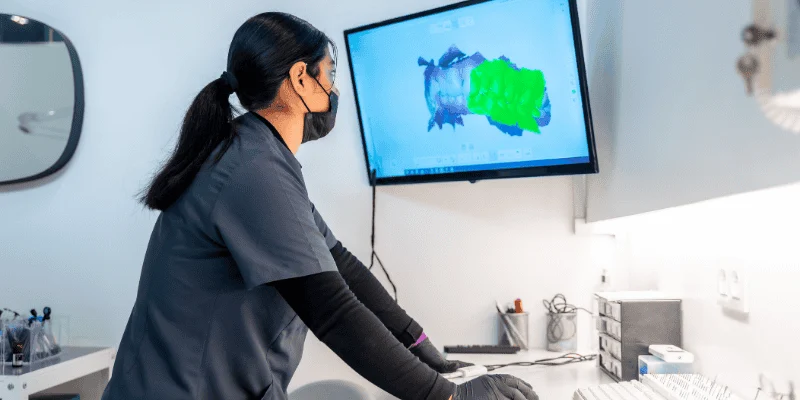
Digital impressions replace messy trays with a small scanning wand. The scanner records your teeth and gums in high detail. This data feeds into 3D imaging software that shows bone height, density, and nerve in one view.
Your dentist uses these images to plan implant placement with accuracy. The plan reduces guesswork and lowers the risk of nerve or sinus issues. Reviews of modern implant workflows highlight how digital planning improves precision and outcomes in daily practice, as described in research on digital technology in implant dentistry.
Key benefits you notice
- Shorter chair time
- Fewer retakes
- Clear previews of your treatment
Custom-Made Crowns for Seamless Fit

A custom-made crown starts with your digital scan, not a standard mold. Software designs the crown to match your bite, tooth shape, and color. Milling machines or 3D printers then create the crown with tight tolerances.
This approach helps the crown sit flush on the implant. It also protects the surrounding gum tissue. Custom shaping matters because uneven pressure can cause soreness or wear.
| Feature | Standard Crown | Custom-Made Crown |
| Fit accuracy | Moderate | High |
| Bite balance | Adjusted later | Planned in advance |
| Appearance | Generic | Matched to your teeth |
Custom designs support implant systems that aim to copy natural root form, including root-analogue implants made with CAD/CAM and 3D printing techniques.
Innovations in Implant Placement
Digital planning also changes how dentists place implants. Guided surgery uses a printed or milled guide that locks onto your teeth or gums. The guide controls angle and depth during drilling.
This method protects nearby bone and soft tissue. It also helps when space is tight or bone volume is limited.
You gain a more controlled procedure with clearer expectations and fewer surprises.
Emerging Technologies and Future Directions
New tools now help implant materials behave more like real tooth roots. These advances focus on sensing force, improving bone bonding, and refining how materials interact with living tissue in modern dental implants.
Smart Implants and Sensory Integration
Smart implants add basic sensing features to traditional designs. These systems track pressure, movement, and early signs of overload. You benefit because dentists can adjust your bite before damage occurs.
Some designs use nano‑engineered surfaces that respond to changes in the mouth. These surfaces support stronger osseointegration, which helps bone attach more evenly along the implant.
Research on the future of dental implant therapy via nanotechnology shows how surface changes can improve stability, especially in patients with weaker bone.
Smart implants do not replace skill or planning. They support better decisions during follow‑up care.
Research Highlights: Tufts University
Researchers at Tufts University study how implant materials interact with bone and nerve tissue. Their work looks at how stiffness, surface texture, and shape affect bone growth around implants.
One focus involves matching the flexibility of implants to natural tooth roots. When materials bend slightly under load, bone stress drops. This behavior mirrors how real teeth absorb chewing forces.
Tufts teams also explore ways to improve communication between bone cells and implant surfaces. These findings help guide safer designs for modern dental implants. While many concepts remain in testing, this research shapes how future implants may better support long‑term oral health.
The Role of Ongoing Material Innovations
Material science continues to refine how implants copy natural roots. Titanium remains common, but surface treatments now do more of the work. Roughened and nano‑patterned surfaces help bone cells attach faster.
Zirconia also gains attention for its tooth‑colored look and tissue response. Reviews on cutting‑edge innovations in dental implantology explain how tapered shapes and advanced coatings spread force like a real root.
You also see progress in digital design. Custom shapes created with CAD tools fit bone more closely. This fit supports stable osseointegration and reduces stress where bone meets the implant.
Frequently Asked Questions
Dental implant materials copy the shape, strength, and behavior of real tooth roots. They rely on safe metals and ceramics, bone bonding, and surface treatments that help your jaw accept the implant.
What characteristics do ideal dental implant materials possess?
Ideal implant materials stay strong under daily biting forces. They also resist corrosion and do not react with your body.
You benefit most from materials that your bone accepts without causing inflammation. Dentists call this property biocompatibility, and it helps implants last longer.
How do dental implants integrate with jawbone tissue?
Your jawbone grows directly against the implant surface after placement. This close contact helps the implant stay stable when you chew and speak.
The process works best when the implant shape and surface match how bone naturally grows.
Can you explain the process of osseointegration in dental implants?
Osseointegration happens when bone cells attach directly to the implant. There is no soft tissue layer between the bone and the implant.
This bond gives implants their strength and stability. It also explains why implants feel firm, similar to natural teeth.
What materials are commonly used to fabricate dental implants?
Most dental implants use titanium or titanium alloys. These metals are strong and bond well with bone.
Some implants use zirconia, a ceramic material. Zirconia offers a tooth-colored option and good biocompatibility.
How do implant surface modifications enhance biocompatibility?
Manufacturers roughen or coat implant surfaces to help bone cells attach faster. These changes increase surface area without changing the implant size.
Surface treatments improve early stability and healing. Dental research shows these features help implants act more like natural roots.
Are there any advancements in dental implant technology that mimic natural teeth?
New implant designs copy the shape and stress patterns of real tooth roots. This helps spread bite forces evenly through your jaw.
Advances also include better crown materials that match natural enamel.