

A low price tag on tooth replacement might look like a smart choice for your wallet today. Cheap tooth replacement options often lead to frequent repairs, additional dental procedures, and surprise medical bills that cost far more than quality treatment over time.
You could end up paying twice or even three times the original amount when infections develop, materials fail, or bone loss requires corrective surgery.
Understanding what drives these hidden long-term expenses helps you make better choices about your oral health and budget. Budget providers may skip important planning steps, use lower-grade materials, or lack the training needed to prevent complications.
These shortcuts create problems that show up months or years later when fixing them becomes more difficult and expensive.
This guide walks you through the real costs you face when choosing bargain tooth replacement. You’ll learn which warning signs to watch for, how poor materials and planning affect your health, and why investing in quality care protects both your smile and your finances for decades.
Key Takeaways
- Cheap tooth replacements often require expensive repairs, replacements, and corrective surgeries that exceed initial savings
- Low-quality materials and poor planning increase your risk of infection, bone loss, and implant failure
- Choosing experienced providers and premium materials reduces lifetime costs and protects your oral health
The True Price of Cheap Tooth Replacement
Budget dental options often advertise attractive prices that seem too good to pass up. The actual cost becomes clear only after you factor in the procedures, materials, and follow-up care that aren’t included in the original quote.
Upfront Savings vs. Hidden Expenses
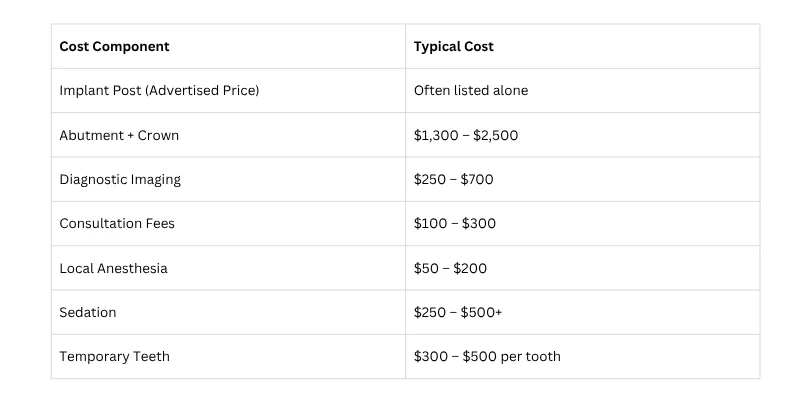
When you see low-cost implant offers, the advertised price usually covers just the implant post itself. You’ll need to pay separately for the abutment and crown, which can add $1,300 to $2,500 to your total bill.
Most budget quotes don’t include diagnostic imaging. You’ll pay $250 to $700 for necessary scans before your procedure even starts. Consultation fees add another $100 to $300.
Anesthesia costs appear as a separate line item in many cases. Local anesthesia runs $50 to $200, while sedation options cost $250 to $500 or more. These comfort measures aren’t optional for most patients.
Temporary teeth during the healing period cost $300 to $500 per tooth. Without these, you’d have visible gaps for three to six months while your implants heal.
Exclusions Common in Low-Cost Offers
Bone grafting rarely appears in advertised prices for cheap dental implants. This procedure costs $600 to $2,600 and becomes necessary when your jawbone lacks sufficient density to support an implant.
Sinus lifts add $440 to $2,600 to your expenses. Upper jaw implants often require this procedure to create adequate space. Budget providers exclude this from their quotes.
Common exclusions include:
- Tooth extractions ($75 to $650 per tooth)
- Follow-up appointments ($75 to $200 per visit)
- Adjustments and refinements
- Corrective procedures if complications arise
Cheap implant materials may fail more often, requiring replacement procedures that aren’t covered in the original price.
Unexpected Out-of-Pocket Costs
Your insurance might not cover budget dental implants the way you expect. Many low-cost providers work outside standard insurance networks, leaving you to pay the full amount upfront.
Maintenance costs add up over time. Specialized cleanings for implants cost $150 to $300 annually. Custom night guards to protect your investment run $300 to $600.
Failed implants need complete replacement. The second attempt often costs as much as the first, doubling your total expense. Poor-quality materials increase the likelihood of this happening.
You might need corrective surgery if cheap implants don’t integrate properly with your bone. This invasive procedure costs thousands of dollars and extends your treatment timeline by months.
Contact our Metairie, Louisiana office today to schedule your comprehensive consultation.
Long-Term Financial Burdens
Cheap tooth replacements often require multiple repairs and replacements over time, turning what seemed like savings into mounting expenses.
The initial low cost rarely accounts for the frequent maintenance, component failures, and repeat procedures that become necessary when inferior materials and techniques are used.
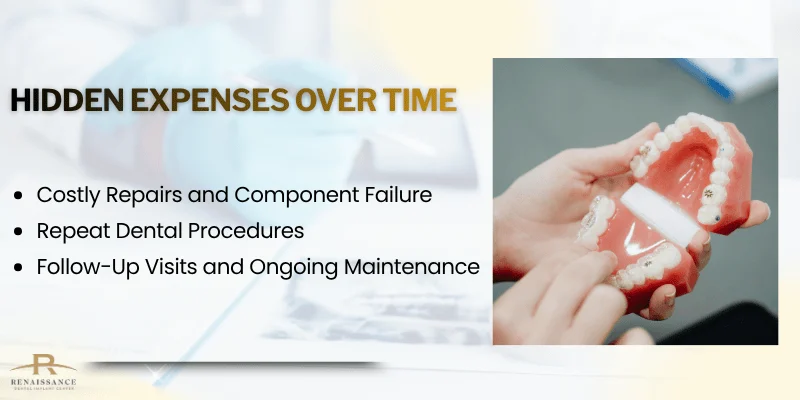
Costly Repairs and Component Failure
When you choose a low-cost implant, the components used are often made from cheaper materials that don’t last as long. Your abutment, which connects the implant to the crown, might loosen or break within a few years instead of lasting decades.
The implant crown itself may chip, crack, or discolor much faster than higher-quality options.
These component failures mean you’ll need implant repairs sooner than expected. A failing abutment requires removal and replacement, which adds both time and money to your dental care costs.
If your final crown needs replacement due to poor materials, you’re essentially paying for the same tooth twice.
The costs add up quickly:
- Abutment replacement: $300-$500
- New implant crown: $1,000-$3,000
- Emergency repair visits: $150-$400 per visit
Repeat Dental Procedures
Budget tooth replacements frequently fail completely, requiring you to start the entire process over. A poorly placed implant might not integrate properly with your jawbone, leading to implant failure within months or a few years.
You’ll then face the expense of removing the failed implant, allowing your bone to heal, and placing a new one.
Some cheap dental work uses outdated techniques that don’t account for proper spacing or bite alignment. This means you might need additional procedures to correct problems that quality work would have avoided from the start.
Each repeat procedure comes with its own costs for anesthesia, imaging, and dental appointments.
Follow-Up Visits and Ongoing Maintenance
Low-quality tooth replacements demand more frequent dental appointments and follow-up care than properly done work. You’ll need more checkups to monitor loose components, adjust ill-fitting crowns, and address recurring issues.
Each visit means taking time off work, paying for appointments, and dealing with ongoing discomfort.
Your final crown may need adjustments every few months instead of staying stable for years. The abutment might require tightening or realignment multiple times. These seemingly small maintenance costs create a significant financial burden over time, often exceeding what you would have paid for quality dental work initially.
Schedule your exam now to discuss a treatment plan built for lasting results.
Undervalued Steps That Raise Future Costs
Many advertised prices skip essential procedures that protect your implant investment. Cutting bone preparation, sedation options, or quality lab work creates problems that cost more to fix later.
Bone Grafting and Site Preparation
Your jawbone needs enough height, width, and density to hold an implant securely. When providers skip bone grafting or try to place implants in inadequate bone, you face higher failure rates within the first few years.
A proper evaluation uses 3D imaging to measure your bone volume. If the scan shows deficiency, grafting adds bone material to create a stable foundation. Skipping this step saves money initially but often leads to implant loosening, infection, or complete loss.
Site preparation also includes ridge preservation after tooth extraction. This procedure maintains bone shape and volume during healing. Without it, your bone can shrink by 40 to 60 percent in the first year, making implant placement harder and more expensive later.
When bone loss occurs, you’ll need more complex grafting procedures like sinus lifts or block grafts. These corrective treatments take months to heal and cost significantly more than addressing bone needs upfront.
Sedation and Comfort Measures
Oral sedation and other comfort options add to your bill, but they improve surgical precision and your ability to tolerate longer procedures. When you’re anxious or moving during placement, your dentist may compromise on ideal implant positioning.
Poor placement angles or depths create mechanical stress on the implant and surrounding bone. That increases wear on components and raises your chance of needing adjustments or replacements.
Sedation helps your provider work carefully without rushing through critical steps.
Some discount clinics offer only local anesthesia to keep prices low. If you require multiple implants or extensive grafting, inadequate pain control can force your dentist to work faster or split treatment into more appointments, adding time and cost.
Lab Work and Temporary Solutions
Quality abutments and crowns require precise impressions, digital scans, and skilled technicians. Cheap providers often use lower-grade labs or prefabricated components that don’t fit your bite or gum contours accurately.
Poor-fitting abutments create gaps where bacteria collect, increasing infection risk. Mismatched crowns put uneven pressure on the implant, which can loosen screws or fracture components. Each repair means new lab fees and additional appointments.
Temporary crowns protect your implant during healing and maintain gum shape. Skipping temporaries or using low-quality versions can cause gum recession or allow adjacent teeth to shift.
Correcting these issues later requires new impressions, remade crowns, and sometimes orthodontic work to reposition shifted teeth.
Oral Health Risks Associated With Cheap Replacements
Low-cost tooth replacements often compromise your oral health through mechanical failures, bacterial infections, and progressive deterioration of jaw structure. These problems typically require additional surgeries and corrective treatments that exceed the initial savings.

Implant Failure and Removal Complications
When cheap implants don’t bond properly with your jawbone, they can loosen or shift within months of placement. This happens when providers skip necessary diagnostic imaging or use substandard surgical techniques.
Poor quality materials increase the risk of mechanical breakdown.
Failed implants must be surgically removed, which causes additional bone loss beyond what you already experienced. The removal process creates trauma to surrounding tissue and leaves you with less bone volume for a replacement attempt.
You’ll need bone grafting to rebuild the site before another implant can be placed.
Implant repairs or replacements cost significantly more than choosing quality components initially. Each surgical intervention extends your recovery time and exposes you to new risks of infection or nerve damage.
Infection and Gum Issues
Budget tooth replacements often create gaps where bacteria accumulate and cause inflammation. Poor fit between components allows food particles and plaque to collect in areas you can’t clean effectively.
This leads to peri-implantitis, an infection that destroys the tissue supporting your implant.
Symptoms include swelling, bleeding gums, persistent bad breath, and visible pus around the implant site. Risks include poor fit and gum irritation that can progress to serious infection if left untreated.
Treatment requires antibiotics, deep cleaning procedures, and sometimes surgical debridement to remove infected tissue. Severe cases need implant removal to prevent the infection from spreading to adjacent teeth or entering your bloodstream.
Progressive Bone Loss
Your jawbone needs regular stimulation from tooth roots or implant fixtures to maintain its density and volume. Poorly designed replacements fail to provide adequate mechanical load, causing the bone beneath them to gradually dissolve.
Bone loss and gum recession often occur together when cheap implants don’t integrate correctly.
This bone loss accelerates if infection develops or if the implant moves under chewing pressure. You may notice your gums receding and metal parts of the implant becoming visible. The bone loss affects neighboring teeth as well, potentially putting them at risk.
Reversing significant bone loss requires grafting procedures that take months to heal. Advanced cases may leave you without enough bone structure to support any implant, forcing you to consider less stable alternatives like dentures.
Weighing Quality Over Short-Term Savings
Choosing quality dental work means investing in skilled professionals, better materials, and careful planning that protects your health for years to come. These factors work together to prevent costly repairs and replacements down the road.
Benefits of Skilled Dental Professionals
Your dentist’s experience directly affects how well your tooth replacement performs over time. An experienced professional knows how to place dental implants correctly, ensuring they integrate properly with your jawbone.
They can spot potential problems early and adjust your treatment plan before complications arise.
When you work with a skilled dentist, you get accurate assessments of your bone density and gum health. This matters because improper placement can lead to implant failure within the first few years.
You might pay less upfront with an inexperienced provider, but businesses that invest in quality relationships often generate higher long-term returns despite higher short-term costs.
Qualified dental professionals use advanced imaging technology to plan your procedure. They take time to explain your options and customize treatments to your specific needs.
This attention to detail reduces your risk of infections, nerve damage, and other serious complications that require expensive corrective procedures.
Value of Premium Materials and Planning
The materials used in your tooth replacement determine how long it lasts and how natural it looks. High-quality dental implants use medical-grade titanium that your body accepts easily. Your final crown should be made from durable porcelain or zirconia that resists staining and wear.
Premium materials offer these advantages:
- Stronger resistance to daily chewing forces
- Better color matching with your natural teeth
- Lower risk of allergic reactions or rejection
- Reduced need for future adjustments
Cheap materials might save you money today, but poor quality remains long after low prices are forgotten. Your dentist should spend time planning the exact size, shape, and angle of your implant.
This planning phase prevents issues with bite alignment and ensures your replacement tooth functions like a natural one.
Long-Term Stability and Patient Health
Quality tooth replacements protect your overall health by maintaining proper jaw structure. When you choose a well-made dental implant, it stimulates your jawbone just like a natural tooth root. This prevents bone loss that makes your face look sunken and ages your appearance.
Your investment in quality materials and skilled placement means fewer dental visits for repairs. Properly installed implants have success rates above 95% over ten years. They don’t require special cleaning routines beyond normal brushing and flossing.
Poor-quality replacements can create gaps where bacteria collect, leading to gum disease and infections. These problems spread to surrounding teeth and require additional treatments.
Careful selection focused on long-term quality rather than short-term savings has shown significant cost reductions while improving product longevity by 35%.
Your health benefits extend beyond your mouth. Stable tooth replacements let you eat nutritious foods without pain or difficulty. You avoid the digestive problems that come from not chewing food properly.
Frequently Asked Questions
Budget tooth replacements often require more frequent repairs, raise infection risks, and can damage surrounding teeth and bone. Understanding these patterns helps you plan for the true cost of care.
Are there any ongoing maintenance costs associated with low-cost dental implants?
Yes, low-cost implants typically need more maintenance than quality options. You might face repairs for loose components, fractured crowns, or implant body failures within just a few years.
Each repair means paying for professional time, lab fees, and replacement parts. Frequent repairs and replacements add up quickly because you’ll need multiple visits for adjustments and temporary crowns.
Cheaper materials also wear faster and may require earlier replacement than premium options. That means paying again for procedures you thought were one-time expenses.
How might cheap tooth replacements impact my oral health in the long term?
Cheap replacements can lead to bone loss around the implant site because poor-quality materials don’t stimulate your jawbone properly. This bone loss weakens your jaw structure and can affect nearby teeth.
Gum recession often follows bone loss. Exposed implant parts trap plaque and irritate your gums, which raises your risk of infection.
Infections around implants require antibiotics, deep cleaning, and sometimes surgical treatment. If left untreated, these infections can become chronic and lead to permanent implant loss.
Can inexpensive dental solutions cause issues with my existing teeth over time?
Yes, poorly planned tooth replacements can create bite problems that put extra stress on your natural teeth. Uneven biting forces can cause pain, chipped teeth, or accelerated wear.
A replacement that doesn’t fit correctly may also damage adjacent teeth over time. The constant pressure and movement can loosen neighboring teeth or cause them to shift.
You might need additional dental work to fix these problems. That includes crown repairs, bite adjustments, or even treatment for damaged natural teeth that were healthy before.
What is the expected lifespan of affordable dental bridges, and how does it compare to pricier options?
Affordable bridges typically last 5 to 7 years before needing replacement or major repairs. Higher-quality bridges can last 10 to 15 years or longer with proper care.
The difference comes down to materials and craftsmanship. Cheaper bridges use lower-grade materials that wear, stain, or break more easily than premium alternatives.
Dental implants represent the most durable long-term solution, often lasting 20 years or even a lifetime with proper care. While they cost more initially, they usually need fewer replacements than bridges.
Does choosing a budget-friendly tooth replacement mean I will have more dental visits in the future?
You’ll likely need more appointments for repairs, adjustments, and monitoring of complications. Budget options have higher failure rates, which means more emergency visits when problems develop.
You may also need visits to treat infections, gum recession, or bone loss that results from lower-quality work. Each complication requires its own treatment plan and multiple appointments.
Travel for bargain clinics adds another layer of difficulty. If complications arise after you return home, local dentists may charge premium rates to fix work they didn’t perform originally.
How can choosing less expensive tooth replacement options now affect my overall dental expenses?
Cheap replacements can actually cost more over time because of repairs, replacements, and corrective procedures. The money you save upfront often gets spent on fixing problems later.
If an implant fails, you’ll pay for removal, bone grafting, and a new implant. These corrective procedures are usually more expensive and complex than the original placement.
Low advertised prices often exclude important costs like CT scans, surgical guides, and temporary teeth. You end up paying separately for items that quality providers include in their treatment plans.