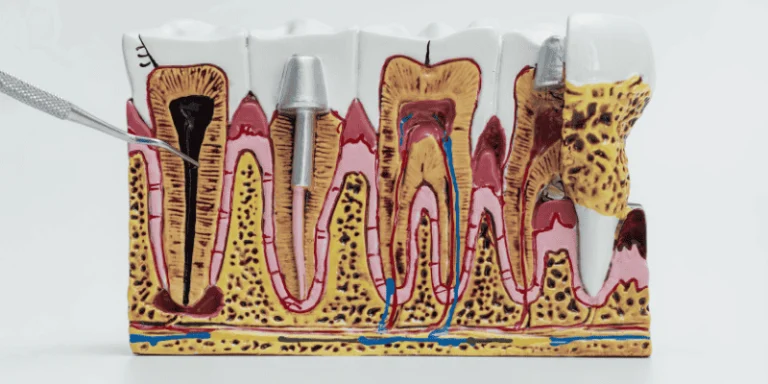


If you’re planning to get dental implants, you might hear about the need for a bone graft.
A bone graft is often necessary to restore lost bone in your jaw so the dental implant has a strong, stable foundation. Without enough bone, the implant may not hold well or last long.
Bone grafting uses materials that help your body grow new bone in the areas where it’s missing.
This can happen because of tooth loss, injury, or gum disease.
The process supports your jaw’s shape and keeps your mouth healthy, making sure your implant will fit and work properly.
Knowing what to expect from the procedure, how healing works, and the types of materials used can help you feel more confident about the treatment.
Taking good care during recovery improves your chance for a successful implant that lasts for many years.
Key Takeaways
- You may need bone grafting to build enough jawbone for dental implants.
- Different materials and methods help your bone heal and grow.
- Proper care and planning improve the success of your implant.
Take the first step toward a stronger, brighter smile: book now!
Why Bone Graft Is Needed for Dental Implants
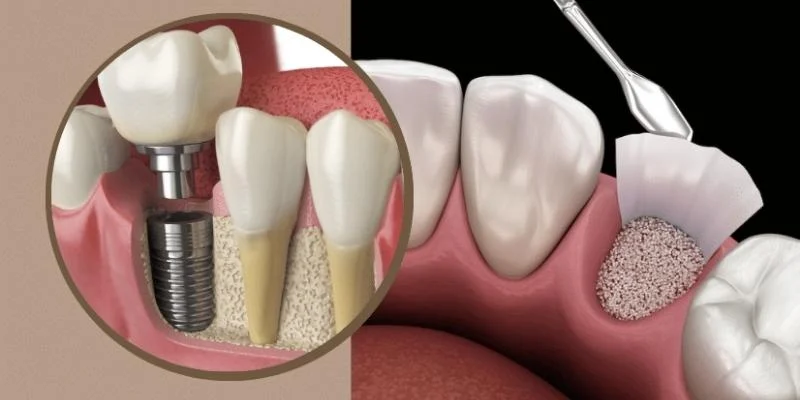
Getting a dental implant means your jawbone must be strong enough to hold the implant securely.
Sometimes, natural bone loss or damage can leave your jaw too weak or thin.
Restoring this bone with a bone graft helps create a solid base for implants, making sure they stay stable and work well.
Understanding Bone Loss and Jawbone Health
Your jawbone supports your teeth and helps keep your face shape.
When teeth are lost, the jawbone no longer receives the pressure it needs.
This leads to bone resorption, which means the bone starts to shrink and weaken.
Bone loss can happen slowly, so you might not notice it at first.
Over time, lost bone volume and density can affect your ability to get implants. In fact, research shows up to 50% of alveolar bone volume can be lost within six months of tooth loss.
If the jawbone is too thin or weak, the implant won’t be stable and may fail.
A bone graft helps rebuild this lost bone, making your jaw healthier and stronger.
Impact of Tooth Loss and Gum Disease
When you lose a tooth, the bone where the tooth used to be no longer gets stimulated.
This causes the bone to shrink in that area.
Additionally, gum disease, especially periodontal disease, causes inflammation that destroys both the gums and the underlying bone.
If the bone around your teeth is damaged by gum disease, it can become too thin for an implant.
Long-term tooth loss also adds to this problem because the bone keeps shrinking without support.
A bone graft replaces the lost bone caused by these issues, giving your implant the foundation it needs.
Role of Bone Volume and Density in Implant Placement
For an implant to be strong and last a long time, the jawbone must have enough volume (thickness) and density (strength).
If your bone is too low in volume or weak, the implant can move or fail.
Dentists use special scans to measure bone volume and density before placing implants.
If the bone doesn’t meet the needed levels, a bone graft adds material in the right spots to build up both volume and density.
This makes sure the implant fits tightly and stays secure during daily activities like chewing.
Reach out to Renaissance Dental Implant Centre in Metairie, LA for expert care.
Types of Bone Grafts and Materials Used
Bone graft materials vary depending on your needs and the condition of your jawbone.
Each type has unique qualities that affect how well it works to rebuild bone and support dental implants.
Understanding these options can help you make a better choice with your dentist.
Autograft and Donor Bone Options
Autografts use bone taken from your own body, such as from your hip or jaw.
This type of graft is considered the best at forming new bone because it contains living cells that help grow bone directly.
Since it’s your own bone, there is no risk of rejection.
However, it does require a second surgical site, which might increase healing time and discomfort.
Donor bone, or allograft, comes from a human donor but is processed to be safe and sterile.
Allografts don’t cause immune reactions and are easier to get without another surgery.
They provide a good scaffold for new bone to grow but don’t have living cells like autografts.
This makes them a popular and convenient choice.
Allograft, Xenograft, and Synthetic Materials
Allografts come from human donors.
Xenografts come from animals, usually cows.
These materials act as a framework that your own bone can grow into over time.
Xenografts are treated to remove proteins that could cause immune responses, making them safe to use.
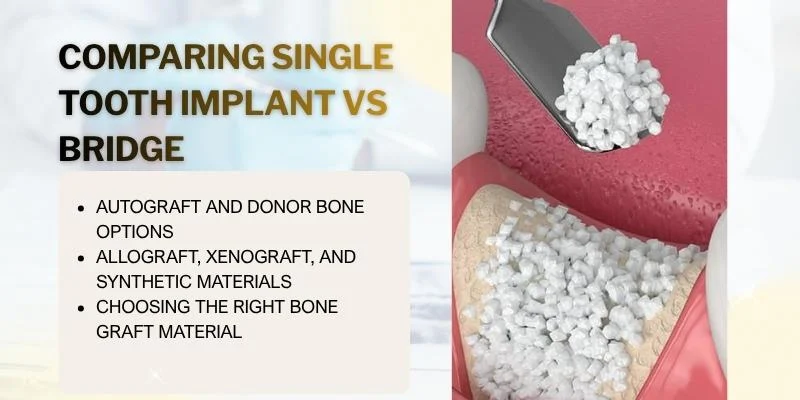
Synthetic materials, like bioactive glass, hydroxyapatite, and bioactive ceramics, are man-made substitutes.
These alloplasts are designed to support bone growth by mimicking natural bone’s structure.
They don’t contain living cells but are very useful in cases where you want to avoid donor tissues or additional surgery.
Synthetic bone substitutes also help maintain the shape of your jaw while bone heals.
Choosing the Right Bone Graft Material
The best bone graft material for you depends on your health, bone loss severity, and comfort with surgery.
Autografts offer the strongest bone growth but need extra surgery.
Allografts reduce surgery but may take longer to fully integrate with your bone.
Xenografts and synthetic options give you alternatives without extra surgery and support bone growth well but lack living cells.
Your dentist will consider factors like how much bone you need, any health risks, and your personal preferences.
Discussing these details helps find the right balance between effectiveness, healing time, and cost.
Bone Grafting Procedures and Techniques
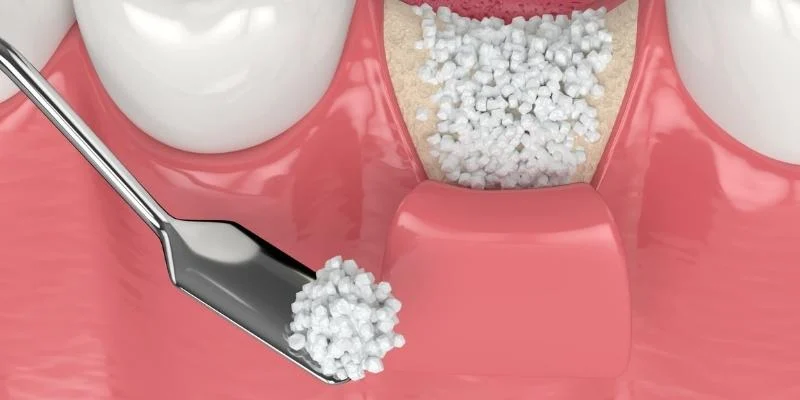
Bone grafting helps prepare your jaw for dental implants by adding missing bone in specific areas.
The process varies depending on where the bone is needed and how much is lost.
You will learn about common methods like preserving the socket after extraction, lifting the sinus floor, growing bone around the ridge, and how imaging guides your surgery.
Socket Preservation After Tooth Extraction
When you lose a tooth, the bone around it can shrink quickly.
Socket preservation is a procedure done right after tooth removal.
Your dentist places bone graft material into the empty tooth socket.
This helps keep the alveolar ridge intact and ready for future implant placement.
The graft material can be natural bone or a synthetic substitute.
It stabilizes the area and limits bone loss during healing.
Socket preservation lowers the risk that you’ll need a larger graft later.
It is an important step if you know you want an implant but aren’t ready for it yet.
Healing time varies but is usually a few months before the area is strong enough for your implant.
Sinus Lift and Ridge Augmentation
Some parts of the upper jaw have thin bone near the sinus cavities.
If there isn’t enough bone height, an implant can fail.
A sinus lift is an oral surgery where the sinus membrane is gently lifted upward.
Bone graft material is placed below the membrane, increasing vertical bone height.
This gives your implant a better base.
Ridge augmentation works on the sides of the jaw, helping to widen or build up the bone ridge if it has shrunk.
It uses grafts made of particles or blocks to restore the shape and size of the jaw.
Both are common techniques to ensure your dental implant stays secure and lasts a long time.
Guided Bone Regeneration and Barrier Membranes
Guided bone regeneration (GBR) involves using a barrier membrane to protect the graft site.
This membrane keeps faster-growing soft tissue cells away from the area where you want new bone to grow.
The barrier allows bone cells to regenerate and fill in defects around your implant site.
Membranes can be made from collagen or synthetic materials and sometimes dissolve on their own after healing.
GBR is often done alongside ridge augmentation or socket preservation.
It improves the chance that your new bone will develop fully, giving your implant a strong and healthy foundation.
Surgical Steps and 3D Imaging
Before bone graft surgery, your dentist or surgeon uses 3D imaging like CBCT scans to get a clear view of your jaw and bone loss areas.
This detailed imaging helps plan the best grafting technique and implant placement.
The surgery usually starts with cleaning and preparing the site.
Then the graft material is placed where bone is missing.
If needed, the graft is covered with a barrier membrane.
After surgery, you will have follow-up visits to monitor healing and ensure the graft integrates well.
Using 3D imaging improves accuracy and outcomes for both grafting and dental implant surgery.
Healing and Recovery After Bone Graft
The healing process after a dental bone graft happens step-by-step as your body rebuilds new bone and prepares for an implant.
You’ll need to care for your mouth carefully and watch for discomfort or complications.
Bone Graft Healing Stages
Healing starts with a blood clot forming around the graft to protect the area.
This initial phase lasts about 1-2 weeks and may include swelling and mild pain.
From 2 to 6 weeks, your body grows new bone cells and blood vessels.
This early bone formation is important to stabilize the graft material.
Between 2 and 6 months, the grafted bone begins to fuse with your natural bone, a process called osseointegration.
This strengthens the jaw and helps prepare for the implant.
Full bone maturity happens between 6 and 12 months.
At this stage, the grafted bone is solid and able to support dental implants well into the future.
Post-Operative Care and Oral Hygiene
Proper care after surgery is key to healing.
You should avoid brushing the graft area directly for the first few days and rinse gently with salt water or as your dentist advises.
Avoid touching or putting pressure on the graft site with your tongue or fingers.
Eating soft foods like yogurt, soup, and mashed potatoes helps protect the healing site.
Keeping your mouth clean lowers the risk of infection.
Brush teeth carefully and avoid smoking or alcohol since these can slow bone growth and delay recovery.
Regular follow-up visits let your dentist check on your healing progress and make sure the graft is integrating well.
Expected Discomfort and Complications
It’s normal to feel soreness and notice swelling or bruising in the first week after your bone graft.
Pain can usually be managed with over-the-counter or prescribed medications.
Bleeding is common right after surgery but should reduce quickly.
If you have prolonged or heavy bleeding, contact your dentist.
Infection is a possible complication and might show as increased pain, swelling, or discharge.
Reporting these signs early helps your dentist treat them fast.
Rarely, the bone graft might fail to integrate, especially if healing is interrupted by smoking or poor oral care.
Following instructions reduces this risk.
Long-Term Outcomes and Implant Stability
Once your bone graft fully heals, it provides a strong base for dental implants.
This improved bone density supports the implant, helping it last over time.
Good oral hygiene and regular dental visits help keep your new bone healthy and stable.
Avoiding habits like smoking further protects the graft and implant.
Factors Affecting Implant Success
Your dental implant’s success depends on several key elements.
These include the quality of your bone, how well the graft integrates, and managing any health risks or complications that may arise during healing.
Predicting and Managing Implant Success Rates
The success of your dental implant often starts with the bone graft.
Using autografts or allografts usually leads to higher success rates, close to 100%.
Xenografts can work but may have slightly lower success and more chance of bone loss around the implant.
Factors that improve success include good bone density and location.
For example, implants in the back of the lower jaw are more likely to survive if your bone structure is strong.
You should also consider your health conditions.
Older age, diabetes, and hypertension can increase the risk of implant problems.
Healing time is important too.
Loading the implant too early or not using a protective membrane can cause failures.
Risks, Failures, and Alternatives
Some risks you should watch for are infection, graft rejection, bleeding, and nerve damage. These complications can affect healing and may lead to implant failure if not managed quickly.
If your jawbone has severe damage or bone defects, traditional implants might be difficult. In those cases, zygomatic implants can be an option.
These implants anchor into the cheekbone and bypass the need for extensive bone grafting. If you experience a failed dental bone graft, your dentist might recommend additional treatments or different implant methods to support your implant better.
Always follow post-surgery care instructions closely to reduce risks and promote healing.
Cost and Innovations in Bone Grafting for Dental Implants
When planning for a dental bone graft, costs and new technology will affect your treatment. Understanding expenses and modern methods can help you make better choices for a good outcome.
Many factors come into play, such as materials and surgical techniques.
Dental Bone Graft Cost Overview
The cost of a dental bone graft varies widely. On average, you might pay between $600 and $3,000 depending on your situation and whether you have insurance.
More complex cases, like grafting at multiple sites or using expensive materials, often cost more.
Here’s a quick look at typical cost ranges:
- Simple bone graft: $500 – $1,500
- Extensive grafting with membranes: $1,500 – $3,000
- Bone graft combined with implant surgery: $8,000 – $16,000 (for two implants with grafts)
Some insurance plans may cover part of the cost. Timely grafting also saves money by reducing the chance of bone loss and complications later.
You can learn more about detailed pricing at a dental implant cost guide.
Latest Techniques and Materials
Modern bone grafting uses better materials and techniques to help your bone heal faster. One important innovation is the use of platelet-rich plasma (PRP).
PRP is made from your own blood and speeds up healing by delivering growth factors to the area. Many surgeons also use resorbable membranes, which protect the graft but don’t require removal later.
This makes recovery easier.
Different types of bone grafts include:
- Autografts: Bone taken from your own body
- Allografts: Donor bone from another person
- Xenografts: Bone from animals
- Synthetic grafts: Man-made materials
Choosing the right type depends on your bone needs and health.
Frequently Asked Questions
Healing from a dental bone graft happens in stages, starting with initial recovery and ending when your bone is ready for an implant. Costs can vary depending on the type and size of the graft.
There are signs to watch for if your graft is not healing properly. Bone grafts use materials like your own bone, donor bone, or synthetic options.
Recovery times depend on how much grafting you need. There are some risks to consider before the procedure.
What are the typical healing stages of a dental bone graft?
First, the area will have swelling and mild pain for a few days. The graft then starts to integrate with your existing bone over several weeks.
Full healing usually takes between three and six months. During this time, you should avoid putting pressure on the area to allow your bone to grow well.
How much does it usually cost to have a bone graft for a dental implant?
Bone grafts generally cost between $800 and $2,500. The price depends on the procedure’s complexity and the materials used.
Your location and the oral surgeon’s fees can also affect the total cost you pay.
What could indicate that a dental bone graft has not been successful?
Signs of failure can include persistent pain, swelling that does not go down, or signs of infection. If the graft does not heal properly, the bone may not support the implant.
Your dentist will check the graft during follow-up visits to make sure it is integrating well.
What materials are commonly used in dental bone grafts?
Your own bone may be used, often taken from another spot in your mouth or body. Donor bone from a human or animal source is also common.
Synthetic materials like hydroxyapatite can be used too. The choice depends on your needs and your surgeon’s recommendation.
What is the average recovery time after a bone graft procedure for a dental implant?
Healing usually takes three to six months. Smaller grafts might heal closer to three months, while larger or more complex grafts take longer.
During recovery, follow all care instructions to avoid complications and help the bone heal well.
Are there any downsides or risks associated with having a bone graft for a dental implant?
Risks include infection, nerve injury, or the graft not healing properly.
Some discomfort and swelling are normal but should improve over time.