


When you hear that dental implants are “permanent,” you might think they’ll last forever without any care or attention.
In dentistry, “permanent” means dental implants are designed to be a long-term solution that can last several decades with proper care, but they are not necessarily permanent in the sense of lasting forever.
The word describes how implants stay in your mouth all the time, unlike dentures you can remove.
Understanding what dentists mean by permanent helps you set realistic expectations for your dental implant journey.
The implant post that goes into your jawbone can last for many years, while the crown on top may need replacement every 15 to 20 years due to normal wear. With good oral hygiene and regular dental visits, studies show that 90-95% of dental implants last over 10 years.
Your implant’s lifespan depends on many factors you can control. Things like brushing twice daily, not smoking, and seeing your dentist regularly make a big difference in how long your implants will serve you well.
Key Takeaways
- Dental implants are a long-term tooth replacement that can last decades but require ongoing care and maintenance
- The implant post can last much longer than the crown, which typically needs replacement every 15 to 20 years
- Your daily habits like oral hygiene, avoiding tobacco, and regular dental checkups directly impact how long your implants will last
Defining “Permanent” in Implant Dentistry
When dentists describe dental implants as permanent, they mean the titanium post fuses with your jawbone and stays in place for life. The crown attached to the implant may need replacement over time due to normal wear.
Key Features of Permanence
Permanent dental implants are surgically placed into your jawbone where they act like natural tooth roots. Unlike removable dentures or bridges, you cannot take them out at night or for cleaning. The implant becomes a fixed part of your mouth structure.
The titanium post itself is designed to last your entire lifetime without needing replacement. However, the crown that sits on top typically lasts between 10 to 30 years before showing signs of wear.
Some crowns may last 10 to 15 years depending on factors like your diet and oral hygiene habits.
Key permanent features include:
- Fixed in place and cannot be removed without professional help
- Surgically anchored into the jawbone
- Designed to function like natural teeth
- Require a dentist to remove or adjust
The Role of Osseointegration
Osseointegration is the process where your jawbone grows around and fuses with the titanium implant post. This biological bonding creates a stable foundation that makes dental implants a permanent tooth replacement option.
The fusion process typically takes three to six months to complete. During this healing period, bone cells attach directly to the titanium surface. This creates a bond that is often stronger than natural tooth roots.
Your bone density and overall health affect how well osseointegration occurs. Conditions like diabetes or gum disease can slow down the process. Smoking also interferes with proper bone integration and can lead to implant failure.
Comparing Implants to Other Tooth Replacement Options
Traditional dentures rest on your gums and can slip or move when you eat or speak. Dental bridges rely on grinding down healthy adjacent teeth for support. Both options need replacement every 5 to 10 years on average.
Permanent vs. removable dental implants differ in how they attach and function. Permanent implants are fixed in place by your dentist, while removable options can snap on and off their connectors. This makes permanent implants more stable for daily activities.
Implants preserve your jawbone by providing stimulation similar to natural teeth. Dentures and bridges do not prevent bone loss in your jaw. This bone preservation helps maintain your facial structure over time.
Schedule your exam now to discuss your long-term tooth replacement options.
Components of a Permanent Dental Implant
A permanent dental implant has three distinct parts that work together to replace your missing tooth. Each component plays a specific role in creating a stable and long-lasting restoration that looks and functions like your natural teeth.
Titanium Implant Post and Its Durability
The titanium implant post serves as an artificial tooth root that anchors directly into your jawbone. This small screw-shaped post is made from medical-grade titanium because this material fuses naturally with bone tissue.
Your jawbone grows around the implant post through a process called osseointegration. This biological bonding creates a foundation that’s actually stronger than natural tooth roots. The fusion typically takes between three to six months to complete.
Titanium is incredibly resistant to corrosion and wear. It won’t rust or break down in your mouth over time. Studies show that titanium implants can last 20 years or longer with proper care, making them one of the most durable options in dentistry.
Abutment Functions and Stability
The abutment is a small connector piece that attaches to the top of your implant post and holds the artificial tooth in place. Your dentist screws or cements this component onto the implant after your bone has healed.
This middle piece transfers chewing forces from your replacement tooth down to the implant post and bone. The abutment can be made from titanium, zirconia, or gold depending on your specific needs.
Titanium abutments offer maximum strength while zirconia provides better aesthetics for front teeth.
Your dentist shapes the abutment to match your gum line and support the final restoration. A well-fitted abutment prevents gaps where bacteria could collect and helps your artificial tooth sit at the correct angle.
Artificial Tooth and Longevity
The visible part of your implant is a custom-made crown that matches your surrounding teeth in color, shape, and size. Most crowns are made from porcelain or ceramic materials that resist staining and look natural.
Your artificial tooth attaches to the abutment and handles the daily demands of biting and chewing. Modern dental ceramics are extremely durable and can withstand normal eating forces for 10 to 15 years or more.
While the crown may eventually need replacement due to normal wear, your implant post and abutment typically remain in place.
You care for your artificial tooth just like natural teeth through daily brushing and flossing. Regular dental checkups help ensure your crown stays in good condition and your implant remains healthy.
Contact our Metairie, Louisiana office today to schedule your implant consultation.
Lifespan and Longevity of Dental Implants
Dental implants can last anywhere from 10 to 25 years or more, depending on which part you’re talking about and how well you care for them. The titanium post itself often lasts longer than the crown attached to it, and both typically outlast traditional tooth replacement options.
How Long Do Dental Implants Last?
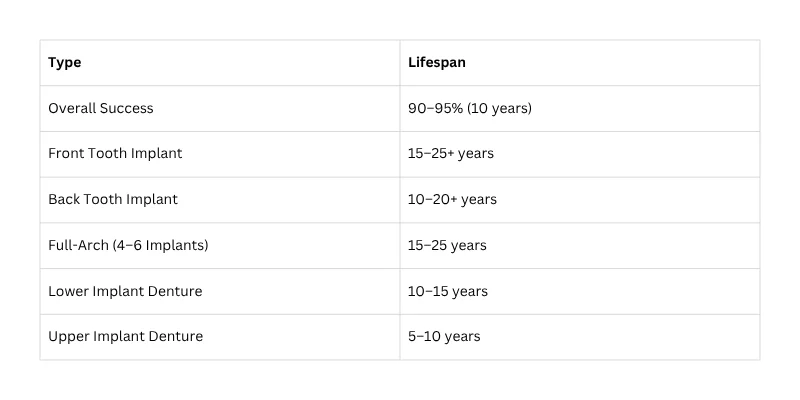
Studies show that dental implants have a 90 to 95 percent success rate over 10 years. With proper care and good bone quality, your implant can last 15 to 25 years or even longer.
Single tooth implants in your front teeth tend to last longer than those in your back molars. This happens because back teeth handle more chewing force.
If you need a full arch of teeth replaced, bridges supported by 4 to 6 implants typically last 15 to 25 years on average. Using more implants instead of the minimum number helps them last longer. The implants spread out over a wider area also tend to be more stable.
For removable dentures that snap onto implants, lower dentures with 2 to 4 implants usually last 10 to 15 years. Upper dentures supported by implants have shorter lifespans of 5 to 10 years because bone in your upper jaw is softer.
Longevity of the Implant vs. Crown
The titanium implant post that sits in your jawbone is designed to be permanent. The implant itself can potentially last a lifetime, while the crown, bridge, or denture attached to it will need replacement.
Your porcelain crown typically needs replacing every 10 to 15 years due to normal wear. The crown can chip, stain, or lose its appearance over time from daily use.
When your crown wears out, your dentist simply removes it from the abutment and attaches a new one. The implant post stays in place if it remains healthy and stable. This is much easier than replacing the entire implant.
Abutments may also need repair or replacement, but less often than crowns. Replacing these worn parts keeps your implant working properly without removing the post from your jaw.
Implant Longevity Compared to Other Options
Dental implants offer superior strength and longevity compared to bridges and dentures. Traditional bridges typically last 5 to 15 years before needing replacement.
Removable dentures need replacement every 5 to 8 years as your jaw changes shape. They also slip around in your mouth and make eating difficult.
Implants help preserve your jawbone because they stimulate it like natural tooth roots. Bridges and dentures don’t provide this benefit, so your bone continues to shrink over time.
This bone loss makes future tooth replacement harder and can change your face shape.
The initial cost of implants is higher, but their longer lifespan often makes them more affordable over your lifetime. You’ll need fewer replacements and dental visits compared to other options.
Factors Affecting Dental Implant Permanence
Several key factors determine whether your dental implants will last for decades or face complications. Your bone quality, daily habits, overall health, and commitment to professional care all play critical roles in implant success.
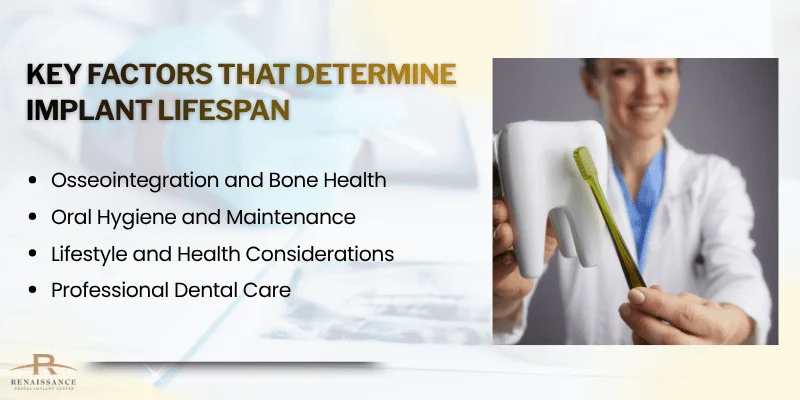
Osseointegration and Bone Health
Osseointegration is the process where your jawbone fuses with the titanium implant post. This fusion creates the foundation for your new tooth.
Dense, healthy bone provides the best environment for long-lasting dental implants. If your bone is porous or you don’t have enough bone volume, the implant may not integrate properly.
Your dentist might recommend bone grafting before placing implants if your jawbone has deteriorated from tooth loss or gum disease.
Factors that affect bone quality include:
- Previous periodontal disease
- Time since tooth loss
- Natural aging processes
- Certain medical conditions
Early implant failure usually happens within the first few months if osseointegration doesn’t occur correctly. Late implant failure can happen years later if bone loss develops around a previously stable implant.
Oral Hygiene and Maintenance
Your daily cleaning habits directly impact how long your implants last. Bacterial buildup around implants causes peri-implantitis, which destroys the bone supporting your implant.
You need to brush twice daily with a soft brush and floss at least once per day. The spaces between implants are often wider than natural teeth, so interdental picks work better than regular floss. Pay special attention to cleaning where the implant crown meets your gum line.
Poor hygiene is the biggest cause of implant failure after successful integration. Even if your implant doesn’t fail completely, inadequate cleaning can shorten its lifespan and require earlier replacement of components.
Lifestyle and Health Considerations
Smoking significantly increases your risk of implant failure. It reduces blood flow to your gums and impairs healing, leading to 4-6 times higher early failure rates.
Uncontrolled diabetes also compromises healing and bone integration. If you have diabetes, work with your doctor to manage blood sugar levels before and after implant surgery.
Grinding or clenching your teeth puts excessive force on implants and can damage both the implant and surrounding bone. Your dentist can provide a nightguard to protect your implants while you sleep.
Avoiding very hard or sticky foods also helps prevent mechanical damage to your implant crowns.
Professional Dental Care
Regular dental visits catch problems before they become serious. You should see your dentist at least once a year for comprehensive exams of your implants.
Professional cleanings every six months remove tartar and bacteria from hard-to-reach areas around your implants. Your hygienist uses special tools that won’t scratch the implant surface.
These appointments also include X-rays to monitor bone levels and check for any signs of bone loss.
Your dentist will replace worn crowns or abutments as needed. The implant post itself is designed to last permanently, but the visible components on top may need replacement after 10-15 years of normal wear.
Risks and Complications Impacting Permanence
While dental implants have high success rates, certain complications can threaten their permanence. Peri-implantitis affects the tissues around your implant and is the most serious threat to long-term success.
Peri-implantitis and Peri-implant Mucositis
Peri-implant mucositis is inflammation of the soft tissue around your implant. It’s similar to gingivitis and causes redness and bleeding when you brush or floss.
If left untreated, it can progress to peri-implantitis. This more serious condition affects both the soft tissue and the bone supporting your implant. You’ll experience bone loss that weakens the implant’s foundation.
Warning signs include:
- Bleeding when brushing around the implant
- Swollen or tender gums
- Pus discharge
- Implant feeling loose
- Bone loss visible on x-rays
Poor oral hygiene is the main cause of both conditions. Bacteria build up around your implant just like they do around natural teeth. Smoking, diabetes, and a history of gum disease increase your risk.
Your dentist can treat peri-implant mucositis with professional cleaning and improved home care. Peri-implantitis requires more aggressive treatment like deep cleaning, antibiotics, or surgery to remove infected tissue and repair bone damage.
Recognizing and Managing Implant Failure
Early implant failure happens within the first few months after surgery. Your implant doesn’t properly fuse to your jawbone during this critical healing period. Infection, poor bone quality, smoking, or incorrect placement can cause this problem.
Late implant failure occurs after your implant has successfully integrated. The risk of serious, permanent complications is low but bone loss from peri-implantitis is the most common cause.
Excessive force from teeth grinding or a poor bite can also damage a previously stable implant.
Signs of failure include pain, mobility, swelling, or difficulty chewing. If you notice these symptoms, contact your dentist immediately. Early intervention can sometimes save a failing implant through cleaning, antibiotics, or bite adjustment.
If your implant fails completely, it needs removal. After healing, your dentist can usually place a new implant at the same site with good success rates.
Maximizing the Long-Term Success of Dental Implants
Proper daily care and attention to warning signs are the two main factors that determine whether your permanent dental implants will last for decades.
Regular maintenance keeps the surrounding bone and gums healthy while early detection of problems prevents minor issues from becoming serious.
Daily Care Recommendations
Dental implants require consistent care just like your natural teeth to maintain dental implant permanence. You need to brush twice daily and floss around your implants every day to remove food particles and bacteria.
A water flosser works well for cleaning around the implant site because it can reach areas regular floss might miss. Use it daily to flush out debris that collects near the gum line.
Your dentist may recommend an antimicrobial mouth rinse to reduce bacteria that could cause inflammation. Schedule professional cleanings and checkups every six months so your dentist can monitor the health of your implants and catch small problems early.
Key daily habits include:
- Brushing with a soft-bristled toothbrush twice daily
- Flossing or using interdental brushes around each implant
- Using a water flosser to clean hard-to-reach areas
- Rinsing with antimicrobial mouthwash if recommended
- Avoiding smoking, which damages bone and gum tissue
Signs Maintenance or Replacement May Be Needed
Contact your dentist right away if you notice swelling, bleeding, or pain around your implant. These symptoms could indicate an infection or other problem that needs treatment.
Loose implants or crowns require immediate attention because they signal that the bond between the implant and bone may be weakening. You might also notice changes in how your bite feels or difficulty chewing.
Persistent bad breath or a bad taste in your mouth near the implant site can mean bacteria are building up. Red or puffy gums around the implant are warning signs of inflammation that could spread to the bone if left untreated.
Warning signs to watch for:
- Pain or tenderness around the implant
- Bleeding gums when brushing or flossing
- Swelling or redness near the implant site
- Movement or looseness of the implant or crown
- Difficulty chewing or changes in your bite
Frequently Asked Questions
Dental implants last differently depending on which part you’re talking about, and costs vary based on how many teeth you need replaced and what materials are used. Understanding these details helps you make informed choices about your tooth replacement options.
How long do dental implants typically last?
The titanium implant post that goes into your jawbone can last 25 years or longer. Many people keep their implant posts for life once they successfully fuse with the bone.
The crown that sits on top of the implant typically lasts 10 to 15 years before needing replacement. This doesn’t mean your implant failed. The crown just experiences normal wear from chewing and may get stained or chipped over time.
Studies show success rates of 90 to 95 percent over 10 years. Your implant’s lifespan depends on how well you care for it and your overall health habits.
What are the differences between permanent dentures and temporary dentures in terms of materials?
Permanent dentures attached to implants use stronger, more durable materials than temporary ones. The teeth are usually made from high-quality porcelain or zirconia that resists staining and wear better.
Temporary dentures often use acrylic materials that are lighter and easier to adjust. These materials work well for short-term use but aren’t built to last decades like permanent options.
The framework that connects permanent dentures to implants is typically made from titanium or other strong metals. This gives you a stable base that won’t shift or move when you eat.
What are the cost factors to consider when getting full mouth teeth implants?
The number of implants you need affects your total cost. A full mouth restoration might use four to six implants per arch rather than replacing each tooth individually.
Your jawbone condition plays a big role in pricing. If you need bone grafting to build up weak areas before implant placement, this adds to your investment.
The type of restoration you choose matters too. All-on-4 implants that support a full arch of teeth cost differently than individual implants with separate crowns.
Your dentist’s experience and location influence pricing. Areas with higher living costs typically charge more for dental procedures.
Can you describe the various types of permanent dentures available?
All-on-4 dentures use four implants to support a full arch of replacement teeth. This option works well if you’re missing all your teeth in one or both jaws.
Implant-supported bridges replace several teeth in a row using two or more implants as anchors. These don’t rely on your natural teeth for support like traditional bridges do.
Individual implant crowns replace single missing teeth. Each implant gets its own custom crown that looks and functions like a natural tooth.
Overdentures snap onto implants but can be removed for cleaning. These give you more stability than regular dentures while still allowing easy maintenance.
How does the cost of permanent dentures compare to traditional dentures?
Permanent dentures cost more upfront than traditional removable dentures. You’re paying for surgical placement, implants, and custom restorations all at once.
Traditional dentures need replacement every 5 to 8 years as your jawbone changes shape. Over your lifetime, you’ll likely need several sets of dentures.
Permanent dentures attached to implants rarely need full replacement. You might need to replace the visible teeth after 10 to 15 years, but the implants themselves stay in place.
When you add up the cost of multiple denture replacements over decades, permanent options often become more economical. You also avoid the ongoing costs of denture adhesives and adjustments.
Are dental implants considered a removable option, or are they fixed in place?
Dental implants are permanently fixed in your jawbone. You can’t take them out like traditional dentures.
The implant post stays in place once it fuses with your bone through osseointegration. This process creates a stable foundation that acts like a natural tooth root.
You care for implants just like your natural teeth. You brush and floss them without removing anything from your mouth.
Some implant-supported overdentures can snap on and off for cleaning. But the implants themselves remain permanently attached to your jaw even when you remove the denture portion.