
Losing a tooth affects more than just your smile. It changes how you eat, speak, and feel about yourself every day. When you’re faced with missing teeth, you need to decide between options that work for now and those built to last.
Permanent tooth replacement options like dental implants and bridges are designed to last many years and function like natural teeth, while temporary solutions such as flippers and temporary dentures provide short-term fixes during healing or as affordable placeholder options.
Each choice comes with different costs, timelines, and benefits that fit different situations.
Understanding what makes these options different helps you pick the right path for your needs. Your budget, how quickly you need results, and your long-term goals all play a role in this important decision.
Key Takeaways
- Permanent solutions like implants offer long-lasting stability and function like natural teeth
- Temporary options provide quick, affordable fixes but need replacement over time
- Your choice depends on your budget, timeline, and whether you need a short-term or lifelong solution
Compare permanent vs temporary tooth replacement options with a specialist in Metairie, LA.
Understanding Tooth Loss and Replacement Needs
Missing teeth affect how you eat, speak, and feel about yourself each day. The causes range from decay to injury, and choosing the right replacement depends on understanding what you’ve lost and what you hope to gain back.
Impacts of Missing Teeth
When you lose a tooth, the effects go beyond the gap in your smile. Your jawbone starts to shrink where the tooth root used to be. This happens because the bone needs pressure from chewing to stay healthy and strong.
Your other teeth begin to shift into the empty space. This movement can mess up your bite and make chewing harder. You might notice changes in how you speak, especially if you’re missing front teeth.
Missing teeth can affect your oral health in ways you don’t see right away. Food gets stuck in gaps more easily, raising your risk of gum disease. Your face shape can even change over time as bone loss continues.
Many people feel less confident when they’re missing visible teeth. You might avoid smiling in photos or feel uncomfortable eating in public.
Common Causes for Tooth Replacement
Tooth decay is the top reason people lose teeth. When cavities go untreated for too long, the damage becomes too severe to save the tooth.
Gum disease destroys the bone and tissue that hold your teeth in place. Advanced gum disease accounts for many cases of tooth loss in adults. Injuries from sports, accidents, or falls can knock out healthy teeth without warning.
Some people are born with missing teeth or lose them due to genetic conditions. Age-related wear and certain medications can also weaken teeth over time. Failed root canals or cracked teeth sometimes lead to extraction when they can’t be repaired.
Goals of Tooth Replacement
The main goal of tooth replacement is to restore function so you can eat and speak normally again. You need teeth that can handle the pressure of chewing without pain or problems.
Preventing bone loss is critical for your long-term oral health. Replacement options that include roots or implants help keep your jawbone strong and healthy.
You want your smile to look natural and feel comfortable. Good replacements match your other teeth in color, shape, and size so nobody notices the difference.
Protecting your remaining teeth matters too. The right replacement stops neighboring teeth from shifting and keeps your bite aligned properly. This helps you avoid more dental problems down the road.
Find out which long-term tooth solution fits your needs in Metairie, LA.
Permanent Tooth Replacement Solutions
Permanent options use durable materials and secure attachment methods to restore your missing teeth for years or even decades. These solutions include individual implants with their supporting components, fixed bridges that span gaps, and full-arch systems that replace entire rows of teeth.
Dental Implants and Their Components
Dental implants work as artificial tooth roots that support your replacement teeth. The implant post, usually made from titanium, gets surgically placed into your jawbone during implant placement. Over several months, the titanium implants fuse with your bone through a process called osseointegration.
This fusion creates a stable foundation for your new tooth. Once healing completes, your dentist attaches an abutment to the implant post. The abutment connects the implant to your visible tooth replacement.
Finally, a permanent restoration gets secured to the abutment. This could be a crown for a single tooth or serve as an anchor for larger restorations. The complete system mimics your natural tooth structure from root to crown.
Permanent Dental Bridges
A permanent dental bridge fills the gap left by one or more missing teeth. The bridge consists of permanent crowns on either side that attach to your natural teeth or implant posts, with a pontic (artificial tooth) filling the space between them.
Types of permanent bridges include:
- Traditional bridges supported by natural teeth
- Implant-supported bridges anchored to implant posts
- Cantilever bridges attached on only one side
Unlike removable options, permanent dental bridges stay fixed in your mouth. You care for them just like natural teeth through regular brushing and flossing. Implant-supported bridges offer better stability than those relying on natural teeth because they don’t stress adjacent teeth.
Permanent Dentures and All-on-4 Implants
All-on-4 dental implants replace an entire arch of teeth using just four strategically placed implant posts. This system provides a permanent and stable solution that doesn’t require removal for cleaning like traditional dentures.
The permanent all-on-4 system uses permanent restorations made from strong materials like zirconia. These materials resist wear, fractures, and discoloration better than temporary acrylic versions. Your permanent restoration attaches securely to the four implants, creating a full set of fixed teeth.
The implants integrate with your jawbone, preventing bone loss that typically occurs with missing teeth. You can eat, speak, and smile confidently because the teeth stay firmly in place.
Discover whether permanent or temporary tooth replacement is right for you.
Temporary Tooth Replacement Options
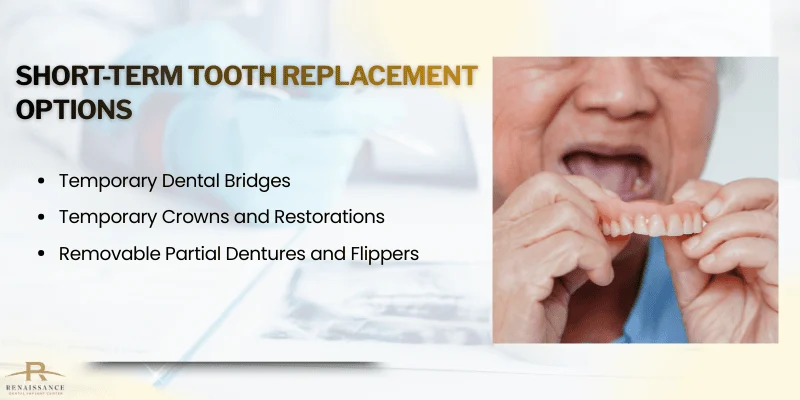
When you lose a tooth, temporary solutions can restore your smile and function while you wait for a permanent fix. These options include bridges that fill gaps for a short time, crowns that protect teeth during healing, and removable dentures that you can take out as needed.
Temporary Dental Bridges
A temporary dental bridge fills the space left by a missing tooth while you wait for your permanent restoration. Your dentist creates this bridge from acrylic or composite materials that match your natural teeth.
These bridges protect your exposed gums and keep neighboring teeth from shifting into the gap. They restore your ability to chew and speak normally during the waiting period. Temporary bridges typically last a few weeks to several months.
Your dentist bonds the temporary bridge using special cement that holds it in place but allows for easy removal later. You’ll need to avoid sticky or hard foods that could dislodge it. The bridge also maintains the proper spacing for your permanent restoration.
Temporary Crowns and Restorations
Temporary crowns cover damaged teeth or dental implants while your permanent crown is being made. These restorations protect your tooth structure and keep your bite aligned.
Cemented temporary crowns work well for dental implants because they give your bone time to heal around the implant post. The temporary restoration prevents other teeth from moving and maintains your appearance. Most temporary crowns stay in place for two to three weeks.
You should brush gently around temporary restorations and avoid chewing on that side of your mouth when possible. The materials used are not as strong as permanent crowns, so extra care prevents damage or loosening.
Removable Partial Dentures and Flippers
Removable partial dentures replace one or more missing teeth and attach to your natural teeth with metal clasps. You can take them out for cleaning and sleeping. These dentures work well when you’re missing several teeth in different areas of your mouth.
Flipper teeth are lightweight temporary partial dentures made from acrylic. They snap into place and restore your appearance quickly and affordably. Flippers are easy to remove and clean, making them a popular short-term solution.
Both options let you eat and speak more comfortably than having gaps in your smile. However, they may feel bulky at first and require an adjustment period. You’ll need to remove and clean them daily to prevent bacteria buildup.
Comparing Permanent and Temporary Solutions
Permanent and temporary tooth replacements differ in their construction, longevity, and purpose in your treatment plan. The materials used, how long they last, and their upfront costs vary significantly between these options.
Differences in Materials and Durability
Temporary restorations use softer materials like acrylic or composite that work well for short-term use. These materials protect your tooth while you wait for your final restoration but aren’t designed to last long.
Permanent restorations use stronger materials like porcelain, metal, or zirconia. Permanent crowns and bridges can withstand the daily pressure of chewing and biting for many years. A permanent dental bridge typically lasts 10 to 15 years with proper care, while temporary crowns may only hold up for a few weeks to a few months.
The durability difference matters for your daily life. You need to be more careful with temporary restorations, avoiding sticky or hard foods that could dislodge them. Permanent options restore full chewing power once they’re in place.
Functionality and Appearance
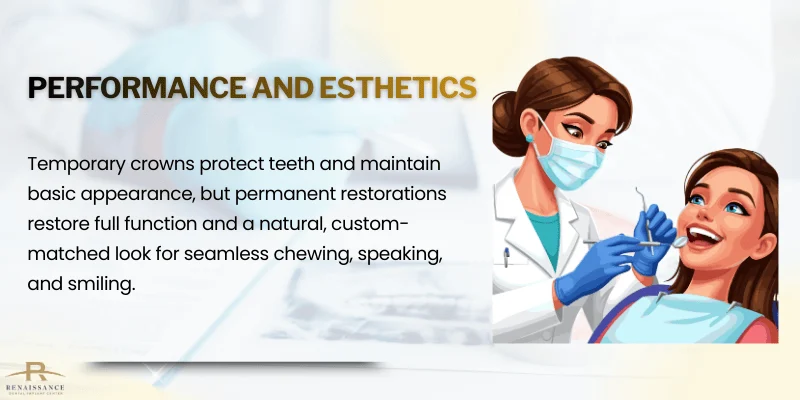
Temporary crowns provide basic protection and help you maintain a normal appearance during treatment. They allow you to eat and speak without major issues, though you’ll need to take extra care.
Your permanent restoration offers complete functionality that matches your natural teeth. You can bite, chew, and speak normally without worrying about shifting or damage. The strength and stability of permanent options mean you won’t need to modify your diet or daily habits.
Appearance-wise, temporary solutions may not blend perfectly with your surrounding teeth. Permanent restorations are custom-crafted to match your natural tooth color, shape, and size. This customization gives you a seamless smile that looks completely natural.
Healing Period and Treatment Timeline
The healing period affects which type of restoration you receive and when. After procedures like root canals or tooth extractions, your mouth needs time to heal before receiving a permanent restoration.
Temporary restorations protect your prepared tooth during this healing period. They keep the space ready for your final restoration and prevent sensitivity or further damage. Most temporary solutions stay in place for two to six weeks while your permanent restoration is being created or your tooth heals.
Your oral hygiene routine remains important with both types. You’ll need to brush and floss carefully around temporary restorations to keep them clean without dislodging them. Once your permanent restoration is placed, you can return to your normal cleaning routine.
Cost Considerations
Temporary restorations cost less upfront because they use simpler materials and require less customization. You’ll pay for them as part of your overall treatment plan, not as a standalone solution.
Permanent options involve higher initial costs due to their quality materials, custom design, and placement procedures. A permanent dental bridge or crown represents a bigger investment, but this one-time expense provides years of reliable function.
When you consider how long permanent restorations last compared to temporary fixes, they often prove more cost-effective over time.
Your dental insurance may cover different portions of temporary versus permanent restorations. Check with your provider to understand your specific coverage for each type of treatment.
Choosing the Right Tooth Replacement Option
Your choice depends on your specific needs, budget, and long-term dental goals. Understanding what factors matter most and working closely with your dentist will help you make the best decision for your smile.
Factors to Consider When Deciding
Your oral health plays a major role in determining which option works best for you. If you have strong jawbone density and healthy gums, you might be a good candidate for dental implants. If bone loss has occurred after tooth extraction, you may need additional procedures first or consider alternatives like bridges or dentures.
Budget matters too. Permanent solutions like implants cost more upfront but can last decades with proper care. Temporary options cost less initially but may need replacement every few years.
Think about your lifestyle and daily needs. Do you want something you never have to remove? Implants stay in place permanently. Prefer something you can take out for cleaning? Dentures might suit you better.
The number of missing teeth affects your choice as well. Single tooth gaps often work well with implants or bridges. Multiple missing teeth might benefit from dental implants or dentures depending on your situation.
Consulting Your Dental Professional

Schedule a thorough evaluation with your dentist before making any decisions. They will examine your jawbone, gums, and overall dental health to determine which tooth replacement options are realistic for you.
Your dentist can explain the treatment timeline for each option. Some procedures take months to complete, while others provide faster results. They’ll also discuss what happens during recovery and how to manage any discomfort.
Ask about the long-term maintenance requirements. Different solutions need different levels of care and regular dental check-ups. Your dentist can provide personalized advice based on your health history and daily habits.
Don’t hesitate to ask questions about costs, insurance coverage, and payment plans. Understanding the financial commitment helps you plan accordingly. Consulting with dental professionals gives you the information you need to feel confident in your choice.
Maintaining Oral Health After Replacement
Strong oral hygiene habits keep your replacement teeth functioning properly for years. Brush twice daily and floss around your new teeth just like you would with natural ones. This prevents gum disease and protects any remaining natural teeth.
Schedule regular dental check-ups every six months. Your dentist will monitor your replacement teeth, check for any problems, and perform professional cleanings. Early detection of issues saves you time and money down the road.
If you have implants, pay special attention to the gum tissue around them. Use a soft-bristled toothbrush and avoid aggressive scrubbing that could damage the area. For dentures, remove them nightly and clean them thoroughly with appropriate products.
Watch what you eat, especially in the first few months. Avoid extremely hard or sticky foods that could damage your new teeth. As you adjust, you’ll learn what foods work best for your specific tooth replacement option.
Frequently Asked Questions
Cost differences between options can range from hundreds to thousands of dollars, while material choices and treatment timelines affect both comfort and durability.
How do the costs of temporary tooth replacement options compare to those of permanent solutions?
Temporary tooth replacement options typically cost much less upfront than permanent solutions. Dental flippers and temporary dentures usually range from a few hundred to around a thousand dollars.
Permanent solutions like dental implants cost significantly more, often ranging from several thousand dollars per tooth to over $20,000 for full-arch replacements. However, permanent options can last 10 to 15 years or longer with proper care, making them more cost-effective over time.
You should consider both the initial investment and long-term value when choosing between temporary and permanent options. Temporary solutions may need frequent replacements, which adds up over the years.
What are the main differences between immediate and permanent dentures?
Immediate dentures are placed right after your teeth are removed, so you don’t have to go without teeth during healing. They act as a temporary solution while your gums and bone reshape after tooth extraction.
Permanent dentures are custom-made after your mouth has fully healed, which usually takes several months. They fit more precisely because they’re created based on the final shape of your gums.
Permanent dentures are generally thinner than temporary ones and offer better comfort and a more natural appearance. Immediate dentures often require adjustments or relining as your gums heal and change shape.
What material are permanent dentures typically made from?
Permanent dentures are usually made from strong, durable materials like zirconia or high-quality acrylic. Zirconia is a ceramic material that’s extremely strong and looks very similar to natural teeth.
These materials are designed to withstand daily chewing and last for many years. They resist staining better than temporary materials and maintain their appearance longer.
Temporary dentures are often made from acrylic, which works well for short-term use but isn’t as durable. The material choice affects both the strength and the natural look of your replacement teeth.
Can you explain the all-on-4 dental implant process and how temporary versions differ from permanent ones?
All-on-4 dental implants involve placing four implants in your jaw to support a full arch of replacement teeth. These implants act as anchors for your new teeth and eliminate the need to replace each tooth individually.
After your implant surgery, your dentist may place temporary restorations while your mouth heals. These temporary teeth let you eat, speak, and smile during the healing period, which typically lasts three to six months.
Temporary restorations are not as strong as permanent ones and are made from lighter materials. Permanent restorations are custom-made from stronger materials and are designed to function like natural teeth for years.
In some cases, your dentist can fit permanent restorations on the same day as your surgery. This eliminates the need for temporary teeth altogether.
Is it possible to receive dental implants within a 24-hour period?
Yes, you can receive dental implants within 24 hours with same-day implant procedures. Some dental practices offer immediate loading, where temporary or permanent teeth are attached to implants on the same day as surgery.
This approach works best when you have adequate bone density and good overall health. Your dentist will evaluate your specific situation to determine if you’re a good candidate for same-day implants.
Same-day procedures typically involve placing the implant posts in the morning and attaching temporary teeth later that day. You leave the office with functional replacement teeth instead of waiting months for healing.
What are the advantages of choosing permanent dentures over temporary ones?
Permanent dentures offer superior durability and can last 10 to 15 years or longer with proper care. They’re made from stronger materials that better withstand daily use and maintain their appearance over time.
You’ll experience better comfort with permanent dentures because they’re custom-fitted to your mouth after complete healing. They fit more precisely, reducing irritation and improving your ability to eat and speak naturally.
Permanent dentures look more natural than temporary options. They’re customized to match the color and shape of natural teeth, giving you a more confident smile.
Dental implants have a 96.4% success rate even after ten years, making them a reliable long-term solution. Unlike temporary options that may slip or require frequent adjustments, permanent solutions stay securely in place.