

Same-day dental implants have become a popular option for people who want to replace missing teeth quickly. You might wonder if getting an implant and tooth replacement in one visit is actually safe for your mouth and overall health.
Same-day dental implants are generally safe when performed by qualified dentists on carefully selected patients who meet specific health and bone quality requirements.
The procedure combines implant placement with immediate tooth attachment, but success depends on having enough healthy bone and following proper healing guidelines.
Research shows that immediate implant placement can achieve high survival rates when done correctly. However, not everyone qualifies for same-day treatment, and your dentist will need to evaluate your specific situation to determine if you’re a good candidate.
Key Takeaways
- Same-day dental implants are safe for qualified patients when performed by experienced dentists
- Success depends on having adequate bone density and meeting specific health requirements
- The procedure carries similar risks to traditional implants but requires careful patient selection
Evaluating the Safety of Same-Day Dental Implants

Same-day dental implants show promising success rates with proper patient selection, though they require careful evaluation compared to traditional methods. The safety depends largely on bone quality, healing capacity, and long-term stability factors.
Success Rates and Patient Outcomes
Same-day dental implants achieve success rates between 90-95% when you meet the right criteria. Your bone density and overall health play crucial roles in these outcomes.
Studies show that dental implant procedures are generally safe when recommended by qualified professionals. However, immediate loading places additional stress on the implant during early healing.
Considering same-day implants in Metairie, LA? Book an appointment today to find out if you’re a good candidate.
Key success factors include:
- Adequate bone volume and density
- Good oral hygiene habits
- No active gum disease
- Non-smoking status
Your risk of implant failure increases if you smoke, with failure rates reaching 11% compared to 5% for non-smokers. Smoking interferes with osseointegration, the process where your bone fuses with the implant surface.
Complications can include infection, nerve damage, or implant loosening. Most issues occur within the first few months after placement.
Comparing Safety to Traditional Implants
Traditional dental implant procedures involve a healing period of 3-6 months between implant placement and crown attachment. This allows complete osseointegration before loading forces are applied.
Same-day implants skip this waiting period. You receive your replacement tooth immediately, but this creates additional challenges for proper healing.
Safety comparison:
| Factor | Traditional Implants | Same-Day Implants |
| Healing time | 3-6 months | Immediate loading |
| Success rate | 95-98% | 90-95% |
| Bone integration | Complete before loading | Occurs under load |
| Patient selection | Less restrictive | More restrictive |
Your bone quality must be excellent for same-day success. Dense, healthy bone provides immediate stability that softer bone cannot offer.
The FDA approves both approaches when proper materials and techniques are used. Mini dental implants can also receive replacement teeth the same day as the procedure.
Long-Term Durability and Stability
Long-term stability of same-day dental implants depends heavily on successful osseointegration during the first few months. Your bone must grow around and integrate with the implant while you use it for chewing.
Research shows that properly selected same-day implants can last decades with appropriate care. However, you face higher risks of marginal bone loss if complications develop early.
Critical factors for durability:
- Initial implant stability at placement
- Proper bite adjustment to avoid excessive forces
- Regular professional maintenance
- Excellent home care routine
Your jawbone continues remodeling around the implant for up to one year. During this time, avoiding hard foods and following post-operative instructions becomes essential.
Marginal bone loss around implants typically measures less than 1.5mm in the first year for successful cases. Excessive bone loss indicates potential problems with osseointegration or bacterial infection.
You should expect regular follow-up appointments to monitor healing and stability. Early detection of issues allows for intervention before complete implant failure occurs.
Risks and Potential Complications
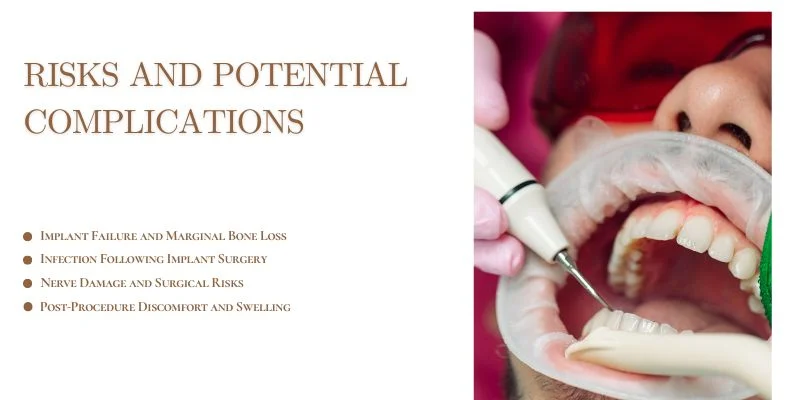
Same day dental implants carry similar risks to traditional implant procedures, though the accelerated timeline may affect healing. The main concerns include implant failure, infection, nerve damage, and temporary discomfort after surgery.
Implant Failure and Marginal Bone Loss
Implant failure rates are higher for smokers compared to non-smokers. Your bone needs time to grow around the implant post to create a strong bond.
Same day implants may have slightly higher failure rates because your bone doesn’t get the usual healing time before the crown is placed. This puts more stress on the implant right away.
Common signs of implant failure include:
- Loose or wobbly implant
- Pain when chewing
- Gum swelling around the implant
- Implant becoming visible through the gums
Marginal bone loss happens when bone tissue around your implant starts to shrink. This can cause your implant to become loose over time.
People with gum disease face higher risks of implant problems. Your dentist will check your bone density before surgery to make sure you’re a good candidate.
Infection Following Implant Surgery
Infections can develop during or after your implant surgery. Risk factors for infection include having an autoimmune disease, smoking, and poor oral hygiene.
Your mouth contains many bacteria that can enter the surgical site. Same day procedures may slightly increase infection risk because you get the crown immediately.
Signs of infection include:
- Fever
- Severe pain that gets worse
- Pus around the implant site
- Bad taste in your mouth
- Swollen lymph nodes
You’ll receive antibiotics before and after surgery to prevent infection. Following your dentist’s care instructions greatly reduces this risk.
Good oral hygiene becomes even more important after getting implants. Brush gently around the surgical site and use any prescribed mouth rinses.
Nerve Damage and Surgical Risks
Nerve damage is a rare but serious complication that can happen during implant surgery. Your dentist will take X-rays beforehand to map out nerve locations and avoid them.
The main nerve at risk is in your lower jaw. Damage to this nerve can cause numbness in your lip, chin, or tongue.
Other surgical risks include:
- Damage to nearby teeth
- Sinus problems (for upper jaw implants)
- Excessive bleeding
- Allergic reactions to anesthesia
Most nerve damage is temporary and heals within a few months. Permanent nerve damage happens in less than 2% of cases.
Your surgeon’s experience matters a lot for avoiding these complications. Ask about their training and how many implant procedures they’ve done.
Post-Procedure Discomfort and Swelling
You should expect temporary pain after getting dental implants. This discomfort is normal and can be managed with medication.
Same day implants may cause more initial discomfort because you’re getting surgery and a crown in one visit. Your mouth needs time to adjust to the new tooth.
Common post-surgery symptoms:
- Swelling around the implant site
- Minor bleeding for 24-48 hours
- Difficulty chewing
- Jaw stiffness
Pain typically peaks 2-3 days after surgery and then improves. Most people can return to normal activities within a week.
Ice packs help reduce swelling in the first 24 hours. After that, warm compresses can provide relief.
Take prescribed pain medication as directed. Avoid hard foods and don’t smoke, as this slows healing and increases complications.
The Same-Day Dental Implant Procedure
The same-day dental implant procedure combines tooth extraction, implant placement, and temporary restoration into one appointment. This streamlined approach requires careful planning and immediate aftercare to ensure successful healing.
Consultation and Planning
Your dentist will take detailed X-rays and CT scans to map your jawbone structure. These images show bone density and help determine if you need bone grafting before implant placement.
During this visit, your dentist checks your medical history and medications. They look for conditions that might affect healing, like diabetes or smoking habits.
Key planning steps include:
- Measuring available bone space
- Checking gum health
- Planning extraction sites
- Designing temporary restorations
Your dentist will explain the entire process and timeline. They’ll also discuss pain management options and what to expect during recovery.
If your jawbone isn’t thick enough, you may need bone grafting first. This would delay your procedure by several months to allow proper healing.
Implant Placement and Temporary Restoration
The procedure starts with local anesthesia to numb the treatment area. Your dentist will then perform any necessary tooth extractions.
Next comes the implant placement into your jawbone. The dentist creates a small hole and screws the titanium implant post into position.
The placement process involves:
- Creating the implant site
- Inserting the titanium post
- Checking stability and fit
- Attaching the temporary crown
Your temporary restoration gets placed immediately after implant placement. This temporary tooth lets you eat soft foods and maintains your appearance while healing occurs.
Ready for same-day implants in Metairie, LA? Contact us today to schedule your consultation and get started.
The entire appointment typically takes 2-4 hours depending on how many implants you need. You’ll leave with functional teeth the same day.
Aftercare Instructions
Your dentist will give you specific care instructions before you leave. Following these guidelines helps prevent infection and ensures proper healing.
Important aftercare steps include:
- Taking prescribed antibiotics
- Using ice packs for swelling
- Eating only soft foods for 1-2 weeks
- Avoiding smoking completely
You’ll need to keep the implant area clean but be gentle around the surgical site. Your dentist may recommend special mouthwash or provide a soft-bristled toothbrush.
Pain and swelling are normal for the first few days. Most patients can return to work within 24-48 hours after the procedure.
Follow-up appointments are scheduled to monitor healing and replace your temporary restoration with a permanent crown after 3-6 months.
Frequently Asked Questions
What should one consider when weighing the pros and cons of same-day dental implants?
You need to think about your bone health first. Your jawbone must be strong enough to support the implant right away.
Your overall health plays a big role too. If you have diabetes or gum disease, same-day implants might not work well for you.
The healing process is different with same-day implants. You won’t have months between steps like traditional implants. This means your mouth has less time to heal before the final tooth goes on.
Consider your lifestyle habits. If you smoke, your risk of implant failure increases significantly. Smokers have much higher failure rates than non-smokers.
Think about the cost too. Same-day implants often cost more upfront. But you might save money on fewer dental visits.
Your work schedule matters. Most people can return to work the next day after the procedure.
What are the potential risks associated with same-day dental implants?
Infection at the implant site is one main concern. This can happen with any dental implant surgery.
Nerve damage can occur during the procedure. This might cause numbness in your lip, chin, or tongue.
The implant might not bond properly with your bone. Same-day implants have less time to integrate before you put pressure on them.
Damage to nearby teeth or blood vessels can happen. The surgeon works in a small space with many important structures.
You might experience more pain than expected. Though most people have less discomfort than they think, everyone heals differently.
The implant could become loose or fail completely. This happens more often when your bone isn’t ready to support immediate loading.
Sinus problems can develop if the implant goes into your sinus cavity. This mainly affects upper jaw implants.
Long-term complications include difficulty cleaning around the implant. Poor cleaning leads to gum disease and implant failure.