
You want a replacement that feels secure, costs what you can afford, and lasts without constant repairs. Implant overdentures give you removable comfort and lower upfront cost, while fixed hybrid dentures offer the most stability and chewing power but usually cost more and need more surgery.
This comparison will help you weigh comfort, upkeep, and long-term value so you can pick what fits your life and budget. Expect clear, practical points about everyday wear, cleaning needs, likely lifespan, and what each option feels like when you eat and talk.
Key Takeaways
- Removable overdentures tend to be gentler on your wallet and easier to clean.
- Fixed hybrid dentures give stronger bite force and steady fit for daily activities.
- Your jaw health, budget, and how you use your teeth should guide the final choice.
Understanding Implant Overdentures and Fixed Hybrid Dentures
You will learn how implant overdentures and fixed hybrid dentures differ in how they attach, how you care for them, and what to expect for comfort and costs. Read on to see which option fits your mouth, budget, and daily routine.
What Are Implant Overdentures?
Implant overdentures are removable dentures that snap or clip onto two to four dental implants in your jaw. The implants act as anchors, so the overdenture has far less movement than a complete denture that only sits on the gums.
You remove the prosthetic teeth each night for cleaning. This makes daily hygiene easier and lowers the risk of food trapping and bad breath. Overdentures can be supported by existing tooth roots or by implants, which helps preserve bone compared with traditional removable dentures.
They cost less upfront than fixed hybrid dentures because they need fewer implants and fewer surgical steps. Many people choose them when bone volume is limited or when they want a lower-cost implant option that still improves chewing and speech.
What Are Fixed Hybrid Dentures?
Fixed hybrid dentures (hybrid dentures) are full-arch prostheses permanently attached to four to six dental implants. You cannot remove the prosthetic teeth at home; a dentist removes them only for repairs or maintenance.
The hybrid denture has a rigid metal framework with prosthetic teeth and gum material layered over it. This gives very high chewing efficiency and a natural feel. Fixed hybrids often preserve the jawbone better because the implants carry chewing forces into the bone continuously.
Because they require more implants and more complex surgery, fixed hybrids usually cost more and take longer from planning to final placement. They suit you if you want a non-removable, stable solution and if your jaw bone and health support several implants.
Comparing Full-Arch Tooth Replacement Options
Attachment: Implant-supported overdentures attach with snaps, bars, or magnets so you can remove them. Fixed hybrids screw or cement onto implants and stay in place.
Number of implants: Overdentures commonly use 2–4 implants. Fixed hybrids usually need 4–6 implants for a full-arch bridge.
Care: Overdentures require daily removal and cleaning. Fixed hybrids need regular professional cleaning around implants and normal brushing of the prosthetic teeth.
Comfort and function: Fixed hybrids offer higher bite force and less movement. Overdentures improve stability versus traditional removable dentures but may shift slightly when eating tough foods.
Cost and surgery: Overdentures are less invasive and cheaper upfront. Fixed hybrids require more surgery, time, and expense but often deliver longer-lasting function.
Bone and health needs: If you are edentulous with low bone, overdentures may be easier after bone grafting is considered. If you have a good bone and want a permanent feel, hybrids may be the better match.
Key Differences: Structure, Stability & Function
You’ll find clear trade-offs in how each option attaches, how firmly it stays in place, and how it feels when you eat or speak. One is built to be removable and easier to service; the other is built to act like permanent teeth.
Attachment Methods and Implant Support
Overdentures use fewer implants and removable attachments that let you take the denture out to clean it. Common attachments include snap-in (ball-retained) and bar-retained systems. Snap-in (ball) attachments use two or more implants and small studs that click into the denture. Bar-retained overdentures use a metal bar that connects several implants and clips on for stronger support.
Fixed hybrids require more implants (often 4–6) and are screwed or cemented to a fixed prosthesis. The prosthesis is not removed daily. Implant placement for hybrids focuses on spreading implants across the arch to share chewing loads and protect jawbone health. You’ll have fewer routine removals with a fixed hybrid, but you’ll need professional access for cleaning under the prosthesis.
Stability and Chewing Efficiency
An implant-supported fixed hybrid gives the highest stability and the best chewing efficiency. Because the prosthesis is rigidly fastened to multiple implants, you get near-normal bite force and improved chewing function for tougher foods. That stability also reduces movement that can irritate soft tissues.
Overdentures improve chewing compared with conventional dentures but usually offer less chewing efficiency than fixed hybrids. Movement depends on attachment type: bar-retained systems offer strong retention and better chewing than ball-retained snap-ins, which still allow more micro-motion.
If you want stronger bite force and minimal shifting while you eat, a fixed hybrid will serve you better. If you prioritize easier cleaning and slightly lower cost, an overdenture may be acceptable.
Aesthetic Outcomes and Oral Feel
Fixed hybrids sit stiffly against the gumline and can deliver lifelike tooth position and consistent facial support. They often restore your facial aesthetics by maintaining vertical height and lip support. Because the prosthesis is fixed, you’ll get a stable oral feel that many people describe as closest to natural teeth.
Overdentures can also look natural, but removable designs sometimes need thicker acrylic to cover attachment parts, affecting how they look and feel.
They can allow more gum coverage and bulk, which some users notice when speaking. Overdentures can help preserve jawbone when supported by implants, but fixed hybrids generally do a better job at long-term bone preservation because of the wider implant distribution and load sharing across the arch.
Comfort and Maintenance in Daily Life
You’ll balance comfort, cleaning, and periodic care when choosing between removable overdentures and fixed hybrid prostheses. Expect differences in how they feel, how you clean them, and how often a dentist must adjust them.
Wearing Comfort and Fit
Removable overdentures sit on soft tissues and attach to 2–4 implants or existing roots. You may feel slight movement during chewing, especially with sticky or hard foods. This movement can affect speech at first, but attachments (balls, bars, or locators) improve retention and reduce slipping.
Fixed hybrids are screwed to 4–6 implants and feel more like natural teeth. They don’t come out daily, so you won’t handle them for eating or talking. Because they stimulate the jawbone, they help prevent bone loss and keep the fit stable over time.
Comfort also depends on gum sensitivity and bite alignment. If you have a thin ridge or sore spots, overdentures allow easier chairside adjustments. Fixed hybrids usually need more complex adjustments but give greater long-term stability and a closer “real tooth” feel.
Oral Hygiene and Cleaning Care
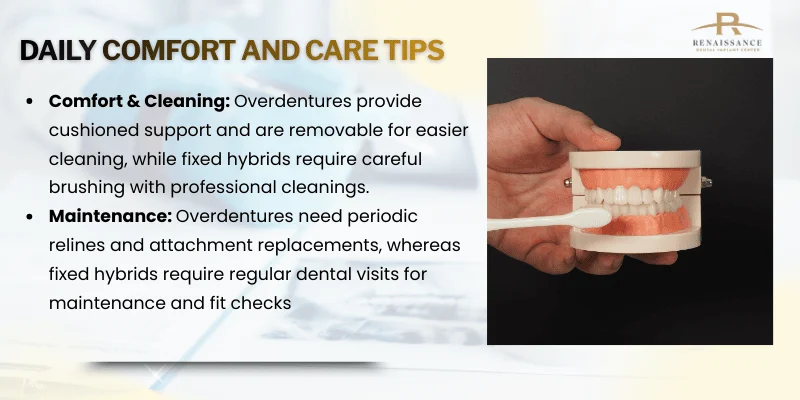
With removable overdentures you remove the prosthesis daily. Clean the denture with a soft brush and nonabrasive cleaner, and rinse after meals. Use a soft toothbrush and floss or interdental brush for the implants or abutments. Check attachments for wear; worn parts reduce retention and should be replaced by your dentist.
Fixed hybrids require home care like natural teeth: brush twice daily with a fluoridated toothpaste and use interdental brushes around the implant bar.
You can’t take the prosthesis home for soaking, so professional cleanings every 3–6 months are important. Both options help restore your smile, but overdentures make daily cleaning more straightforward while hybrids need careful daily brushing plus periodic professional maintenance.
Adjustment Periods and Maintenance Needs
Expect a short adjustment period with either choice. Overdentures often need relining or rebasing as the jaw changes; plan for check-ups every 6–12 months. Attachments wear over time; replacing locator inserts or clips every 1–3 years keeps fit tight and comfortable.
Fixed hybrids typically need fewer prosthetic replacements but require scheduled maintenance visits every 3–6 months for professional cleaning and screw checks.
If you have bone loss risk factors, hybrids’ bone stimulation reduces future ridge shrinkage, lowering the need for frequent relines. Still, any soreness, loosening, or changes in bite calls for prompt dental review to protect oral hygiene and your long-term quality of life.
Longevity and Impact on Long-Term Oral Health
You will learn how each option holds up over time, how they affect jawbone health, and what to expect if you have bone loss or need grafting.
Durability and Lifespan of Each Option
Fixed hybrid prostheses (IFRs) usually last longer before full replacement. Studies report implant survival rates for IFRs near 98% at five years, and prosthesis survival often exceeds 95% when maintained. You should expect repairs like broken teeth or loose screws more often with fixed bridges than full implant failure.
Implant overdentures (IODs) show good implant survival too, often above 90% at five years, but the overdenture components (attachments, acrylic teeth) wear faster. You will likely need periodic relines, new attachments, or rebasing every 2–5 years. Cost of maintenance is lower per visit but adds up over time.
Both options depend on your hygiene, smoking status, and medical conditions such as diabetes. Good daily care and regular dental visits extend lifespan and cut complication risk.
Bone Preservation and Jawbone Density
Fixed hybrids attach firmly to implants and transfer chewing forces more evenly into the bone. That mechanical loading helps slow bone resorption and supports higher jawbone density over time. If you chew a varied diet and maintain implants, you help preserve bone height and width.
Overdentures that connect to fewer implants or use resilient attachments can produce less direct force on bone. That can lead to more ridge remodeling, especially in the maxilla. However, well-planned four-implant maxillary overdentures still preserve bone better than conventional dentures.
If bone preservation matters most, your dentist will assess baseline bone volume and recommend the option that gives stable, consistent load to the jawbone. Regular radiographs track bone levels so problems get treated early.
Suitability for Bone Loss or Bone Grafting
If you have moderate to severe bone loss, fixed hybrids often require grafting or a sinus lift in the upper jaw to place enough implants. Bone grafts add healing time, cost, and surgical visits but let you get a rigid, long-lasting fixed restoration.
Overdentures are more forgiving. They can work with fewer implants placed in native bone, avoiding grafts or sinus lifts in many cases. You may choose short implants or tilted implant techniques to bypass thin bone and reduce need for grafting.
Your health, budget, and treatment timeline shape the choice. If you prefer fewer surgeries and lower upfront cost, an overdenture may suit you. If you want maximum bone support and can accept grafting, a fixed hybrid may give better long-term jawbone stability. For more on long-term outcomes of maxillary options, see this systematic review of four-implant overdentures versus fixed restorations (Int J Oral Maxillofac Implants) (https://pubmed.ncbi.nlm.nih.gov/40279380/).
Cost Considerations and Treatment Experience
You’ll weigh price, how long the work lasts, and what the visits feel like. Expect higher upfront costs for fixed hybrids and simpler upkeep for removable overdentures.
Initial Investment and Long-Term Value
Fixed hybrid arches often require 4–6 implants per jaw and more lab work, so you can expect higher initial fees; commonly several times the cost of a two‑implant overdenture. Removable implant overdentures typically use 2–4 implants and lower‑cost attachments, which cuts the upfront bill.
Think about long‑term value. Fixed hybrids give you near‑tooth function and less daily removal, which can reduce relines and replacements. Overdentures may need periodic relining, new attachments, or replacement prostheses every 5–10 years depending on wear. Ask your prosthodontist for an itemized estimate that separates implant surgery, implant components, the prosthesis, and lab fees so you can compare real costs.
Insurance and Financing Options
Dental insurance rarely covers full implant costs but may pay part of the restorative work or pre‑op imaging. Check your plan for yearly maximums and implant exclusions before treatment.
Many practices offer in‑office financing, third‑party medical credit cards, or phased treatment to spread implant surgery and prosthesis costs. You can often finance the implant surgery and later pay for the final prosthesis. Ask your provider about interest rates, payment timeline, and whether warranties or maintenance plans are included. A clear written plan helps you compare offers and avoid surprise bills.
Treatment Process and Recovery
Treatment for both options starts with a consultation, 3D imaging, and possible bone grafting. Implant surgery typically takes 1–3 hours per implant and often uses local anesthesia with sedation options.
For overdentures you may get provisional teeth the same day or shortly after surgery. Fixed hybrids usually require a healing period of 3–6 months before the final screw‑retained arch is placed, though some clinics offer immediate‑load protocols.
Recovery includes swelling and soreness for a few days; you’ll follow a soft‑food diet initially. Regular follow‑ups with your prosthodontist are needed to check osseointegration and to adjust the prosthesis or attachments.
Choosing the Right Tooth Replacement Solution
You need a solution that matches your health, daily routine, and budget. Think about bone health, how you clean and wear replacements, and how long you want them to last.
Ideal Candidates for Each Option
If you have good jawbone density and want a permanent feel, fixed hybrids suit you best. They usually require 4–6 implants and a healed, healthy jaw. Expect a longer surgery and higher cost, but you get strong chewing power and minimal movement when you speak or eat.
If your jawbone is thin or you want a lower-cost path, implant overdentures work well. They commonly use 2–4 implants and can snap on and off for easy cleaning. Overdentures are less invasive up front and let you preserve bone better than traditional dentures.
If you still have some healthy teeth, an overdenture that fits over natural roots can help preserve bone and offer extra retention. Your dentist will assess X-rays, medical history, and smoking or diabetes risks before recommending implants or overdentures.
Personal Preferences and Lifestyle
Decide how you handle daily care. If you want a fixed set that feels like real teeth and you don’t want to remove them, choose a hybrid. You’ll need regular professional cleanings and careful home care around the implant screws.
If you prefer to remove your prosthesis to clean it, overdentures make hygiene simpler. They give flexibility for travel, overnight soaking, and easier repairs. Overdentures can also be more forgiving if you plan to adjust your bite or need future relines.
Consider eating habits and social comfort. Hybrids let you bite firmer foods without worry. Overdentures may shift slightly with tough foods but still offer much better stability than conventional dentures. Think about cost, recovery time, and how comfortable you feel with surgery.
Collaborating With Your Dental Team
Bring recent X-rays and a list of health issues to your appointment. Ask your dentist about implant numbers, bone graft needs, and timeline for healing. Request clear cost estimates that separate surgery, lab fees, and prosthetic work.
Discuss maintenance plans: how often to return for checks, cleaning protocols, and signs of wear to watch for. Ask to see similar cases from your clinic and get patient photos if available. If you need a second opinion, your dentist should support that and coordinate care with oral surgeons or labs when needed.
Frequently Asked Questions
This section answers specific questions about comfort, costs, insurance, and lifespan for implant overdentures and fixed hybrid (All-on‑X) prostheses. Expect clear numbers, typical ranges, and practical differences you can use when talking with your dentist.
What factors affect the comfort level between implant overdentures and fixed hybrids?
Comfort depends on how the prosthesis attaches, the fit, and your jawbone. Fixed hybrids (like All‑on‑4) sit rigidly on implants, so they feel more like natural teeth and reduce gum pressure. Implant overdentures snap on or clip to implants and press on the gums more, which can feel bulkier but lets you remove them for cleaning.
Tissue health and bite force matter too. If you have thin gum tissue or low bone, pressure points can form under an overdenture. If you grind your teeth, a fixed hybrid tends to handle chewing forces better. Healing time and any sore spots after surgery also change short‑term comfort.
How does the cost of full dentures with extractions compare to implant overdentures?
Full dentures with extractions usually cost much less upfront. A basic full denture with extractions can run from a few hundred to a few thousand dollars, depending on your location and the dentist.
Implant overdentures add implant surgery and attachments, so expect several thousand more. Typical total costs for implant overdentures range from about $5,000 to $20,000 per arch depending on number of implants and materials. Exact quotes vary by clinic and case complexity.
Are there differences in the insurance coverage options for implant-supported dentures and fixed hybrid dentures?
Yes. Insurance often covers part of tooth extractions and some of the denture base for basic dentures. Many plans limit coverage for implants or exclude them as “cosmetic.” Fixed hybrids and implant placements are more likely to require out‑of‑pocket payments or supplemental dental implant coverage.
Check your plan details and ask the clinic to submit a pre‑treatment estimate. Some clinics offer financing or medical payment plans when insurance coverage is limited.
What is the average price range for premium dentures versus snap-in dentures?
Premium (custom, high‑end) full dentures typically cost between $2,000 and $6,000 per arch. These use higher quality teeth and acrylic, and they include more customization for fit and esthetics.
Snap‑in (implant overdenture) costs depend on implants used. If you already include implants, a snap‑in overdenture portion can add roughly $1,000–$4,000 per arch on top of implant fees. Remember implant placement and parts drive much of the total price.
How does the longevity of All-on-4 treatments compare to traditional implant overdentures?
All‑on‑4 and similar fixed hybrids can last many years with proper care; often 10–20 years for the prosthesis and longer for the implants themselves. The acrylic teeth or composite teeth may need repairs or replacement sooner.
Implant overdentures also last many years, but they typically need more maintenance like relines, replacement of attachment components, or new denture bases every 5–10 years. Implants that support overdentures generally have high survival rates similar to those used for fixed hybrids.
Can you provide a price comparison for the best denture options available at major dental clinics?
Prices vary by clinic, region, and case details. For example, premium full dentures at many U.S. clinics range from $2,000–$6,000 per arch. Implant overdentures at larger clinics often fall between $7,000 and $20,000 per arch, depending on 2–4 implants and attachment type.
Fixed hybrid or All‑on‑4 treatments at major clinics commonly range from $15,000 to $35,000 per arch. Ask clinics for itemized estimates and compare implant brand, number of visits, imaging, and lab fees.