

Waiting for dental implants can feel like a long process, especially when you have to go without a tooth in the meantime. Temporary teeth are a smart way to keep your smile looking good and help you chew comfortably while you heal.
They also protect your implant site and can sometimes help your jawbone heal faster. There are different types of temporary teeth, like fixed crowns or removable plates, and the choice depends on your needs and the location of your missing tooth.
Taking care of these temporaries is important, they aren’t meant to last forever but serve as a helpful bridge until your permanent teeth are ready. Knowing what to expect with temporary teeth can ease your worries and help you keep your confidence during this phase.
If you want to keep your smile functional and looking natural while you wait, temporary teeth are often the best option.
Key Takeaways
- Temporary teeth keep your smile and mouth working during healing.
- Different temporary options suit different needs and tooth locations.
- Proper care helps temporary teeth protect your implant and look good.
Why Temporary Teeth Matter During Dental Implants
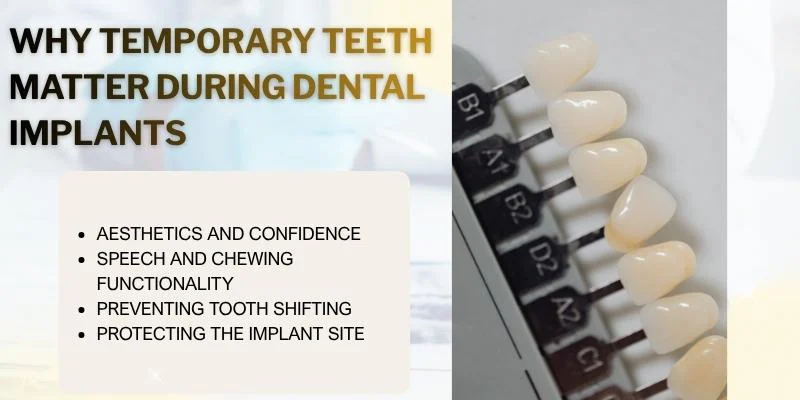
When you get dental implants, temporary teeth play a key role beyond just filling the gap. They help you keep your smile looking natural, make it easier to eat and speak, stop other teeth from moving, and protect your healing implant site.
Aesthetics and Confidence
Missing teeth can change how you look and make you feel self-conscious. Temporary teeth give you a natural appearance while waiting for your implant to heal.
They fill the space so your smile stays complete and you don’t have to worry about visible gaps.
In fact, studies show that 86% of implant patients report higher social confidence when temporary teeth are used during healing.
You can smile, talk, and laugh without feeling embarrassed. Temporary dental solutions are designed to look like real teeth, matching your natural color and shape.
Speech and Chewing Functionality
Missing teeth affect your ability to speak clearly and chew food well. Temporary teeth restore these important functions while your implant heals.
They help you pronounce words normally, avoiding lisps or slurred speech caused by gaps. Research shows that up to 70% of people experience speech problems when missing front teeth, making temporary teeth essential for clear pronunciation.
Chewing becomes easier with temporary teeth, so you can eat a variety of foods without difficulty.
This maintains your nutrition and avoids extra strain on nearby teeth. Temporary dental solutions are made to balance comfort and function.
Preventing Tooth Shifting
When a tooth goes missing, the teeth next to it can drift into the empty space. This can change your bite and cause alignment problems.
Temporary teeth act as placeholders that keep your teeth properly spaced while your implant heals. Keeping your teeth in place helps avoid future dental problems like crowded teeth or uneven wear.
It also makes the final implant fit better because the surrounding teeth don’t shift. Using a temporary dental solution reduces the risk of needing extra treatments later due to unwanted tooth movement.
It helps protect your overall oral health during the implant process.
Protecting the Implant Site
The area where your implant will go needs time to heal properly after the surgery. Temporary teeth shield this healing site by covering it gently.
This protection lowers the chance of irritation, infection, or injury while you wait for the implant to integrate with your bone. Some types of temporary teeth, like crowns, can even promote faster bone healing by applying just the right pressure to the implant site.
However, this depends on your specific case, so your dentist will guide you. A temporary dental solution also helps you avoid biting or chewing too hard on the healing area, preventing complications.
Overview of the Dental Implant Process
The dental implant process involves several important steps. Each step helps rebuild your smile by securely attaching a replacement tooth to your jaw.
You’ll learn what happens from the start of treatment to when your implant becomes fully stable.
Stages of Dental Implant Treatment
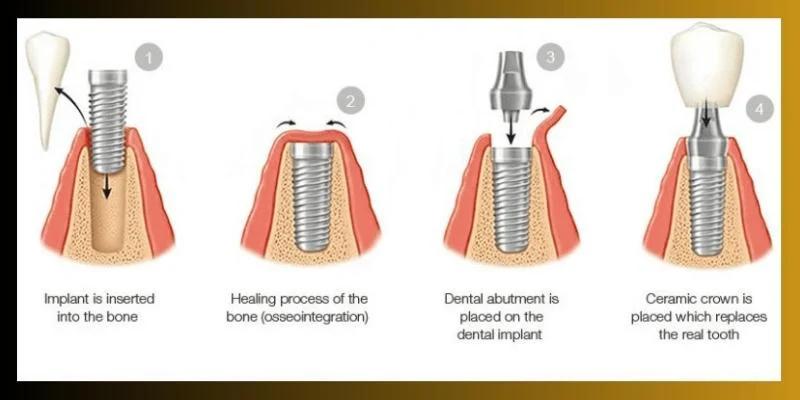
First, your dentist will examine your mouth and jaw to make sure you have enough healthy bone for the implant. Next comes the surgical step where a small metal post, called an implant post, is placed into your jawbone.
This post acts as a root for your new tooth. After the implant post is placed, your dentist may add a temporary tooth to fill the gap.
This helps you eat, speak, and look your best during healing. Once your jawbone is ready, the dentist attaches a permanent crown on top of the implant post.
This crown looks and works like a natural tooth.
Healing Period and Osseointegration
After the implant post is in your jaw, your body needs time to heal and attach the implant securely to the bone. This process is called osseointegration.
Osseointegration usually takes several months. During this time, the jawbone grows around the implant post, locking it in place.
Your dentist may give you temporary teeth during healing to protect the area and keep your smile looking good. It’s important to follow care instructions during this period.
Avoid putting too much pressure on the implant to allow proper healing and bone bonding.
Types of Temporary Teeth Solutions
When you need a temporary tooth replacement during your implant process, several options can keep your smile looking good and your mouth functioning well. These solutions vary in how they fit, feel, and support your healing.
Knowing the differences can help you and your dentist pick the best choice for your needs.
Temporary Crowns

Temporary crowns are custom-made caps placed over your existing teeth or implant posts. They look and feel similar to your natural teeth.
These crowns protect the implant site while offering a natural appearance. You usually get a temporary crown if the missing tooth is in a visible area.
It helps you maintain your smile and chewing ability without leaving a gap. These crowns are fixed in place, so they don’t move around.
They are often made from acrylic or composite materials and are meant to last only a few months. While they help protect your implant, they do need special care to avoid damage or staining.
Temporary crowns can also help your jawbone heal by providing light support where needed.
Temporary Bridges
A temporary bridge replaces one or more missing teeth by attaching to nearby teeth or implants. It fills the empty space, maintaining your bite and stopping other teeth from shifting.
Temporary bridges are useful when you have multiple teeth missing but don’t want to use a removable option. They are often made of acrylic and are cemented temporarily.
These bridges can last through the healing phase of your implant surgery. They are more stable than removable options but require good oral hygiene to avoid problems around the supporting teeth.
Dental Flipper and Removable Partial Dentures
A dental flipper is a simple, removable plastic plate that holds fake teeth. It’s lightweight and easy to take out when needed.
This option is quick to make and often less expensive. You might choose a flipper if you want a temporary tooth that doesn’t put pressure on the implant site or is more convenient to clean.
However, it may feel less secure and less natural compared to fixed options. Removable partial dentures are similar but cover a larger area and can replace several teeth.
They use clasps to grip the nearby natural teeth, which might cause some discomfort at first. Both options let you maintain your appearance and can be adjusted if your mouth changes during healing.
Temporary Dentures
Temporary dentures are full or partial sets of false teeth worn during the implant healing period. They are made of acrylic and designed to fit your mouth while your implant heals.
You can expect temporary dentures to restore your chewing and speaking abilities. They cover the gums and fill tooth gaps but are removable for cleaning.
They usually need regular adjustments because the fit can change as your mouth heals. Temporary dentures are a practical choice if you’re waiting longer for your permanent implant.
They also protect the healing gums and can be crafted to look natural, helping you keep confidence in your smile during treatment.
Learn your best temporary teeth during implant options, schedule today!
Factors to Consider When Choosing a Temporary Tooth
When picking a temporary tooth, it’s important to think about how many teeth are missing and where they are. You should also keep in mind your jawbone health, how stable your implant is, your budget, and how long you will need the temporary tooth.
Lastly, how the tooth looks and feels affects your daily comfort and confidence.
Location and Number of Missing Teeth
The place and number of missing teeth affect your temporary tooth choice a lot. For a front tooth, you might want something that looks very natural because it shows when you smile.
For back teeth, strength and chewing ability are more important since those teeth do most of the work. If you are missing several teeth, a removable partial denture or immediate denture can replace multiple teeth at once.
If it’s just one tooth, options like a flipper or a temporary dental bridge might be better. Your dentist will look at your specific situation and suggest which option fits best with your daily needs and activities.
Implant Stability and Jawbone Health
Implant stability and the condition of your jawbone are key when deciding on a temporary tooth. A strong, healthy jawbone lets your dentist place a temporary crown directly on the implant in some cases.
This looks like a real tooth and feels fixed, but you must avoid hard chewing during healing. If the bone is weak or the implant is not fully stable, a removable option like a flipper or Essix retainer is safer.
This protects both your implant and gums while they heal. Good oral hygiene is essential during this time to keep your mouth healthy and avoid infection around the implant.
Budget and Duration
Your budget and how long you need a temporary tooth play big roles. Some options like flippers or Essix retainers tend to cost less and can be made quickly.
They work well if you just need a temporary fix for a few months. Fixed options, such as a temporary bridge or implant crown, usually cost more but offer better comfort and stability.
You should also consider if you can handle removing the temporary tooth for cleaning or prefer something that stays in place. Discuss your budget honestly with your dentist.
This helps pick a temporary tooth that fits your finances and your healing timeline.
Aesthetic Preferences
How your temporary tooth looks matters for your confidence. If your missing tooth shows when you smile or talk, you probably want something that blends in naturally.
Options like clear Essix retainers with built-in teeth are discreet and lightweight. Flippers can look good but might feel a little bulky at first.
Temporary bridges and implant crowns feel more natural but may require more work from the dentist. Think about how much you care about appearance versus comfort and ease of use.
Make sure to communicate your priorities with your dentist so you get the best match. For more details on the types of temporary teeth, check Temporary Teeth Options While Waiting for Implants.
Caring for Your Temporary Teeth
Taking good care of your temporary teeth or dental crown helps keep them clean and comfortable. You’ll want to protect your smile and avoid problems like irritation or damage while your implants heal.
Oral Hygiene Best Practices
You should brush your temporary teeth gently with a soft-bristled toothbrush. Avoid brushing the gums near the implant site until your stitches dissolve.
This helps prevent irritation or reopening the surgical area. Use toothpaste that is non-abrasive to protect the temporary crown’s surface.
Rinsing with warm salt water several times a day can reduce swelling and clean the mouth. Avoid using strong mouthwashes like Listerine, as they may irritate healing gums.
Once your dentist says it’s okay, you can floss carefully around the temporary teeth. Water flossers are also a good option to keep the area clean without damaging delicate tissues.
Eating and Food Precautions
Stick to soft foods to avoid putting too much pressure on your temporary teeth and implants. Foods like mashed potatoes, scrambled eggs, yogurt, and cooked pasta are safe choices.
Avoid hard, sticky, or crunchy foods like nuts, chips, or caramel. These can loosen or break your temporary crown and cause discomfort.
Don’t chew directly on the temporary teeth. Use the other side of your mouth for harder bites.
Also, avoid hot drinks and foods at first, since numbness from surgery can cause burns. Warm or cool items are better while you heal.
Drinking through a straw is not recommended as it can disturb the healing process.
Transitioning from Temporary to Permanent Solutions
Moving from temporary teeth to permanent crowns is an important step in your dental implant journey. This process depends on how well your implants heal and how your dentist decides the timing and type of permanent restoration that fits your needs best.
When to Replace Temporaries with Permanent Crowns
Your temporary teeth protect your implants while your bone heals and fuses with the implant post. This healing period usually takes several months.
You should expect your dentist to watch for signs that the implant is stable and well-integrated before placing permanent crowns. Some signs that it’s time for permanent crowns include:
- No pain or swelling around the implant
- Firm implant stability in the jaw
- Healthy gum tissue around the implant site
If a crown is placed too early, it might disrupt healing or cause implant failure. Trust your dentist’s guidance on the right timing.
Working with Your Dentist
Your dentist plays a key role in this transition. They will evaluate your implant site during follow-up visits.
Expect them to:
- Take x-rays to check bone healing
- Examine gum health and implant stability
- Discuss permanent crown options that match your bite and smile
You might be offered implant-supported crowns or bridges, designed to look natural and function well. Your dentist will also ensure the permanent crown fits comfortably and that your bite is balanced.
Regular communication with your dentist is important. Ask questions if you notice discomfort or changes.
Frequently Asked Questions
Temporary teeth options can vary from fixed crowns to removable plates, depending on where your implant is and how your mouth heals. Costs differ based on the type of temporary tooth and your location.
You can usually eat with temporary teeth, but some foods might need to be avoided. The All-on-4 procedure offers a full set of teeth with temporary ones right after surgery.
There are also over-the-counter products you can use, but their effectiveness varies. Snap-On Smile is a removable option that some use while waiting for permanent implants.
What options are available for a temporary tooth while my implant is healing?
You can get a fixed temporary crown attached to the implant or a removable esthetic plate. Fixed crowns look and feel more like real teeth and help with bone healing.
Removable plates are less visible but easier to clean and adjust.
How much do temporary dental tooth implants typically cost?
Temporary teeth costs vary widely. They depend on the type of temporary tooth, the clinic, and your geographic location.
Usually, temporary crowns or dentures add to the overall implant treatment price.
Can you eat with temporary teeth provided during the dental implant process?
Yes, but you should avoid very hard or sticky foods. Temporary teeth help you chew normally, but they are not as strong as permanent ones.
Your dentist can guide you on what foods to avoid.
What is the All-on-4 dental implant procedure and does it include temporary teeth?
All-on-4 is a full-arch implant treatment that uses four implants to support a complete set of teeth. It includes custom temporary teeth that allow you to eat and smile confidently right after surgery.
Are there over-the-counter temporary tooth replacements that are effective until permanent implants are placed?
There are products like temporary tooth flippers or partial dentures sold over the counter. They can fill gaps but usually don’t provide the same comfort, fit, or bone stimulation as dentist-made temporaries.
What is a Snap-On Smile and can it be used while waiting for permanent implants?
Snap-On Smile is a removable dental device that fits over your existing teeth or gaps. It provides a natural-looking smile during healing.