


If you’re a smoker considering dental implants, you need to know how tobacco use affects your chances of success. Smoking significantly reduces dental implant success rates, with smokers experiencing a 140.2% higher risk of implant failure compared to non-smokers.
The chemicals in tobacco interfere with healing, reduce blood flow to your gums, and weaken the bone that holds your implant in place.
The good news is that understanding these risks can help you make informed decisions about your treatment.
Whether you’re planning to quit smoking before getting implants or wondering if you can smoke after the procedure, knowing how tobacco impacts healing and long-term stability gives you the power to improve your outcomes.
Your choices before, during, and after implant placement can make a real difference in whether your new teeth succeed or fail.
This article breaks down exactly what happens when you smoke with dental implants, from the biological reasons behind implant failure to practical steps you can take to protect your investment. You’ll learn about timing, risk factors, and strategies that can help you achieve the best possible results for your smile.
Key Takeaways
- Smokers face more than double the risk of dental implant failure compared to non-smokers due to reduced blood flow and compromised healing
- The number of cigarettes you smoke per day directly affects your implant success rate, with heavier smoking causing greater risks
- Quitting smoking before and after your implant procedure significantly improves healing, bone integration, and long-term implant stability
The Link Between Smoking and Dental Implant Success Rates
Research shows a clear connection between smoking and lower dental implant success rates. Smokers face significantly higher risks of implant failure compared to non-smokers, with failure rates reaching up to 15.8% versus just 1.4% in those who don’t smoke.
Comparing Success Rates in Smokers Versus Non-Smokers
The difference in implant survival between smokers and non-smokers is stark. Studies show that dental implant failure rates in smokers can reach 15.8%, while non-smokers experience failure rates as low as 1.4%.
Your chances of successful dental implant integration drop significantly if you smoke. Non-smokers consistently show better outcomes across all stages of the implant process.
Key differences include:
- Healing time: Non-smokers heal faster after implant placement
- Bone integration: Your bone fuses better with the implant when you don’t smoke
- Long-term stability: Non-smokers maintain stable implants for longer periods
- Infection rates: You face fewer complications without smoking
These numbers demonstrate why your dentist may express concern about placing implants if you smoke regularly.
How Smoking Increases the Risk of Implant Failure
Smoking directly impacts the biological processes your body needs for successful dental implant integration. Nicotine and carbon monoxide reduce blood flow, oxygen levels, and angiogenesis, which are essential for healing.
Your body struggles to complete osseointegration when you smoke. This is the process where your jawbone fuses with the titanium implant post. Without proper blood flow, your bone cells can’t reach the implant surface to begin integration.
The chemicals in cigarettes also compromise your bone quality. Weaker bone means less support for your dental implant, increasing early implant failure risk during the critical healing phase.
Overview of Relevant Research and Studies
Multiple retrospective studies have examined the relationship between smoking and dental implant success. Research consistently identifies smoking as a significant risk factor for implant failure.
Systematic reviews and meta-analyses have investigated how smoking affects dental implants based on failure rates, bone loss, and other measures. These studies provide strong evidence of the negative impact.
Clinical data shows smokers experience higher rates of complications during the early healing phase. Your implant faces the greatest risk in the first few months after placement when osseointegration occurs.
Biological Mechanisms: How Smoking Impacts Implants
Smoking disrupts multiple biological processes that are essential for successful implant integration. Nicotine and other chemicals in cigarettes interfere with blood flow, bone formation, and your body’s ability to fight infections around the implant site.
Impaired Blood Flow and Wound Healing
When you smoke, nicotine causes your blood vessels to narrow. This means less oxygen and fewer nutrients reach the peri-implant tissue where your dentist placed the implant.
Your wound healing slows down significantly because your cells need adequate blood flow to repair tissue. The carbon monoxide in cigarette smoke also binds to hemoglobin in your blood, further reducing oxygen delivery to healing tissues.
Without proper blood flow, your gums and bone tissue struggle to heal after implant placement. This creates a longer recovery period and increases your risk of complications. The chemicals in tobacco smoke can damage the small blood vessels around your implant for hours after each cigarette.
Effects on Osseointegration and Bone Healing
Smoking impairs osseointegration, which is the critical process where your jawbone fuses with the implant. Your bone cells need to grow around the implant surface to create a stable foundation.
Nicotine interferes with the cells that build new bone tissue. This slows down bone healing and weakens the connection between your implant and jaw. The toxins in cigarette smoke also reduce the activity of osteoblasts, the cells responsible for forming new bone.
Research shows that smokers experience decreased implant stability during the healing phase. Your bone density around the implant may be lower compared to non-smokers. This compromised bone healing can lead to implant failure weeks or months after the procedure.
Altered Immune Response and Infection Risk
Smoking weakens your immune response at the implant site. Your white blood cells become less effective at fighting bacteria and preventing infections around the peri-implant tissue.
The chemicals in tobacco reduce the production of antibodies and inflammatory mediators that protect against infection. This means bacteria can more easily colonize the area around your implant. Your body’s natural defense system struggles to respond quickly to potential threats.
You face a higher risk of developing peri-implantitis, an infection that can destroy the bone supporting your implant. Studies indicate that smoking significantly affects postoperative infection rates after implant placement.
Specific Complications and Risk Factors for Smokers
Smoking creates several specific problems that can threaten your dental implants. Tobacco use affects your bone health around the implant and increases your chances of developing infections and inflammation in the gum tissue.
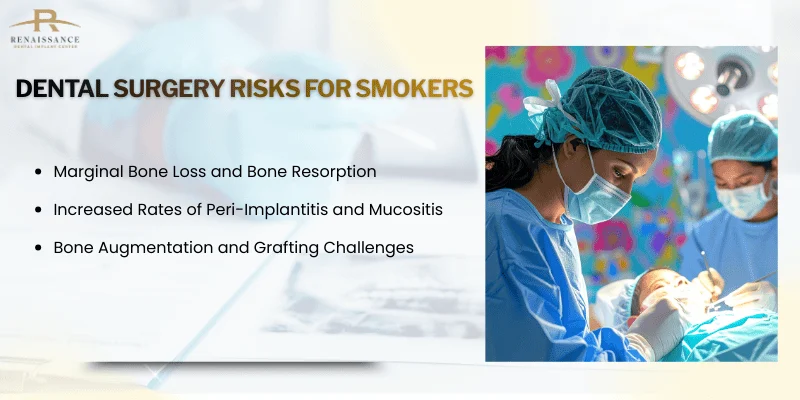
Marginal Bone Loss and Bone Resorption
When you smoke, your implants face a higher risk of marginal bone loss around the area where the implant meets your jawbone. This happens because smoking reduces blood flow to your gums and bone tissue. Without proper blood circulation, your bone doesn’t get enough oxygen and nutrients to stay healthy.
The chemicals in cigarettes also trigger inflammation throughout your body. This chronic inflammation speeds up bone resorption, which means your body breaks down bone tissue faster than it can rebuild it. Studies show that smokers experience more rapid bone loss around their implants compared to non-smokers.
Your jawbone needs to maintain a strong connection with the implant for long-term success. When bone resorption occurs, the implant can become loose or fail completely. The amount of bone loss often relates to how many cigarettes you smoke per day.
Increased Rates of Peri-Implantitis and Mucositis
You face a much higher risk of developing peri-implantitis if you smoke. This serious condition causes inflammation and infection in the tissues surrounding your implant. Research shows smokers are 2.14 times more likely to experience early implant failure compared to non-smokers.
Peri-implant mucositis often appears first as inflammation in the soft tissues around your implant. If you continue smoking, this condition can progress to full peri-implantitis, which damages the bone supporting your implant. The infection becomes harder to treat because smoking weakens your immune system’s ability to fight bacteria.
These infections develop more quickly in smokers because tobacco reduces your body’s natural defenses. Your gums also heal more slowly, giving bacteria more time to cause damage.
Bone Augmentation and Grafting Challenges
If you need bone grafting before getting implants, smoking makes this procedure riskier. Bone augmentation requires your body to integrate new bone material with your existing jawbone. Smoking interferes with this healing process at every stage.
The success rate for bone grafts drops significantly in smokers. Your body struggles to form new blood vessels in the grafted area, which slows down healing. This means you might need to wait longer before your dentist can place the implant.
You also face higher chances of graft failure if you smoke during recovery. The combination of diabetes and smoking creates even more risk factors for implant complications. Your dentist may recommend quitting smoking several weeks before and after bone grafting to improve your chances of success.
Smoking Patterns, Timing, and Their Effect on Implant Outcomes
The amount you smoke and when you smoke around your implant surgery directly impacts your chances of success. Research shows that smoking frequency and timing affect both early healing and long-term stability of dental implants.
Cigarette Consumption and Dose-Response Relationship
The number of cigarettes you smoke each day matters for your implant success. Studies show a clear dose-response relationship where heavier smoking leads to higher failure rates.
Research found that bone loss around implants in smokers averaged 1.5 mm, more than double the 0.7 mm in non-smokers. Heavy smokers face even greater risks to healing, bone integrity, and implant stability.
One study measuring pack-years found that each additional pack-year increased the odds of early implant failure by 1.049. Pack-years calculate your total cigarette consumption over time by multiplying packs smoked per day by years of smoking.
Light smokers have better outcomes than heavy smokers, but both groups still face higher failure rates compared to non-smokers. The more you smoke, the more you compromise your body’s ability to heal and maintain the bone around your implant.
Critical Periods: Pre- and Post-Implant Placement
Smoking affects nearly every stage of dental implant treatment, from initial healing to long-term integration. The weeks immediately before and after your implant surgery are especially important.
Early implant failure rates show a strong connection to smoking habits. Research indicates smokers are 2.14 times more likely to experience early implant failure than non-smokers. Early failure typically occurs within 3 to 12 months after placement.
Your body needs to form new bone around the implant during the first few months after surgery. Smoking reduces blood flow and oxygen delivery to the surgical site during this critical healing period. This makes it harder for bone to attach properly to your implant.
Many dentists recommend stopping smoking at least two weeks before surgery and avoiding it for several months afterward. This gives your body the best chance to heal and integrate the implant successfully.
Long-Term Implant Survival in Smokers
Long-term implant survival remains lower for smokers compared to non-smokers. Studies tracking patients for up to 22 years show that smoking increases implant failure rates at both early and late stages.
Research found that smokers face 1.48 times higher odds of late implant loss compared to people who never smoked. Late failures occur after the initial healing period when the implant should be stable.
You face ongoing risks even years after successful implant placement if you continue smoking. Tobacco use continues to affect the bone and gum tissue supporting your implants over time.
The evidence from 25 out of 33 recent studies shows a significant correlation between cigarette consumption and increased implant failure rates. Quitting smoking improves your chances for better long-term implant survival and overall oral health.
Strategies to Improve Implant Success for Smokers
Smokers can take specific steps to protect their dental implants and boost their chances of long-term success. Quitting smoking before surgery, maintaining excellent oral hygiene, and working with your dentist to assess your individual risk level are the most effective ways to improve outcomes.
Importance of Smoking Cessation Before and After Surgery
Stopping smoking is the single most important action you can take to improve your implant success rates. Your dentist will likely recommend quitting at least two weeks before your implant surgery to give your body time to start healing better.
The longer you stop smoking before surgery, the better your wound healing will be. Your blood flow improves within just 48 hours of quitting, which helps deliver oxygen and nutrients to the surgical site.
After your implant placement, you should avoid smoking for at least two months during the critical healing period. This timeframe allows the implant to properly fuse with your jawbone through a process called osseointegration.
Research shows that smoking cessation efforts significantly improve outcomes in dental implant patients. Even reducing the number of cigarettes you smoke daily can lower your risk of complications, though complete cessation gives you the best results.
Optimizing Oral Hygiene and Post-Operative Care
Your oral hygiene routine becomes even more critical as a smoker receiving dental implants. You need to brush twice daily and floss around your implants to prevent bacterial buildup that could lead to infection.
Use an antibacterial mouthwash as directed by your dentist to reduce harmful bacteria in your mouth. Follow all post-operative care instructions carefully, including taking prescribed antibiotics and avoiding hard foods during the healing period.
Schedule more frequent dental checkups than non-smokers typically need. Your dentist should monitor your implants every three to four months during the first year to catch any problems early.
Report any signs of infection immediately, such as increased pain, swelling, or discharge around the implant site. Quick intervention can save an implant that might otherwise fail.
Patient Evaluation and Risk Assessment
Your dentist should conduct a thorough evaluation before placing implants to determine your specific risk level as a smoker. This assessment includes examining your jawbone density, overall health status, and how many cigarettes you smoke per day.
Be honest with your dental team about your smoking habits. They need accurate information about your tobacco use to create the best treatment plan for your situation and set realistic expectations.
Some smokers may need additional procedures before implant placement, such as bone grafting to strengthen weak jawbone areas. Your dentist might also recommend a longer healing period between procedures or choose specific implant types designed for higher-risk patients.
Understanding your individual risk helps you make informed decisions about moving forward with implants and what modifications to your lifestyle might be necessary.
Other Contributing Factors and Special Considerations
While smoking plays a major role in dental implant outcomes, other health conditions and habits can also affect your chances of success. Diabetes can slow healing, teeth grinding can damage implants, and skipping dental visits can let problems go unnoticed.
Interactions with Systemic Conditions Like Diabetes
If you have diabetes, your body faces extra challenges when healing from dental implant surgery. High blood sugar levels can slow down wound healing and make you more likely to develop infections around your implant site.
When you combine diabetes with smoking, the risks multiply. Both conditions reduce blood flow to your gums and bones, which makes it harder for your implant to bond with the jawbone properly.
You need to keep your blood sugar under good control before and after implant surgery. Your dentist may work with your doctor to make sure your diabetes is managed well enough for the procedure.
Key factors for diabetic patients:
- Blood sugar levels should be stable for several months before surgery
- HbA1c levels typically need to be below 7-8% for implant procedures
- Healing time may take longer compared to non-diabetic patients
- Regular monitoring helps catch any implant complications early
Impact of Bruxism and Other Habits
Bruxism, or teeth grinding, puts extra pressure on your dental implants. When you grind or clench your teeth, especially at night, you can damage the implant or the bone around it.
The constant force from grinding can loosen your implant over time. This happens because the repeated stress prevents proper healing and weakens the bond between the implant and your jawbone.
If you have bruxism, your dentist might suggest wearing a night guard to protect your implants. This simple device acts as a cushion between your upper and lower teeth.
Other habits like nail biting, chewing ice, or using your teeth to open packages can also harm your implants. These activities create sudden, strong forces that your implants were not designed to handle.
Role of Regular Dental Follow-Ups
Your dental visits after implant surgery are not optional. These appointments let your dentist check how well your implant is healing and catch problems before they become serious.
During follow-up visits, your dentist examines the tissue around your implant for signs of infection or inflammation. They also check that your implant stays stable and properly positioned.
Most dentists schedule visits at specific intervals: typically at 1 week, 3 months, 6 months, and then yearly after that. The first few months are the most critical for improving implant success rates.
Professional cleanings during these visits remove plaque and bacteria that regular brushing might miss. Your dentist can also adjust your care routine if they notice any issues developing around your implant.
Frequently Asked Questions
Smoking creates unique challenges during every stage of dental implant treatment. Understanding how tobacco affects healing, timing, and long-term care helps you make informed decisions about your dental health.
What factors contribute to the success rate of dental implants in people who smoke?
Several factors determine whether your dental implants will succeed if you smoke. Blood flow plays a major role because smoking reduces blood flow to the gums, which limits oxygen and nutrients reaching the implant site.
Your body’s healing ability becomes compromised when you smoke. The bone needs to grow around the implant through a process called osseointegration, and tobacco slows down this bone repair and rebuilding process.
Infection risk increases significantly for smokers. Your immune system becomes weaker when exposed to tobacco, making it harder to fight off bacteria around the implant site. This can lead to peri-implantitis, a serious infection that causes bone loss and implant failure.
The amount you smoke matters too. Heavy smokers face higher risks than light smokers, though any tobacco use creates problems for healing.
Can light or occasional smoking impact the healing process after dental implant surgery?
Yes, even light or occasional smoking affects how well your implants heal. Your body doesn’t distinguish between heavy and light smoking when it comes to the healing process.
Every cigarette restricts blood vessels and reduces oxygen delivery to your gums and bone. This happens regardless of whether you smoke one cigarette or a full pack each day.
The chemicals in tobacco dry out your mouth and increase inflammation. These effects occur each time you smoke, creating repeated setbacks during the critical healing period after surgery.
Occasional smoking still introduces harmful bacteria into your mouth. Your tissues need consistent, clean conditions to heal properly around the implant.
Are there any additional risks for smokers undergoing all-on-4 dental implant procedures?
All-on-4 procedures involve placing four implants to support a full arch of teeth. This creates a larger surgical site that requires more extensive healing compared to single implants.
Smokers face increased risks because the procedure affects more bone and gum tissue. Each implant site needs proper blood flow and oxygen to integrate successfully with the bone.
The connection between all four implants means one failure can compromise the entire arch. If smoking causes one implant to fail, it may affect the stability of your complete restoration.
Bone grafting often accompanies all-on-4 procedures, and smoking affects bone graft success rates significantly. The grafted bone needs healthy conditions to merge with your natural bone structure.
Is it ever too late to quit smoking to improve the chances of dental implant success?
It’s never too late to quit smoking before getting dental implants. Your body starts recovering from tobacco damage within days of your last cigarette.
Dentists typically recommend quitting at least 6 to 8 weeks before implant surgery. This gives your blood vessels time to recover and your immune system time to strengthen.
Even if your surgery is scheduled soon, quitting now still helps. Every smoke-free day improves your blood flow and reduces inflammation in your mouth.
After surgery, continuing to avoid tobacco becomes just as important. The healing period usually lasts several months, and staying smoke-free during this time protects your investment in dental implants.
How does smoking affect the long-term maintenance and health of dental implants?
Smoking increases the risk of long-term complications even after your implants heal initially. The ongoing exposure to tobacco continues to restrict blood flow and weaken your immune response.
Peri-implantitis becomes more likely when you smoke long-term with implants. This infection develops gradually as bacteria accumulate around the implant and your body struggles to fight them off.
Bone loss progresses faster in smokers with dental implants. The bone supporting your implant needs good circulation to stay strong, and smoking continuously limits that blood supply.
Your implants may loosen over time if you continue smoking. What starts as a stable, secure restoration can become unstable as the supporting bone weakens and recedes.
What advice do dental experts give to smokers considering dental implants?
Dental professionals strongly encourage you to quit smoking before getting implants. Quitting is crucial for oral health and gives you the best chance of successful treatment.
Most dentists want you to be honest about your smoking habits. They need accurate information to assess your risk level and create an appropriate treatment plan for your situation.
Your dentist may recommend nicotine replacement therapy or other cessation programs. These tools help you manage withdrawal symptoms during the weeks before and after surgery.
Some dental practices require you to be smoke-free before they’ll perform implant surgery. This policy protects both you and the practice from preventable complications and failures.
Regular dental checkups become even more important if you’ve smoked in the past. Your dentist needs to monitor your implants closely for any early signs of infection or bone loss.