

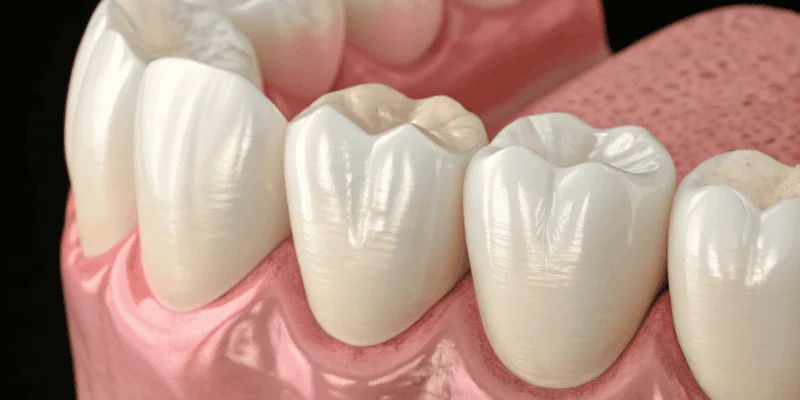
If a crown or veneer needs to sit on healthy tooth structure, you might need crown lengthening first. Crown lengthening uncovers more of the tooth so your dentist can place a lasting restoration and fix decay or fractures below the gum line.
You may also choose this procedure to improve how your smile looks when gums cover too much tooth. If you notice a “gummy” smile, a tooth broken under the gum, or decay that reaches below the gum line, tell your dentist so they can evaluate whether crown lengthening will help.
Key Takeaways
- Crown lengthening can expose more tooth for better restorations and repair.
- The procedure can improve both function and how your smile looks.
- Your dentist will assess healing time, risks, and whether alternatives fit your case.
Understanding Crown Lengthening
This explains what crown lengthening does, how the procedure changes gum and bone, and how it differs from simple gum reshaping. You’ll learn the basic steps, the main types of surgery, and why a dentist might choose one approach over another.
What Is Crown Lengthening?
Crown lengthening is a surgical procedure that exposes more of a tooth by removing gum tissue, and sometimes a small amount of bone. Your dentist or periodontist usually recommends it when there isn’t enough tooth above the gum line for a crown, filling, or repair.
The procedure begins with a local anesthetic so you won’t feel pain. The clinician lifts the gum to access the tooth root and adjusts the tissue or bone until enough tooth shows above the gum. Stitches hold the gum in place while it heals.
Expect the goal to be stable tooth height and a healthy margin for restorations. That helps crowns and fillings fit better and last longer. It also lets the clinician clean decay or prepare a fractured tooth without cutting the crown margin.
Types of Crown Lengthening Procedures
Two main approaches exist: functional and esthetic crown lengthening.
Functional crown lengthening exposes tooth structure to allow restorations. Your dentist uses this when decay or a fracture extends below the gum. It may include removing a bit of bone (osteoplasty) so the crown edge won’t sit too close to the bone.
Esthetic crown lengthening focuses on changing the gum line to improve how your smile looks. The surgeon removes excess gum tissue to reveal more tooth, often on several teeth to keep the gum line even.
Both types use similar surgical steps: anesthesia, gum incision, tissue or bone removal as needed, and sutures. Healing time varies, but most people can expect several weeks before final restorations.
Difference Between Crown Lengthening and Gum Contouring
Crown lengthening and gum contouring both change the gum line but for different reasons. Crown lengthening often involves bone removal and is done so restorations fit correctly or to access decay. Gum contouring is usually a simpler trimming of soft tissue for cosmetic reasons only.
Gum contouring can often be done with a laser, has less downtime, and rarely affects bone. Crown lengthening is more invasive and needs careful planning because bone removal changes tooth support and future restoration margins.
Your dentist will choose the procedure based on whether the priority is function (durable restorations) or appearance (balanced gum line). If you’re preparing for a crown, ask whether bone adjustment is needed so your restoration won’t fail later.
Common Signs You May Need Crown Lengthening Before Restorative Work
You may need crown lengthening when the tooth can’t hold a proper restoration or when decay or damage sits under the gum line. These problems affect how a crown, veneer, or bridge will fit and how long it will last.
Insufficient Visible Tooth Structure
If too little tooth shows above the gum, a crown or veneer won’t have enough surface to grip. That can leave the crown margin sitting on soft tissue instead of enamel, which raises the chance of leakage and failure. Your dentist will look for at least a few millimeters of sound tooth above the gum so the restoration seals correctly.
Crown lengthening exposes more of the tooth by removing gum (and sometimes a small amount of bone). This gives the lab-made crown or veneer a stable edge to sit on. If you want a long-lasting restoration, the extra tooth exposure helps the dentist place margins where they can be cleaned and checked.
Decay or Restoration Below the Gum Line
When decay or an old filling reaches under the gum, you can’t get a tight seal without exposing healthy tooth. Trying to place a crown over decay risks trapping bacteria and causing recurring problems. Your dentist will check X-rays and probe the area to find hidden decay or failing restoration margins.
Crown lengthening allows the dentist to remove diseased tissue and move the gum margin down so the new crown can cover only clean tooth. This makes it easier to remove old cement and shape the tooth. It also reduces the chance your new crown will fail from unseen decay under the margin.
Tooth Fracture Near or Below Gumline
A fracture that reaches the gum line or under it often prevents a good crown fit. If the break extends below the bone, you may need crown lengthening plus other measures. For cracks just under the gum, exposing more tooth can let the dentist build up the tooth and place a proper crown margin on solid structure.
If the fracture is deep, your dentist will assess whether the tooth can be saved. Crown lengthening can create enough tooth to restore after repair. When you have a visible crack or sudden sensitivity after a hit, tell your dentist so they can check the crown margin, tooth structure, and decide if lengthening is needed.
Aesthetic and Health Reasons for Crown Lengthening
Crown lengthening can change how much tooth shows when you smile and make restorative care easier. It targets excess gum tissue, adjusts the gumline, and can reduce pockets that trap plaque.
Correcting a Gummy Smile
If your teeth look short because your gums cover too much tooth, crown lengthening removes extra gum tissue so more enamel shows. This usually involves reshaping gum tissue and sometimes a small amount of bone to keep a stable gumline.
You should expect your dentist or periodontist to measure how much tooth needs to be exposed and plan how much tissue to remove. The goal is to show a more natural tooth-to-gum ratio while keeping the gum attachment healthy.
Recovery for a gummy smile procedure often includes mild swelling and careful eating for a week or two. Results can last if you maintain good oral hygiene and treat any underlying gum disease first.
Enhancing Smile Aesthetics
Crown lengthening helps balance tooth proportions by revealing the proper tooth height for crowns or veneers. When restorations sit on a correctly shaped tooth, they look more natural and fit better at the gumline.
Your restorative dentist will work with the periodontist to place margins at a healthy level. This teamwork reduces the chance of visible black lines at the edge of crowns and improves color match and symmetry across teeth.
Patients often combine crown lengthening with whitening or veneer work. That lets you design a smile that looks even, bright, and well-contoured while protecting periodontal health.
Improving Oral Hygiene and Periodontal Health
Excess gum tissue can form deep pockets where food and plaque hide. Crown lengthening exposes more tooth so you can clean around restorations and gum crevices more effectively, lowering the risk of gum disease.
By reshaping the gumline, the procedure reduces places where bacteria collect and makes brushing and flossing reach critical areas. That helps prevent inflammation and bone loss that could threaten restorations or natural teeth.
If you have active gum disease, your provider may treat it before crown lengthening. Proper timing and professional cleaning improve healing and support long-term oral health after the surgery.
How Crown Lengthening Supports Successful Restorative Work
Crown lengthening exposes more tooth structure and reshapes supporting bone or gum tissue. This lets your dentist place restorations with correct margins, protect soft tissue health, and reduce the risk of future failures.
Ensuring a Secure Crown Fit
Crown lengthening gives your restorative dentist extra tooth to grab onto. When decay or a fracture sits below the gum line, the procedure exposes sound tooth structure so the dental crown can sit on solid material instead of loose or decayed tissue.
A proper crown margin needs at least 2–3 mm of healthy tooth above the bone to avoid invading the biologic width. Clinical research shows restorations placed too close to bone violate biologic width, increasing inflammation and crown failure risk.
If the margin sits too deep, your crown can trap bacteria, cause inflammation, and fail early. Crown lengthening creates a safe distance between the restoration edge and the bone, helping the crown seal properly and last longer.
Facilitating Dental Restorations
You get better outcomes for crowns, onlays, and cosmetic bonding when there’s clear access to the tooth. Crown lengthening makes it easier for your dentist to shape the tooth, take accurate impressions, and place restorations without working under the gum.
Clear access also improves the fit of temporary crowns and speeds up adjustments. For cosmetic bonding, exposing more enamel gives a stronger bond and a more natural look. If you need a post-and-core after a root canal, crown lengthening helps create the ferrule; a band of tooth structure that strengthens the final restoration.
Preventing Future Complications
By positioning restoration margins above an appropriate level, crown lengthening lowers the chance of repeated decay and gum disease. When margins sit too deep, cleanability drops and plaque accumulates, which raises infection risk. Raising the margin makes home care and professional cleanings more effective.
The procedure can also reduce chronic inflammation and recession around the restored tooth. That protects neighboring teeth and supports better long-term function. For predictable long-term results, discuss with your dentist whether crown lengthening is needed before placing crowns or other dental restorations.
What to Expect: The Crown Lengthening Process and Recovery
You will meet your dentist or periodontist, plan the procedure, go through surgery with local anesthesia, and follow a clear recovery plan that includes pain control, wound care, and follow-up visits. Healing times vary by tooth position and whether bone removal is needed.

Preparation and Planning With Your Dentist
Your dentist or periodontist will review X-rays and your medical history before scheduling. Expect a detailed exam to check bone level, root shape, and how much tooth needs exposure for the final crown.
If you smoke, have uncontrolled diabetes, or take blood thinners, mention it; these affect infection risk and healing time. You may get a dental cleaning before surgery to lower bacteria.
Your provider will explain options and alternatives to crown lengthening, like orthodontic extrusion or a restorative ferrule, and why crown lengthening is recommended. They will tell you whether bone removal is likely and whether you’ll need a temporary crown placed before or after surgery.
Step-by-Step Procedure Overview
You will get local anesthesia; sedation may be offered if you feel anxious. The periodontist makes small incisions to pull back gum tissue and expose bone and tooth roots.
If needed, the clinician removes a small amount of bone to create space between the bone and the planned crown margin. This bone removal ensures a stable tooth-to-crown fit.
After shaping the gum and bone, the periodontist repositions the gum and places sutures. A protective dressing or temporary crown may be placed. The whole visit typically takes 30–90 minutes depending on how many teeth are treated.
Healing Timeline and Recovery After Crown Lengthening
First 48–72 hours: expect swelling, mild bleeding, and soreness. Use ice for the first day and take prescribed or over‑the‑counter pain medicine as directed.
First 1–2 weeks: sutures usually come out or dissolve; soft foods help protect the area. Tooth sensitivity to hot and cold is common until a final crown is placed.
Weeks 6–12: soft tissue usually stabilizes. If surgery was in the back, full recovery can be 6–12 weeks; front teeth may take 3–6 months to finish healing, especially if bone was altered. Follow your periodontist’s timeline before placing the final crown.
Post-Operative Care and Follow-Up
Keep the area clean but gentle. Rinse with salt water 2–3 times daily starting 24 hours after surgery, and avoid brushing the surgical site until your dentist says it’s safe. Use a soft-bristled brush when you resume brushing nearby teeth.
Avoid hard, crunchy, or sticky foods for at least one week. Do not smoke; smoking raises infection risk and slows healing.
Attend the scheduled follow-up appointment to check healing, remove non‑dissolving sutures, and plan placement of a temporary or final crown. Report heavy bleeding, increasing pain, fever, or pus; these are signs of infection and need prompt care.
Considerations, Risks, and Alternatives
Crown lengthening changes the gum and bone around a tooth to give you enough healthy tooth structure for a crown. You should weigh healing time, out-of-pocket cost, and other treatment choices before you agree to the procedure.
Potential Risks and Complications
You may have soreness, swelling, and bleeding after the surgery; these are common in the first few days. Your dentist or periodontist will prescribe pain control and give instructions to reduce bleeding and swelling.
There is a risk of infection if you don’t follow post-op care. Keep the area clean, avoid smoking, and take any antibiotics if prescribed. Call your provider if you get fever, pus, or increasing pain.
Gum recession and tooth sensitivity can occur because more root may be exposed. This can change how your smile looks and may require future gum grafting. Bone removal can also weaken nearby teeth if too much is removed.
Healing times vary. Expect 4–8 weeks for soft tissue to settle and up to 3–6 months for final bone stability before placing a permanent crown. Your provider may place a temporary crown during healing.
Cost Factors and Insurance Coverage
The cost of crown lengthening depends on how many teeth and how much bone needs removal. Typical fees range widely by location and complexity. Ask for a written estimate that breaks down surgical fees, lab fees, and follow-up visits.
Insurance may cover crown lengthening when it’s needed to place a crown for restorative reasons. However, insurers often deny coverage for purely cosmetic cases. Check your policy for “periodontal surgery” or call your carrier to confirm benefits and any required preauthorization.
You will also face additional costs for the final crown, temporary crown, and possible grafting. If budget is a concern, ask about a phased plan: do the most urgent tooth first, delay elective cases, or consider a payment plan in the dental office.
Alternatives to Crown Lengthening for Restorative Needs
In some cases, less invasive options can work instead of crown lengthening. Your dentist might recommend a surgical or nonsurgical crown extension by redoing the filling or building up the tooth with composite to create more retention for a crown.
If tooth structure is severely compromised but crown lengthening is not ideal, an extraction followed by a dental implant or bridge can replace the tooth. Implants avoid altering adjacent gum and bone but carry their own costs and timelines.
Orthodontic extrusion can slowly pull a tooth up to expose more tooth structure without removing bone. It takes longer but can preserve gum levels and reduce the chance of sensitivity.
Discuss these alternatives with your dentist. They can explain trade-offs: success rates, treatment time, final esthetics, and comparative costs so you can pick the option that fits your oral health and budget.
Frequently Asked Questions
This section answers practical questions about signs, tools, pain, and how crown lengthening helps make restorations fit and last. You’ll get clear steps for spotting problems and what to expect during treatment and recovery.
What are common signs that indicate a need for crown lengthening?
If a tooth has decay below the gumline, you may see dark staining near the gum or feel sensitivity when brushing. A broken or worn tooth with little visible crown can also make a crown sit improperly.
If your dentist says the crown margin would sit under gum tissue or there’s not enough enamel above the gum to attach a crown, that often signals crown lengthening is needed. Recurrent decay around older crowns or crowns that trap food can be another clue.
How does the 2 2 2 rule apply to pre-restorative dental procedures?
The 2 2 2 rule helps ensure enough healthy tooth and space for a restoration. It usually means at least 2 mm of sound tooth structure above the bone, 2 mm of biological width between the restoration and bone, and 2 mm of ferrule (vertical tooth structure) for crown stability.
Following this rule reduces the chance of decay or crown failure. Your dentist or periodontist will measure these spaces before planning crown lengthening or other treatments.
What can patients expect in terms of discomfort during a crown lengthening procedure?
You’ll receive local anesthesia, so you should not feel pain during the procedure. Expect mild soreness or pressure after the anesthesia wears off, typically controlled with over-the-counter pain relievers.
Swelling and tenderness are common the first few days. Most people return to normal activities within a week, but full gum healing can take several weeks.
Are there specific dental tools used for tissue removal during crown lengthening?
Clinicians use scalpels, surgical instruments, or dental lasers to remove gum tissue and shape the margin. If bone needs adjustment, small rotary instruments or bone files are used carefully to remove tiny amounts.
Sutures are placed to secure the gum, and surgeons may use microscopes or magnification to work precisely. Tools vary by the clinician’s technique and the case complexity.
What conditions typically require crown lengthening treatment before restorative work?
Decay that extends under the gum, fractured teeth at or below the gumline, and short clinical crowns that won’t hold a crown properly often require crown lengthening. Teeth with inadequate ferrule or bad crown margins that trap bacteria also benefit.
Sometimes crown lengthening is needed for cosmetic reasons when the gum covers too much tooth and affects the final look of a veneer or crown.
How do I determine if my tooth requires crown lengthening?
Your dentist will examine the tooth, take X-rays, and measure the gum and bone levels around it. They may use a periodontal probe to check pocket depths and the distance from the restoration margin to the bone.
Ask for a referral to a periodontist if bone recontouring or complex tissue management seems needed. Getting photos, measurements, and a clear restorative plan helps decide if crown lengthening is the right step.