


Gum recession can cause discomfort and make your teeth look longer or uneven. You might wonder if gum grafting is the right step to fix this problem.
Gum grafting is truly necessary when your gum recession is worsening, causing sensitivity, or putting your teeth at risk of damage or loss. Not every case of gum recession needs surgery.
Sometimes monitoring or simpler treatments are enough, but if the roots of your teeth are exposed or your gums are inflamed, a gum graft can help protect and strengthen them. Knowing the signs of when to get a graft helps you avoid bigger dental issues in the future.
This article will guide you through what gum grafting involves, when you should consider it, and how it can improve your oral health and smile. Understanding these points will help you make the best choice for your dental care.
Key Takeaways
- Gum grafting is needed when gum recession worsens or causes sensitivity.
- Not all gum recession requires surgery; careful evaluation is important.
- Timing and proper treatment can prevent further dental problems.
Understanding Gum Recession
Gum recession happens when the gum tissue pulls back from your teeth. This leaves parts of your tooth roots exposed.
It can affect how your smile looks and how healthy your mouth feels. Knowing what causes it and spotting early signs can help you protect your oral health before the problem gets worse.
What Is Gum Recession?
Gum recession means your gums move away from where they normally sit around your teeth. This pulls the gum line higher, often exposing the roots underneath.
Unlike the crown of the tooth, roots are not covered by hard enamel, so they are more sensitive and vulnerable to damage. When gums recede, your teeth can look longer.
You might also notice more gaps or “black triangles” between your teeth. If left untreated, gum recession can harm the bone that supports your teeth and may lead to tooth loss over time.
Causes of Gum Recession

Many factors cause gum recession. Poor oral hygiene is one common cause because plaque buildup causes gum disease, which damages gum tissue.
Gum disease makes gums inflamed and weak, and you might lose soft tissue around your teeth. Other causes include genetics, which can make some people naturally more prone to receding gums.
Misaligned teeth or grinding your teeth (bruxism) can put extra stress on gums and cause them to pull back. Tobacco use also damages gum tissue and slows healing.
Periodontal disease, a serious gum infection, often plays a big role in worsening gum recession.
Early Signs and Symptoms
Nearly 50% of adults over 30 experience gum recession, which can lead to tooth sensitivity and even tooth loss.
At first, gum recession might be hard to notice. You may see your teeth looking longer or feel that your gums look uneven.
Sensitivity to hot, cold, or sour foods is another early sign because exposed roots are more sensitive than covered teeth. You might also notice redness or swelling in your gums.
Sometimes there is bleeding when you brush or floss. If you catch these signs early, you can talk to your dentist about ways to stop or slow the receding process.
Good oral hygiene and early treatment can help protect your teeth and gums before more serious damage happens.
Is Gum Grafting Necessary? Key Indicators
You may need a gum graft if your gums have started to wear away and this causes issues like pain or changes in your smile. Paying attention to specific signs can help you know when it’s time to see a dental professional for help.
Gum grafting can protect your teeth and prevent further problems when other treatments aren’t enough. Gum grafting has a success rate of 90-95%, making it one of the most effective treatments for gum recession.
Exposed Tooth Roots and Tooth Sensitivity
If you notice that your teeth look longer than before, you might have gum recession exposing the roots. Tooth roots don’t have the tough enamel that covers the rest of the tooth.
This makes them sensitive to hot, cold, and sweet things. This sensitivity often means the protective gum tissue has worn away.
When roots are exposed, it’s easier for bacteria to reach them, increasing the risk of decay. If you feel this kind of discomfort regularly, a gum graft might be needed to cover and protect these exposed roots.
Progression to Tooth Loss or Loose Teeth
As gum tissue recedes, the bone that holds your teeth in place can also weaken. This happens because gums support the bone, so when gum tissue wears away, the bone can lose strength too.
Loose teeth or feeling like your teeth move more than usual are serious signs. Without gum grafting or other treatment, you risk losing teeth altogether.
Gum grafting helps strengthen the area and improves your oral health by preserving both gum tissue and bone.
Visible Changes in Gum Line
Take a close look at your gums in the mirror. If you see your gum line pulling back, or if there are gaps where the gum should be, it could mean gum recession is getting worse.
An uneven gum line or gums that pull away from your teeth can also let harmful bacteria build up. This makes gum disease more likely.
A gum graft can restore the gum line, protect teeth roots, and improve how your smile looks.
When Non-Surgical Options Aren’t Enough
Sometimes, gum recession starts because of brushing too hard or gum disease. You might try softer brushing, better cleaning, or other non-surgical steps first.
But if your gums keep receding or your tooth roots stay exposed despite good care, it’s time to talk to a dental professional. Non-surgical treatments won’t restore lost gum tissue.
A gum graft can provide the tissue your gums need to protect the teeth and stop more damage.
Types of Gum Grafting Procedures
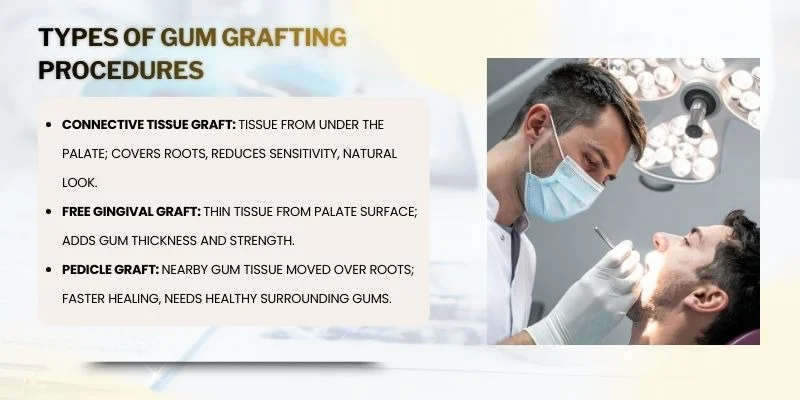
When your gums have receded, there are a few common ways your periodontist can replace the lost tissue. Each type of gum graft has its own method of taking tissue and placing it to cover exposed roots.
Knowing the differences helps you understand what to expect from your gum grafting procedure.
Connective Tissue Graft
A connective tissue graft is the most common gum grafting procedure. Your periodontist will take tissue from under the roof of your mouth, called the palate.
This tissue is removed from beneath a flap, not the surface, which helps reduce discomfort after surgery. The graft tissue is then stitched over the areas where your gums have pulled back.
This method covers the exposed roots well, helping to reduce sensitivity and protect against decay. Because two areas are involved (the donor site on your palate and the graft site) this procedure usually takes 1–2 hours.
You may experience some soreness where the tissue was taken, but healing usually occurs within a few weeks. This graft works well for covering deep gum recession while creating a natural look.
Free Gingival Graft
In a free gingival graft, the tissue is taken directly from the surface of your palate. This type is often chosen if you have thin gums naturally or need added thickness.
The tissue is removed as a thin piece and placed on the gum line where recession has occurred. This procedure helps make your gums stronger and less likely to recede again.
Since the graft comes from the surface, it might take a little longer to heal and may cause more initial discomfort than a connective tissue graft. Your periodontist will stitch the graft in place, and the healing may involve some mild swelling and tenderness.
It’s a good option if you want to boost the amount of gum tissue, especially in areas prone to future recession.
Pedicle Graft
The pedicle graft does not require taking tissue from the roof of your mouth. Instead, your periodontist loosens gum tissue next to the area with recession and gently slides it over the exposed root.
One advantage of this method is that the graft keeps its own blood supply, which helps it heal faster. However, this technique only works if you already have plenty of healthy gum close to the problem area.
The surgery usually takes less time than other gum grafts, and recovery tends to be quicker. It’s a good choice when the nearby gum tissue is thick and healthy enough to cover the root without needing tissue from the palate.
How the Gum Grafting Process Works
Gum grafting is a careful procedure to fix receding gums and protect your teeth. It involves detailed steps from diagnosing the issue to performing surgery with different techniques focused on your comfort and healing.
Understanding how the process unfolds can help you feel more confident about your treatment.
Consultation and Diagnosis
Your first step is a thorough exam by a periodontist, a dental professional specialized in gum health. They will check how much your gums have receded and measure the pockets around your teeth.
This helps identify the most affected areas and the severity of gum loss. Your periodontist may take X-rays or use other tools to see the bone structure supporting your teeth.
Based on this, they’ll decide if gum grafting is the best option or if you can try less invasive treatments first. During this visit, the periodontist will explain the procedure, risks, and benefits.
You can ask questions and discuss sedation options to keep you comfortable during surgery. This consultation sets the foundation for a personalized treatment plan.
Surgical Steps of a Gum Graft
During the procedure, the dentist or periodontist will use local anesthesia to numb your mouth. This stops you from feeling pain but keeps you awake.
If you want, sedation options like nitrous oxide or oral meds may be available to ease anxiety. The surgery usually involves three main steps:
- Preparation: The periodontist cleans and prepares the area where gums have receded, removing bacteria and damaged tissue.
- Harvesting tissue: They take a small piece of gum tissue from the roof of your mouth (palate). This tissue will cover the exposed roots. In some cases, donated graft material is used instead, avoiding the need for a second surgical site.
- Placement and suturing: The graft is placed over the exposed roots and stitched into place. The stitches may dissolve on their own or be removed during a follow-up visit.
The surgery time varies but usually lasts about an hour for one tooth.
Modern Alternatives: Laser-Assisted Grafting
Newer methods sometimes use lasers to assist with gum grafting. Laser-assisted periodontal surgery can reduce bleeding and speed up healing.
It allows precise removal of damaged tissue while limiting trauma to the gums. Lasers can also help clean infected areas and prepare the site without cutting large flaps.
This minimally invasive technique may mean less discomfort and quicker recovery for you. Not every case qualifies for laser use, but if suitable, your periodontist will discuss it as part of your treatment.
This option is growing in popularity because it preserves more of your natural tissue and reduces risks linked with traditional graft surgery.
For more detailed information about how gum graft surgery works, visit gum graft surgery steps.
Benefits and Risks of Gum Grafting
When dealing with gum recession, getting a gum graft can improve how your gums work and look. It can protect your teeth and reduce sensitivity but, like any procedure, it comes with some risks you should know about.
Restoring Gum Health and Function
A gum graft helps cover the roots of your teeth that have become exposed. This is important because exposed roots can cause tooth sensitivity to hot, cold, or sweet foods.
The graft adds healthy gum tissue where it’s missing, which protects the roots and lowers your chance of getting cavities or infections there. The procedure also supports the overall gum health around your teeth.
Stronger gums hold your teeth in place better, reducing the risk of tooth loss. By treating recession early with a gum graft, you stop further damage to both your gums and the bone underneath.
This can save you from more serious dental problems later on.
Aesthetic Improvements
If your gums have pulled away from your teeth, it can make your teeth look longer than normal or uneven. A gum graft restores a natural gum line, which can vastly improve how your smile looks.
This not only boosts your confidence but also helps you feel better about showing your teeth when you smile or talk. For many people, the change is subtle but important, they get a healthier, more youthful appearance.
Plus, covering exposed roots stops the visible damage that might make your teeth look worn or unhealthy.
Potential Risks and Complications
Although gum grafts usually work well, there are some risks you should be aware of. After surgery, you might feel some pain, swelling, or bleeding for a few days.
These symptoms are normal but should gradually improve. A small risk exists that the graft may not fully attach or heal properly.
This could mean you need a second procedure. Infection is rare but possible, especially if you don’t follow aftercare instructions.
You might also experience temporary tooth sensitivity right after the surgery. This usually fades as your gums heal but can be uncomfortable at first.
Recovery and Long-Term Care After Gum Grafting
Taking care of your gums right after surgery is key to healing well and keeping your smile healthy. This includes managing pain, following a special diet, and being gentle with oral hygiene.
Post-Operative Care Essentials
Right after your gum graft, your mouth will need extra care. Expect some swelling, tenderness, and minor bleeding for the first few days.
Use any pain meds your dentist gives you and try cold compresses to reduce swelling. Stick to soft, cool foods like yogurt, smoothies, or scrambled eggs for at least a week.
Avoid spicy, crunchy, or hot items that could irritate your healing gums. Drinking plenty of water and resting with your head slightly raised can also help.
Be careful when brushing. Use a soft toothbrush and avoid the graft area until your periodontist says it’s okay.
Follow any cleaning instructions your dentist provides to stop infection and gum disease during recovery. Sutures may be removed after about two weeks, depending on the type.
Tips for Healthy Gums After Surgery
Once healing starts, keeping up a gentle but effective oral care routine is vital. Brush twice a day with a soft brush, but be cautious near the graft at first.
Avoid flossing the grafted site until your dentist clears you. You can use an antibacterial mouthwash if prescribed.
This helps keep bacteria away and lowers the chance of infection. Regular dental checkups let your dentist track how well your gums are doing.
Stay away from smoking and alcohol during recovery because these slow healing and increase risks. Also, avoid heavy exercise for a couple of weeks.
Preventing Future Gum Recession
Protecting your gums after a graft means avoiding habits that cause damage. Brush gently but thoroughly, and floss daily once cleared to stop plaque buildup, which can lead to gum disease.
Try not to clench or grind your teeth, since this can put pressure on your gums. Use a night guard if you grind at night.
Keep regular dental visits to catch any early signs of gum issues. Maintain a balanced diet rich in vitamins, especially vitamin C, to support gum tissue health.
Frequently Asked Questions
You might wonder about the signs that show you need a gum graft or how the surgery and recovery will go. Knowing what to expect with costs, healing time, and discomfort helps you feel more prepared and confident about the process.
What are the indicators that a gum graft is necessary for recession?
You may need a gum graft if your teeth feel more sensitive to hot or cold foods. If your teeth look longer than before or if you can see their roots, that’s a clear sign.
Bleeding gums, inflammation, or loose teeth can also mean gum tissue has worn away enough to require a graft. These signs show that the gums aren’t protecting your teeth well anymore.
How much does gum graft surgery typically cost?
The cost varies depending on where you live, the type of graft you need, and the dentist’s experience. Generally, gum graft surgery can range from a few hundred to over a thousand dollars per tooth.
Insurance might cover some of the cost if the procedure is necessary for health reasons. It’s best to check with your dentist and insurance provider for a more exact estimate.
What should I expect to see in my gums before and after a graft procedure?
Before the graft, your gums may look thin, pulled back, or uneven. You might notice exposed roots or redness around affected areas.
After the surgery, the grafted area might look swollen or slightly red. Over a few weeks, you should see new, thicker gum tissue covering previously exposed roots, helping protect your teeth.
Can you describe the healing process after undergoing a gum graft?
Healing usually takes one to two weeks. During this time, your dentist will advise you to eat soft foods and avoid brushing or flossing near the graft site.
You may need to rinse gently with a special mouthwash. The area will slowly heal, and the new gum tissue will settle into place, becoming strong enough to protect your tooth roots.
At what point is gum recession too advanced for grafting to be effective?
If the recession has caused severe bone loss or your teeth are loose, gum grafting might not work well alone. In those cases, more complex treatments or tooth replacement might be needed.
Your dentist will evaluate how much healthy tissue and bone remain to decide if a graft will help or if other options are better.
What level of discomfort should one anticipate during and after gum graft surgery?
During the procedure, you won’t feel pain because of local anesthesia.
Afterward, mild to moderate discomfort or soreness is normal for a few days.
Your dentist may recommend over-the-counter pain relievers and special care to ease swelling and prevent infection.