


Losing a tooth can feel stressful, but luckily, you have solid options to replace it. When deciding between a single tooth implant and a dental bridge, the best choice depends on your health, budget, and how long you want the replacement to last.
A single tooth implant often offers a more natural look and longer-lasting solution, while a bridge can be quicker and less expensive upfront.
Implants are placed directly into your jawbone, which helps keep your bone strong and preserves your smile’s shape. Bridges rely on nearby teeth for support and usually require less time to complete.
Knowing how each option works can help you pick what fits your lifestyle best.
Key Takeaways
- Implants last longer and support jawbone health better than bridges.
- Bridges often cost less and require less time to install.
- Your overall health and budget play a big role in choosing the best option.
What Is a Single Tooth Implant?
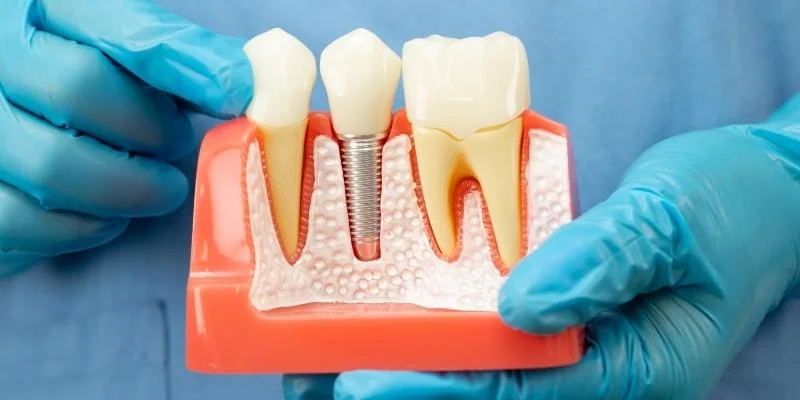
A single tooth implant replaces a missing tooth by putting a strong foundation into your jawbone. It acts just like your natural tooth root and supports a crown that looks and works like your real tooth.
This way, your smile stays complete and your bite stays strong.
Structure and Placement
A single tooth implant starts with a small titanium post. This post acts as a strong root and is placed directly into your jawbone through a minor surgery.
The titanium is chosen because your body accepts it well, making it less likely to cause problems. Once placed, the implant needs time to heal and fuse with your bone.
This process, called osseointegration, usually takes a few months. After this, the implant is firmly anchored in your jaw, ready to support the new tooth.
The implant is designed to fit securely without affecting your nearby teeth. This preserves your natural smile and keeps adjacent teeth healthy.
Implant Crown and Artificial Tooth Root
The part of the implant you see is called the crown. It is a custom-made artificial tooth, shaped and colored to match your natural teeth.
The crown attaches to the titanium post through an abutment, which connects the root to the visible tooth. The implant crown replaces only the visible part of your tooth, while the titanium post acts as an artificial tooth root.
This setup helps maintain your bite and chewing ability the same way your natural tooth would. Since the implant is anchored in your jawbone, it feels and functions more like a natural tooth than other options.
This means you can eat, smile, and speak with confidence.
Implant Materials and Integration
Titanium is the most common material used for implants. It’s strong, light, and biocompatible, meaning it generally won’t cause reactions in your body.
This helps your jawbone grow tightly around the implant, holding it in place for years. After the implant is placed, your bone cells slowly attach to the titanium surface.
In fact, studies show that single-tooth implants have a long-term survival rate of 95-98%, highlighting their reliability when placed and cared for properly.
This natural process creates a strong bond, making the implant stable and long-lasting. The crown on top is usually made of ceramic or porcelain.
These materials look very natural and resist stains, so your new tooth stays bright and blends in with your other teeth. Using these materials together gives you a dental implant that works well and can last a lifetime with good care.
What Is a Dental Bridge?
A dental bridge is a way to replace one or more missing teeth by using the teeth next to the gap for support. It helps restore your smile and makes it easier to chew and speak.
It usually involves crowns and an artificial tooth called a pontic.
Bridge Components and Procedure
A dental bridge has three main parts: pontic, abutment teeth, and crowns. The pontic is the false tooth that fills the empty space.
The abutment teeth are the healthy teeth on either side of the gap. They hold the bridge in place.
First, your dentist will shape the abutment teeth to fit crowns. Then, these crowns are placed on the abutment teeth and connected to the pontic.
This whole unit is fixed so it stays solid and stable. The process usually takes two visits.
At the first visit, your teeth get prepared, and impressions are made. The second visit is for fitting and cementing the bridge in your mouth.
Role of Abutment Teeth and Crowns
Your abutment teeth play an important role by supporting the entire bridge. Because these teeth have to hold the weight of the pontic, they sometimes need crowns to protect and reinforce them.
Crowns fit over your abutment teeth like a cap. They keep these teeth strong since they now carry extra stress.
This means your abutment teeth will be reshaped to make room for the crowns. The health of your abutment teeth is important.
They need to be strong enough to handle the bridge. If they are weak or damaged, a bridge may not be the best choice.
Failure often occurs due to decay or damage of the abutment teeth, which accounts for roughly 50% of bridge complications.
Types of Dental Bridges
There are three common types of dental bridges you might hear about:
- Traditional bridges: These use crowns on abutment teeth on both sides of the gap. The pontic sits in the middle.
- Cantilever bridges: These have a crown on only one abutment tooth, not both. They are used when there’s no tooth on one side of the gap.
- Maryland bridges: These use a metal or porcelain framework bonded to the back of the abutment teeth. They require less tooth shaping but aren’t as strong as traditional bridges.
Your dentist will help you decide which type fits your mouth and needs best.
Take the first step toward a stronger, brighter smile!
Comparing Single Tooth Implant vs Bridge

When you’re deciding between a single tooth implant and a bridge, it’s important to think about how each option works for chewing, how natural they look, and what fits best for your specific missing tooth situation. Each choice has its own impact on your mouth’s health and function.
Functionality and Chewing Forces
A single tooth implant acts like a natural tooth because it replaces both the root and the crown. It is placed directly into your jawbone, which helps it handle bite forces just like a real tooth.
This means you can chew comfortably and avoid extra pressure on your other teeth. On the other hand, a bridge depends on the teeth next to your gap for support.
These adjacent teeth must be filed down to hold the bridge in place. This can put extra bite forces on them, which could weaken those teeth over time.
If you need a strong, lasting solution, implants handle chewing forces better because they don’t rely on neighbors. For quicker fixes, bridges work well but may not last as long due to pressure on supporting teeth.
Aesthetics and Natural Appearance
Implants usually look very natural. Since they replace the tooth root, your gum and bone can stay healthy and keep a natural shape.
This means the implant crown fits well with your smile and maintains the contour of your gums around the tooth. Bridges cover the gap with a fake tooth attached to crowns on nearby teeth.
Although bridges can look good right after placement, they might cause some changes in the gums over time. This can make the area look less natural, especially if the bridge needs replacement years later.
If you care about a long-term, natural look, an implant is often the best choice. A bridge offers a decent temporary appearance, but it might affect your smile’s natural shape in the long run.
Suitability for Missing Teeth
If you’re missing just one tooth, you have both options as good possibilities. Implants don’t affect your other teeth, so they are gentle on your mouth’s overall health.
Bridges require filing down the neighboring teeth, which can be a downside if those teeth are healthy. Bridges usually cost less upfront and need fewer visits to place, which might fit your budget or busy schedule better.
If you are looking for a solution that protects your remaining teeth and lasts many years, implants are often preferred. For faster, affordable tooth replacement, bridges can be a practical choice.
Oral Health Impact and Long-Term Outcomes
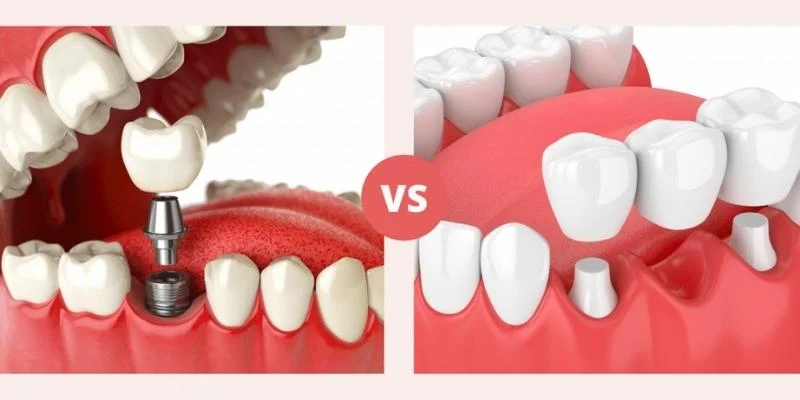
Understanding how a tooth implant or bridge affects your mouth over time can help you choose the best option for your health. This includes how well your jawbone stays strong, what happens to the teeth next to the gap, and the risks for tooth decay or gum problems.
Jawbone Health and Bone Loss
When you lose a tooth, the jawbone in that spot starts to shrink because it isn’t being used. A dental implant is placed directly into your jawbone.
This helps keep the bone healthy by acting like a natural tooth root. It supports the jawbone and can prevent bone loss over time.
In contrast, a dental bridge doesn’t connect to the jawbone. Without a root under the missing tooth, bone density may decrease, which can change your facial shape and weaken the bone.
Sometimes bone grafting is needed before an implant to build up the jawbone if it’s too thin, but this helps keep your jaw strong long term.
Impact on Adjacent Teeth
To place a dental bridge, the healthy teeth next to the gap need to be shaved down. These teeth hold the bridge in place, which can weaken them or make them more likely to need work later.
A dental implant does not affect your neighboring teeth because it stands alone. This means your natural teeth stay intact and healthy.
Protecting those teeth can reduce the chance of future dental work and helps keep your overall mouth stronger.
Risk of Tooth Decay and Gum Health
Bridges can be harder to clean properly because food and plaque can get trapped underneath the false tooth. This makes it easier for tooth decay and gum disease to develop around those teeth.
Since implants are separate and act like real teeth with regular cleaning, you have a lower risk of decay and gum problems around them. Keeping the implant area clean is key, but it is generally easier to care for than a bridge.
This helps keep your mouth healthier in the long run.
Durability, Longevity, and Maintenance
When choosing between a single tooth implant and a bridge, you want to know how long each will last and how much care they need. You also need to understand common problems and how to avoid them to keep your smile strong.
Expected Lifespan of Restorations
Single tooth implants can last many years, often a lifetime, when you take good care of them. The titanium post fuses with your jawbone, making the base strong and stable.
The dental crown on top is made of durable materials like ceramic, which resist wear. Dental bridges usually last 10 to 15 years.
They rely on your neighboring teeth as supports, which can weaken over time. The dental crowns on these teeth hold the bridge in place but may need replacing sooner.
Your personal habits and oral health play a big role in how long either option lasts.
Cleaning and Daily Care
Caring for a dental implant is similar to a natural tooth. You need to brush and floss daily.
Using a floss threader can help clean around the implant crown and beneath it. This prevents plaque buildup and gum disease.
Bridges require more effort. You’ll need to clean under the false tooth carefully, often with special floss or interdental brushes.
Since bridges connect to healthy teeth, keeping those teeth healthy is essential to prevent damage. Regular dental check-ups are vital for both treatments to keep your mouth healthy.
Common Complications and Repairs
Implants usually have fewer problems if you maintain good oral health. Sometimes, implants may have issues with gum inflammation if not cleaned well.
Rarely, the implant may loosen if bone loss occurs. Bridges can cause more complications over time.
The supporting teeth might get decay or weaken because they are filed down to hold the bridge. The cement holding the bridge can break, causing it to loosen or fall out.
If you notice discomfort, looseness, or pain with either, see your dentist right away to avoid bigger problems.
Cost, Insurance, and Choosing the Best Option
When you replace a missing tooth, cost and insurance can play a big role in your choice. Besides price, you should think about how long each option lasts and how it fits your dental health and lifestyle.
This will help you pick the best tooth replacement for you.
Upfront and Long-Term Costs
A dental implant usually costs between $3,000 and $5,000. This price covers the implant post, abutment, and crown.
Sometimes you may need extra work like bone grafts or scans, which adds to the cost.
A dental bridge is less expensive at first, typically between $1,000 and $1,500 per tooth involved. Bridges may need to be replaced every 5 to 10 years, which can add up over time.
| Cost Type | Dental Implant | Dental Bridge |
| Upfront Price | $3,000 to $5,000 | $1,000 to $1,500 |
| Lifespan | 25 years or more | 5 to 10 years |
| Additional Costs | Bone grafts, scans | Possible bridge replacement |
Insurance Coverage Considerations
Your dental insurance might cover part of the cost for either implants or bridges. Many plans are more likely to cover dental bridges because implants can be seen as more elective and expensive.
Check with your insurance about coverage limits, co-pays, and any waiting periods. Sometimes, the insurance cap on bridges can make implants more affordable in the long run, even though they cost more upfront.
Factors to Consider in Decision-Making
Think about your oral health. Dental implants protect your jawbone by integrating into it, which helps maintain your face shape and prevents bone loss.
Bridges rely on nearby teeth for support, which might weaken those teeth over time. If your adjacent teeth are healthy, a bridge might work well, but implants avoid this issue.
You should also consider treatment time. Bridges can be placed in weeks, while implants take 4-6 months because they need time to heal and bond with your bone.
Your daily routine, budget, and how long you want the solution to last all matter. Talk with your dentist for advice tailored just for you.
Frequently Asked Questions
Choosing between a dental implant and a bridge means thinking about how each feels, lasts, and fits your budget. You’ll also want to consider the look, strength, and any discomfort during the process.
What are the pros and cons of a dental implant compared to a bridge?
Dental implants look and feel like natural teeth. They don’t affect your nearby teeth and help keep your jawbone healthy.
Implants need surgery and can take months to heal. Bridges are faster and don’t need surgery.
They may cost less at first, but you have to file down healthy teeth next to the gap. Bridges usually last 10 to 15 years and don’t prevent bone loss underneath.
Is a dental implant or bridge more durable for replacing a single tooth?
Implants are more durable and can last a lifetime with proper care. Bridges tend to need replacement after 10 to 15 years.
Because implants fuse with your jawbone, they stay stable and strong much longer than bridges, which rely on neighboring teeth for support.
How does the cost of a dental implant compare to a bridge for one tooth?
Dental implants generally cost more upfront due to surgery and materials. Bridges usually cost less initially.
In the long run, implants may save you money because they last longer and don’t require as many replacements or repairs.
What’s the better option for front teeth: an implant or a bridge?
Implants are often better for front teeth because they look and feel natural and help keep your facial shape. Bridges can still work well if the teeth next to the gap already need crowns.
But bridges might not look as seamless as implants over time.
Can you explain the pain associated with getting a bridge versus an implant?
Getting a bridge usually involves prepping the nearby teeth, which can cause some sensitivity but no surgery. Implants require surgery to place a post into your jawbone.
You’ll likely feel some soreness for a few days, but modern anesthesia and techniques keep pain to a minimum.
In terms of strength, how does a single tooth bridge hold up compared to an implant?
A single tooth implant is stronger because it replaces the root and bonds with your jawbone.
Bridges rely on surrounding teeth and can weaken them over time.
They are not as stable as implants when it comes to biting and chewing forces.