

Choosing between mini dental implants and traditional implants can feel confusing. Understanding the key differences helps you make the right choice for your smile.
Mini implants are smaller, less invasive, and cost less upfront.
They are ideal if you want faster results or have limited bone density.
Regular implants are larger and stronger.
They offer long-term stability and are better for replacing bigger teeth like molars.
Your decision depends on factors like your jawbone health, budget, and how quickly you want to recover.
Mini implants often allow same-day use and quicker healing, while standard implants need more time to fully integrate but can last much longer.
Key Takeaways
- Mini implants offer less invasive treatment and faster recovery times.
- Traditional implants provide greater strength and last longer.
- Your choice depends on bone health, budget, and desired treatment speed.
Mini Implants vs Standard Implants: Key Differences
When choosing between mini and standard dental implants, understanding their structure, size, and how they are placed can help you decide what fits your needs.
These differences also affect how long the entire treatment takes and what type of care you might require afterward.
Definition and Structure
Mini dental implants are smaller, one-piece posts made typically of titanium.
They act as artificial tooth roots but have a thinner diameter than regular implants.
Standard or full-size implants are usually two-piece systems with a titanium post placed in the jawbone and a separate connector piece called an abutment.
This allows for more flexibility in attachment and restoration options.
Because mini implants are thin and one-piece, they are often used when space or bone density is limited.
Standard implants provide a stronger foundation for crowns, bridges, or dentures because of their larger size and two-part design.
Both types rely on osseointegration, where the bone fuses with the titanium to hold the implant firmly.
Size and Placement Methods
The main size difference is that mini implants are usually under 3mm in diameter, while standard implants range from 3.5 to 6mm.
This size change impacts placement methods and the invasiveness of the surgery.
Mini implants often require less bone and involve a less invasive procedure, sometimes without the need for cutting large gums or bone grafting.
Standard implants need more bone volume and typically require a surgical flap that exposes the bone for precise placement.
This can mean more healing time but offers greater stability and support for chewing.
Treatment Timeline
The treatment for mini implants is generally quicker.
Because these implants are smaller and less invasive to place, you might experience faster recovery and shorter healing periods.
Sometimes, mini implants can even be used right away for denture stabilization or temporary teeth.
Standard implants take longer because the bone needs time to fully fuse with the post through osseointegration, a process that usually takes a few months.
After this healing period, your dentist will attach the abutment and crown or other final restorations.
While the process is longer, standard implants are designed to last many years with proper care, providing a solid, permanent solution.
Advantages and Limitations of Mini Implants
Mini dental implants offer practical benefits, especially when traditional implants may not be a good fit.
They can help secure removable dentures better and are often a choice when jawbone density is low.
However, their use comes with some trade-offs you should know before deciding.
Less Invasive Placement
One big plus of mini dental implants is how they are placed.
Because they are smaller in size (usually less than 3 mm wide) the surgery requires smaller incisions.
This means the procedure is less invasive and involves less damage to your gums and bone.
With less cutting, you’re likely to feel less pain and swelling afterward.
The shorter surgery time and simpler process can make the treatment easier, especially if you’re nervous about dental surgery.
This less invasive approach is also better if your overall health means you need to avoid longer, more complex operations.
Faster Healing and Recovery
Thanks to smaller implants and less invasive surgery, your body often heals quicker after mini implant placement.
Healing times can be much shorter compared to standard implants that require deeper bone integration.
A faster recovery means you can start using your new implants sooner, enjoying better comfort and function.
This quicker healing process is especially helpful if you have medical conditions that slow healing or if you want to avoid long periods without teeth.
Mini implants can reduce downtime because they don’t usually require bone grafts or extra procedures.
However, healing time can still vary depending on your specific health and oral care.
Ideal for Limited Bone Density
If your jawbone density is low because of bone loss or natural anatomy, mini implants might be the solution you need.
Their narrow design fits well in areas where a standard implant wouldn’t work without extra bone grafting.
Mini dental implants are often used to stabilize removable dentures in these cases.
They can improve denture fit and prevent slipping, making eating and speaking easier for you.
This makes them a good choice if you want to improve oral health but lack enough jawbone for full-sized implants.
Still, because they are smaller, mini implants may not be the best option for teeth that face heavy chewing pressure.
Their strength and durability are more limited compared to standard implants.
Benefits and Drawbacks of Standard Implants
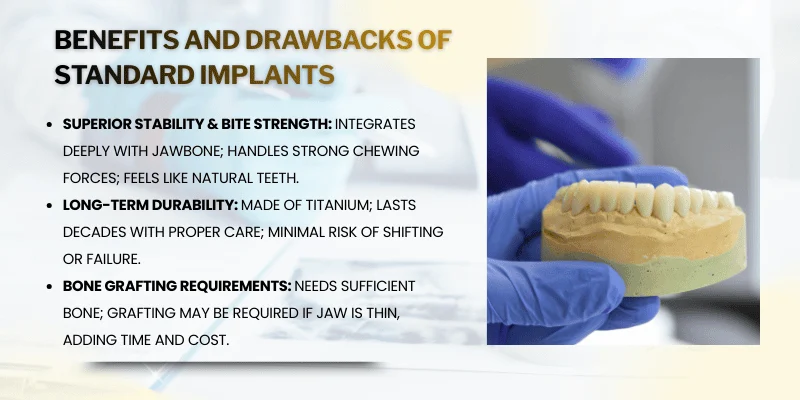
Standard implants offer strong support and long-lasting results, but they also come with some specific needs.
You get a durable solution that handles heavy biting forces well, yet these implants often need enough bone to hold them firmly.
Sometimes, extra steps like bone grafting are necessary to prepare your jaw.
Superior Stability and Bite Strength
Standard implants are larger and designed to integrate deeply with your jawbone through a process called osseointegration.
This bonding makes them very stable.
You can chew your food with confidence because they handle strong bite forces, including on back molars.
This stability is why traditional dental implants are often the best choice if you want to replace single teeth, bridges, or even full arches.
You get a natural feel that’s close to real teeth.
If you need a strong bite and durability, standard implants usually perform better than smaller options.
Long-Term Durability
One of the biggest reasons people choose standard implants is their durability.
These implants are made from titanium, which resists wear and corrosion over many years.
When properly cared for, they can last decades.
Because they integrate firmly with your bone, they reduce the risk of shifting or failing over time.
This gives you a reliable, permanent option for tooth replacement.
Plus, you often won’t need replacements or repairs as often compared to smaller or temporary solutions.
Requirements for Bone Grafting
Standard implants need sufficient bone thickness and volume to hold them securely.
If your jawbone is thin or has shrunk after tooth loss, you might need a bone graft before your implant can be placed.
Bone grafting builds up your jawbone using natural or synthetic material.
This procedure adds healing time and cost but creates a stable foundation for your implants.
If your bone isn’t strong enough, skipping this step might cause implant failure.
Your dentist will evaluate your bone health with imaging to decide if grafting is necessary.
Choosing the Ideal Implant for Your Case
Choosing the right implant depends on your jawbone size, where the missing teeth are, and what you want long term.
Your treatment plan will focus on how to restore your oral function with the best dental restoration possible.
Knowing the strengths of each implant type helps you make a smart choice.
Who Is a Candidate for Mini Implants?
You might be a good candidate for mini implants if your jawbone is thin or has lost density.
Mini implants work well if you can’t have major surgery, like bone grafting.
They are often used to secure dentures, especially in the lower jaw, giving you more stability with fewer visits and less healing time.
Mini implants are less invasive, so if you want a quicker implant procedure with less pain, they could be the right fit.
They’re also often more affordable, making them a helpful option for restoring your smile without breaking the bank.
Best Situations for Standard Implants
Standard implants are usually best when you need replacement teeth that can handle strong biting and chewing, such as molars or bridges.
If you have a healthy jawbone, these implants provide a long-lasting solution because they are designed to fuse deeply with your bone.
They work well for more complex dental restorations like full-arch replacements or implant-supported dentures.
The process takes longer to heal, but standard implants are more durable and versatile.
If you want a treatment plan focused on permanent, natural-looking results, these implants are likely your best choice.
Cost, Longevity, and Maintenance Considerations
When choosing between mini implants and standard implants, it’s important to think about both the upfront cost and how long the implants are likely to last.
You’ll also want to understand what kind of care each type needs to keep your mouth healthy over time.
Initial Costs and Long-Term Value
Mini implants generally cost less than standard implants.
You can expect to pay about $500 to $2,000 per mini implant, while standard implants often run between $1,500 and $6,000 each depending on where you live and the complexity of the dental implant procedure.
Mini implants usually mean a less invasive placement, which can save you money on surgery and recovery time.
However, if you need many implants or a full arch restoration, costs can add up quickly, making standard implants more cost-effective for bigger jobs.
Keep in mind that while mini implants may save you money upfront, they might require more frequent replacements or repairs.
This can affect the long-term value of your investment in dental implant placement.
Expected Lifespan and Care

Standard implants have been used successfully for decades and often last 25 years or more with proper care.
They are made to handle the pressures of chewing, especially on molars.
Mini implants are smaller and less durable, with a typical lifespan of 5 to 10 years depending on your oral health and habits.
They work best in lower-stress areas like stabilizing dentures or replacing small front teeth.
Maintenance for both types involves good oral hygiene, including brushing, flossing, and regular dental check-ups.
However, mini implants might require more careful monitoring because their smaller size can make them more prone to fracture or loosening under heavy bite forces.
Choosing the right option depends a lot on how you plan to use your implants and how committed you are to your oral care routine.
For details on what fits your needs, it helps to have a consultation to weigh these factors.
Frequently Asked Questions
Understanding how mini and standard dental implants differ will help you see the benefits, costs, and care each option involves.
This section answers common questions about which implant might fit your needs best.
What are the primary advantages and disadvantages of mini dental implants compared to standard implants?
Mini implants are less invasive and often cheaper.
They heal faster and work well if your jawbone is narrow.
But they aren’t as strong and may not last as long.
Standard implants are stronger and can support single teeth, bridges, or dentures.
However, they cost more and take longer to heal.
Sometimes you may need extra procedures, like bone grafting, before getting them.
Can mini implants be used in cases where standard implants are not suitable?
Yes.
If you have low bone density or a thin jawbone, mini implants might be your only option.
They need less bone and avoid complex surgeries, making them a good solution when standard implants can’t be placed.
Is there a significant difference in the longevity and durability between mini and standard dental implants?
Standard implants generally last longer because they are larger and designed to handle strong chewing forces.
Mini implants may wear out sooner and aren’t ideal for back teeth that take heavy bites.
How do the costs of mini dental implants compare to the costs of standard dental implants at typical dental clinics?
Mini dental implants usually cost between $500 and $1,500 per implant.
Standard implants, including the crown, can range from $3,000 to $5,000 each.
The price gap reflects the size, strength, and durability of standard implants.
What should patients expect in terms of recovery and care after getting mini dental implants?
Recovery from mini implants is quicker because the surgery is less invasive.
You may have less pain and swelling.
You can often return to normal activities within a few days.
Proper oral hygiene is important to keep the implants healthy.
Are there any specific scenarios where mini dental implants are the preferred option over standard implants?
Mini implants work best if you have narrow jaws. They are also useful if you want to stabilize dentures in the lower jaw.
They are preferred if you want a faster procedure. Mini implants may be chosen if you have medical conditions that make surgery riskier.
If budget is a concern, mini implants can be a more affordable start.