

If you’re considering dental implants or dentures, you might think they solve the same problems. While dentures help replace missing teeth, dental implants fix issues dentures can’t, like preventing bone loss and offering a more natural feel and function.
These hidden benefits make a big difference in your comfort and oral health over time. Dentures can slip or cause sore spots that make eating and speaking tricky.
Implants are anchored in your jawbone, so they stay secure and don’t cause these problems. Plus, dental implants help keep your jaw strong and face looking younger, something dentures can’t do.
You may not realize that implants also make it easier to keep your mouth clean and lower the risks of infections or nerve damage. If you want a lasting, healthier solution that works like real teeth, understanding these hidden advantages can help you make the best choice for your smile.
Key Takeaways
- Implants support jawbone health in ways dentures cannot.
- They provide better stability and comfort for daily activities.
- Implants help maintain cleaner, healthier mouths with less risk of complications.
Core Differences Between Dental Implants and Dentures
Understanding how dental implants and dentures differ helps you see why implants solve some problems that dentures can’t. Their design, how they fit in your mouth, and how they perform in daily use all play key roles in your experience and oral health.
Definition and Types of Dental Implants
Dental implants are small posts made of titanium or similar materials that act as artificial tooth roots. These posts are surgically placed into your jawbone by a dental professional.
Over time, your bone grows around the implant, making it very stable. Once the implant is secure, a crown is attached to replace the visible part of your tooth.
You can get a single implant for one missing tooth or multiple implants for several teeth. There are also options like All-on-4 implants, which support a full arch of teeth with just four implants.
Mini dental implants use smaller posts and are less invasive but still fuse with your jawbone.
Dental implants have a success rate of 95-98%, making them a reliable solution for tooth replacement.
How Dentures Work and Common Types
Dentures are removable fake teeth attached to a molded plate that fits over your gums. They rest on your mouth’s soft tissue and are kept in place mainly by suction or adhesives.
There are two main types:
- Full dentures replace all teeth in the upper or lower jaw.
- Partial dentures clip onto your remaining natural teeth with small metal hooks, filling in the gaps where teeth are missing.
Some hybrid options like implant-retained dentures use implants to hold the denture more firmly, improving fit and comfort but still allow removal for cleaning.
Function and Stability Compared
Dental implants feel and act much like natural teeth because they are anchored in your jawbone. This stability helps you chew firmly and speak clearly without worrying about movement.
Dentures, while effective, tend to be less stable. They can slip or cause clicking sounds, especially as your jawbone changes shape and shrinks over time when tooth roots are missing.
This loosening can make eating and talking harder. Because dental implants replace the root, they also preserve the bone under your gums, maintaining your face’s shape.
Dentures do not stop bone loss, which can lead to changes in your appearance and denture fit. Choosing implants means choosing better long-term function and support, while dentures offer a less expensive but removable solution.
Hidden Oral Health Benefits of Dental Implants
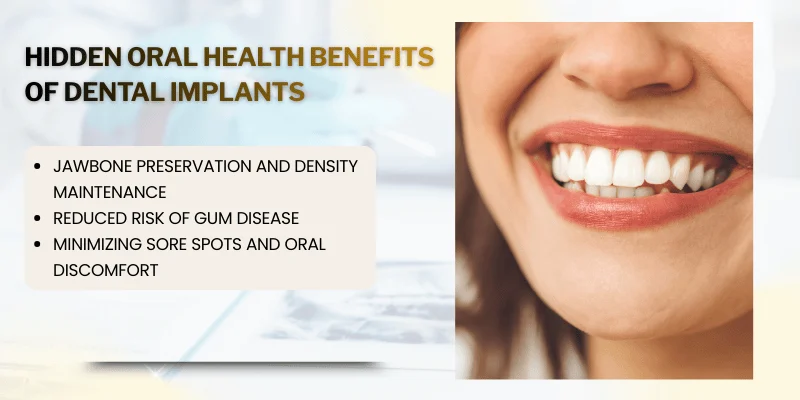
Dental implants do more than just replace missing teeth. They help protect the health of your mouth in ways dentures can’t.
By supporting your jawbone, reducing the chance of infections, and preventing painful sores, implants keep your mouth strong and comfortable.
Jawbone Preservation and Density Maintenance
When you lose a tooth, the bone that used to hold it can start to shrink. This happens because the jawbone needs pressure from tooth roots to stay healthy.
Over 25% of the jawbone can be lost within the first year after tooth loss without implant replacement.
Dentures sit on top of your gums and don’t provide this pressure, so bone loss can continue. Dental implants act like natural tooth roots.
When they are placed in your jawbone, they stimulate it, keeping the bone firm and maintaining its density. This helps prevent long-term changes in your face shape, like a sunken or aged appearance.
By maintaining jawbone density, implants also keep your other teeth stable and prevent them from shifting out of place. This biological connection between the implant and your bone is called osseointegration, and it’s key to keeping your mouth’s foundation strong.
Reduced Risk of Gum Disease
Dentures can sometimes trap food and bacteria around your gums. This buildup increases the risk of gum disease, which can lead to inflammation and even bone loss.
Dental implants create a tight seal with your gums. This seal helps keep harmful bacteria out, reducing your chance of gum infections like peri-implantitis; a disease similar to gum disease but tied to implants.
When cared for properly, implants lower the risk of chronic inflammation in your mouth. Healthier gums mean fewer infections and less discomfort.
You’ll also reduce the risk that oral bacteria could enter your bloodstream and cause problems elsewhere in your body, such as heart issues.
Minimizing Sore Spots and Oral Discomfort
Dentures rest on your gums and often cause sore spots or irritation. They can shift around while you eat or talk, making your mouth feel uncomfortable or painful.
With dental implants, you get a stable and permanent solution. They don’t move or press on your gums the way dentures do, so sore spots and irritation are much less likely.
This makes eating and speaking easier and pain-free. Since implants feel and work like natural teeth, they allow you to maintain good oral hygiene without discomfort.
This helps keep your mouth clean, fresh, and healthy. By preventing sores and discomfort, implants also reduce the chances of infections caused by irritated tissues, making your daily life more comfortable.
Reducing Complications: Nerve, Sinus, and Bone Issues
When getting dental implants, careful planning and precise placement are key to avoiding problems. Taking steps to protect sensitive nerves and avoid sinus damage can help keep your mouth healthy.
Understanding these details can make your implant experience safer and more successful.
Nerve Damage Prevention
Nerve damage happens when an implant is placed too close to major nerves, like the inferior alveolar nerve in your lower jaw. This can cause numbness, tingling, or pain in your lips, chin, or tongue.
To reduce this risk, dentists use detailed 3D scans before surgery. These images show exactly where your nerves are, helping plan the right implant position.
Digital guides during surgery also help avoid nerve injury by controlling the depth and angle of implant placement. If you experience unusual numbness or pain after surgery, let your dentist know right away.
Early treatment can sometimes reverse nerve damage before it becomes permanent.
Addressing Sinus Issues with Implants
If you need implants in your upper jaw, your surgeon must avoid the maxillary sinus, a large cavity above your teeth. If the implant pokes into the sinus, it can cause infections or sinusitis, which may lead to discomfort or implant failure.
Before surgery, your dentist will use 3D imaging to check the distance between your bone and the sinus. Sometimes, a sinus lift is done to add bone and create space for the implant.
This helps keep the implant secure without harming the sinus. Proper planning and careful surgical techniques reduce the chance of sinus problems.
If sinus symptoms like congestion or pain appear after surgery, contact your dentist for evaluation and treatment.
Oral Hygiene and Infection Control Advantages
Taking care of your mouth is easier and more effective with dental implants. You get better control over cleaning, which helps protect your gums and prevents infections that can cause problems if left unchecked.
Improved Oral Hygiene with Implants

With dental implants, you can treat your oral hygiene much like you would with natural teeth. Unlike dentures, which can trap food and bacteria underneath, implants allow you to brush and floss normally.
This means you can remove plaque and bacteria more thoroughly every day. Brushing twice daily and flossing around your implants lowers the risk of harmful bacteria buildup.
This is important because bacteria can cause inflammation and lead to peri-implantitis, a condition that damages the tissues around your implant. Leaving it untreated may cause implant failure.
Regular cleanings at your dental office also help remove stubborn bacterial biofilm. Knowing how to care for your implants properly makes a big difference in keeping your mouth healthy and your implants lasting longer.
You can learn more about proper cleaning methods from trusted dental hygienists to get the best results.
Lower Incidence of Implant and Gum Infections
Dental implants reduce the chance of oral infections compared to dentures because they don’t allow bacteria to collect easily in hidden spaces. Dentures often cause sore spots and irritation, which can lead to infections that affect your gums and jawbone.
Infections around implants, known as implant infections or peri-implantitis, are usually caused by poor oral hygiene or immune system challenges. But when you maintain good oral care habits, your gums stay healthier, and the risk of infection drops.
Your dental provider will use special tools made from materials like glass-filled resin to clean implants gently without scratching them. Scratches can create spots for bacteria to grow, increasing infection risk.
Following post-op care instructions and managing conditions like diabetes or smoking also play big roles in preventing infection. Staying on top of your oral hygiene and regular dental visits helps you avoid these complications and keeps your implants strong and healthy.
For extra tips on preventing implant infection, you can read about effective ways to clean dental implants.
Durability and Everyday Functionality
When you think about replacing missing teeth, durability and comfort in daily life are key. You want a solution that stays strong, feels natural, and avoids hassles like slipping or frequent repairs.
How your teeth hold up over time and how they perform when you eat or talk will make a big difference in your confidence and routine.
Long-Term Stability and Security
Dental implants are anchored deep into your jawbone, making them very stable and secure. This means they don’t shift or move when you chew or speak.
Because implants fuse with your bone, there’s less chance of implant failure when cared for properly. This strong foundation lets you enjoy foods like apples or nuts without worry.
Dentures, on the other hand, rest on your gums and can slip or slide out of place, especially during eating or talking. Over time, changes in your jawbone and gums can cause dentures to fit poorly, requiring adjustments or replacements every few years.
This instability might lead to discomfort or embarrassment.
Enhanced Speech and Eating Comfort
With dental implants, you can speak clearly without the worry that your teeth will slip or click. The stability implants provide mimics real teeth, making it easier to pronounce words properly.
Eating is also more comfortable because implants handle chewing pressure just like natural teeth. Dentures may cause you to avoid certain foods because they can shift or cause soreness.
They sometimes interfere with speech, making sounds less clear. Many wearers need adhesives to keep dentures in place, which can be messy and inconvenient.
Avoiding Common Denture Problems
Dentures can cause common problems like sore spots and difficulty eating sticky or hard foods. A decreased sense of taste can also occur due to gum coverage.
Bone loss under dentures can change your jaw shape. This leads to poor fit and discomfort.
Implants help prevent these issues by preserving the jawbone. They provide a natural feel.
You won’t have to deal with daily removal or special cleaning solutions. Implants avoid the need for adhesives, so you get a more comfortable and lasting dental restoration.
Frequently Asked Questions
Dental implants provide benefits that go beyond just replacing missing teeth. They help keep your jawbone healthy and make eating easier.
You’ll also find them more stable and comfortable compared to dentures.
What advantages do dental implants offer regarding oral health compared to dentures?
Dental implants bond directly with your jawbone, which helps maintain bone strength. Dentures rest on your gums and do not prevent bone loss.
Implants also reduce pressure on surrounding teeth. This is unlike bridges or partial dentures.
Can dental implants help prevent jawbone loss, and if so, how?
Yes, implants act like natural tooth roots by stimulating the jawbone when you chew. This stimulation helps keep the bone healthy and prevents shrinking.
Dentures do not provide this stimulation. This can lead to jawbone deterioration over time.
How do dental implants contribute to better nutrition compared with dentures?
With implants, you can bite and chew all types of foods without worry. Dentures often slip or cause discomfort while eating, which may limit your diet.
Implants let you enjoy crunchy vegetables, nuts, and tough meats. Dentures struggle with these foods.
In what ways do dental implants improve speech compared to traditional dentures?
Because implants are firmly anchored in your jaw, they don’t move around. This stability helps you speak clearly without worrying about slippage or clicking sounds.
Dentures, especially loose ones, can make talking more difficult and less natural.
Are dental implants more comfortable than dentures for long-term wear?
Yes, dental implants feel closer to your natural teeth. They don’t press down on your gums like dentures do, reducing soreness and irritation.
Implants stay in place 24/7. You won’t need to remove or adjust them regularly.
Can dental implants offer a permanent solution, unlike dentures which may need to be replaced?
Dental implants are designed to be a long-lasting solution. With good care, they can last many years or even a lifetime.
Dentures often require adjustments, relining, or full replacement as your mouth changes.